How to Choose Small Shipping Containers for Global Trade?
Choosing small shipping containers for global trade requires more than comparing prices and exterior dimensions. The right unit must fit the cargo, transport route, handling equipment, and destination conditions. A 10-foot container may suit spare parts, samples, or compact machinery. Yet it can waste space when pallets cannot be arranged efficiently. Measure every carton, including corner protection and pallet overhang. Then calculate payload, cubic capacity, door clearance, and floor strength.
Marc Levinson, an economic historian and container-shipping expert, wrote, “The container made shipping cheap enough to transform the global economy.” His observation remains useful, but size still matters. Small shipping containers can reduce unused volume and simplify local delivery. They may also create higher costs when cargo needs several units instead of one larger container. The cheapest option is not always the most efficient.
Check ISO specifications, CSC safety approval, locking bars, roof condition, and container history. Inspect rubber seals carefully. A small gap can damage cartons during a wet ocean crossing. Ventilation matters for coffee, textiles, and other moisture-sensitive goods. Confirm whether the carrier accepts the chosen dimensions on every leg. Port cranes, trucks, rail wagons, and warehouse doors are not equally flexible.
Reliable planning also includes verified tare weight, maximum gross weight, insurance requirements, and destination handling fees. Avoid containers with uncertain repairs or undocumented modifications. Regulations differ by route, cargo type, and country. No checklist is perfect. I would still test the loading plan with real cartons before booking. A simple floor sketch often reveals mistakes that a spreadsheet misses. The best small shipping containers balance safety, usable space, compliance, and predictable handling from origin to final delivery.
What Small Shipping Containers Are and How They Support Global Trade
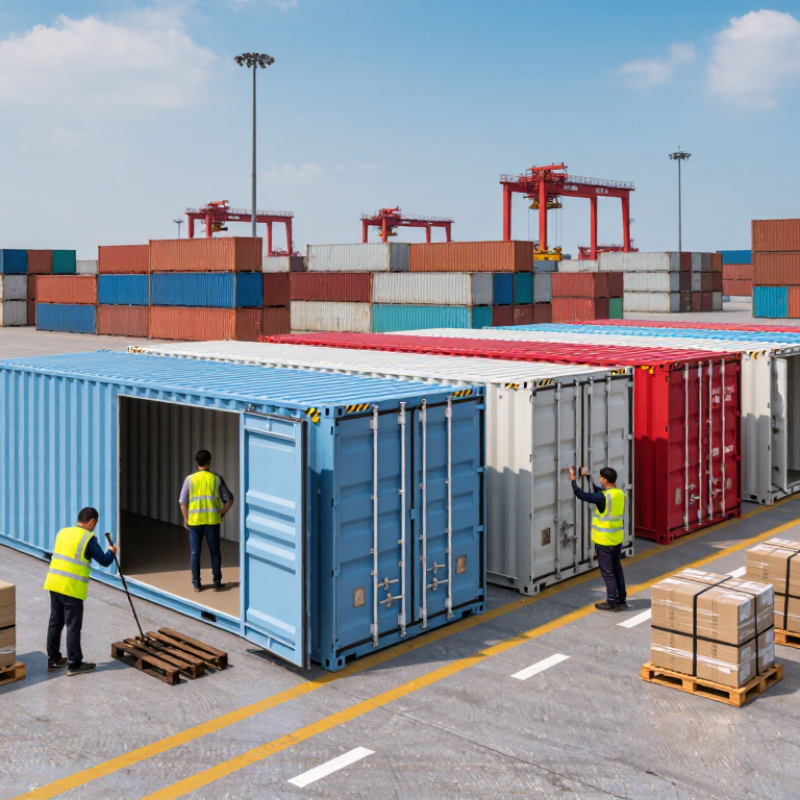
Small shipping containers are compact, standardized units designed for limited cargo volumes, short routes, or difficult delivery locations.
Common options include 6-foot, 8-foot, and 10-foot containers. Some operators also classify 20-foot units as small for specialized shipments. Their steel walls, lockable doors, and weather-resistant construction protect cartons, machinery, and spare parts during handling.
Their steel walls, lockable doors, and weather-resistant construction protect cartons, machinery, and spare parts during handling.
Their value becomes clearer in global trade. The UNCTAD Review of Maritime Transport 2023 reports that over 80% of world merchandise trade by volume moves by sea. Smaller containers help exporters avoid filling a large unit with unused space. They also simplify consolidation, especially for small manufacturers and regional distributors.
A 10-foot container may fit tightly into a warehouse loading area. It can still require a forklift, level ground, and safe lifting points. These details are easy to overlook.
Choosing the right unit requires more than measuring cargo length. Check internal dimensions, payload, door clearance, ventilation, floor condition, and the container’s inspection documentation. The World Bank’s Logistics Performance Index 2023 shows continuing differences in customs, infrastructure, and shipment reliability across economies. Therefore, handling conditions matter as much as container size.
A smaller unit may reduce wasted capacity, but it can increase handling costs per cubic metre. That trade-off deserves honest review.
In practice, the best choice is the smallest container that protects the cargo without creating extra transfers, delays, or unstable stacking.
How to Assess Cargo Size, Weight, and Container Capacity
Choosing a small shipping container starts with accurate cargo measurements, not guesswork. Measure length, width, and height after packaging each item. Include pallets, corner protection, straps, and empty spaces. Measure everything. Weight matters. Record the gross weight, including cartons and packing materials. Then compare it with the container’s maximum payload, not its internal volume alone. A container may have enough space but still exceed its safe weight limit. My early estimates were often too optimistic because I ignored uneven weight distribution.
Tips: Create a simple cargo sheet with item dimensions, quantities, gross weights, and stacking limits. Place dense goods low and near the center. Leave clearance around doors and walls. Check the container’s tare weight, payload, internal dimensions, and door opening from its inspection plate or verified documentation. Do not rely on a standard capacity figure alone. Specifications can vary slightly.
For irregular cargo, calculate usable cubic capacity after allowing room for handling and securing equipment. A practical loading plan should show where each carton goes. Draw it if necessary. Test the heaviest section first. Keep fragile goods away from pressure points, moisture risks, and sharp edges. Small containers can improve cost control, but poor planning may create wasted space or unsafe loading. Recheck the final weight before dispatch, because packaging changes can alter the result. Mistakes happen. A second measurement is cheaper than a rejected shipment.
How to Choose Small Shipping Containers for Global Trade? - How to Assess Cargo Size, Weight, and Container Capacity
| Container Type |
Approx. External Dimensions
(L × W × H) |
Approx. Internal Dimensions
(L × W × H) |
Internal Volume |
Typical Maximum Payload |
Suitable Cargo Profile |
| 8-foot dry container |
2.44 × 2.20 × 2.59 m
8 × 7.2 × 8.5 ft |
2.28 × 2.12 × 2.27 m
7.5 × 7.0 × 7.5 ft |
About 10.9 m³
385 ft³ |
About 7,000 kg
15,430 lb |
Small consolidated shipments, samples, spare parts, and compact machinery. |
| 10-foot dry container |
3.05 × 2.44 × 2.59 m
10 × 8 × 8.5 ft |
2.84 × 2.35 × 2.39 m
9.3 × 7.7 × 7.8 ft |
About 16.0 m³
565 ft³ |
About 8,000 kg
17,640 lb |
Short production runs, packaged equipment, retail stock, and mixed small cargo. |
| 20-foot standard dry container |
6.06 × 2.44 × 2.59 m
20 × 8 × 8.5 ft |
5.90 × 2.35 × 2.39 m
19.4 × 7.7 × 7.8 ft |
About 33.2 m³
1,172 ft³ |
About 28,000 kg
61,730 lb |
Dense or heavy cargo, pallets, machinery, metal products, and general freight. |
| 20-foot high-cube container |
6.06 × 2.44 × 2.90 m
20 × 8 × 9.5 ft |
5.90 × 2.35 × 2.69 m
19.4 × 7.7 × 8.8 ft |
About 37.4 m³
1,320 ft³ |
About 28,000 kg
61,730 lb |
Tall cartons, lightweight bulky goods, furniture, insulation, and products requiring extra vertical clearance. |
| Assessment Dimension |
How to Calculate or Check |
Practical Selection Rule |
| Cargo volume |
For rectangular packages: length × width × height × quantity. Convert centimeters to meters before calculating cubic meters. |
Choose a container with at least 10% more usable volume than the calculated cargo volume to allow for irregular shapes, blocking, and access space. |
| Total cargo weight |
Add the net weight of all goods, packaging, pallets, dunnage, and securing materials. |
The combined cargo weight must remain below the container’s permitted payload and the applicable road, rail, and port limits. |
| Door clearance |
Compare the largest package with the door opening, not only the internal container dimensions. |
Leave clearance for handling equipment and verify that the package can pass through the door at the required angle. |
| Floor loading |
Check concentrated loads such as machinery legs, coils, drums, or dense metal products. |
Distribute weight across the floor with suitable pallets, timber, or load-spreading materials when necessary. |
| Weight distribution |
Plan the center of gravity and keep heavy cargo low and close to the container’s center. |
Avoid concentrating excessive weight at the doors or at one end; secure cargo against movement in all directions. |
| International compliance |
Confirm verified gross mass, cargo securing, dangerous-goods requirements, and destination transport restrictions. |
Use the container’s actual rating plate and current carrier or intermodal-operator requirements instead of relying only on nominal specifications. |
Note: Dimensions, internal volume, tare weight, and payload vary by container manufacturer, construction, CSC plate, and transport route. Always verify the exact container specifications before booking international cargo.
Which Container Materials and Designs Suit Different Goods
Small shipping containers need a material and design matched to the cargo, not merely the route. UNCTAD’s Review of Maritime Transport 2024 reports that global seaborne trade reached about 12.3 billion tons in 2023. Even a compact unit may face salt air, crane handling, vibration, and repeated transfers. Corten steel offers strong impact resistance and better security for machinery, tools, and dense cargo. However, it adds weight and may develop surface corrosion when coatings are neglected. Aluminum reduces tare weight, which can help air-sea or multimodal shipments, but its panels can dent more easily. I have seen small containers selected by external size alone. That shortcut often creates unused volume or unsafe weight distribution.
For food, pharmaceuticals, or temperature-sensitive goods, insulated sandwich panels and sealed doors are more suitable. Add a certified refrigeration system when the cargo requires controlled temperatures. Moisture-sensitive products need a vapor barrier, raised flooring, and ventilation that matches the commodity. ISO 668 and ISO 1496 provide useful dimensional and performance references, but not every small container follows full-size freight-container practice. Verify corner fittings, floor loading, door clearance, and lashing points with the supplier. A container can look robust yet fail during forklift entry. The European Commission’s 2023 Transport in Europe report also highlights the continuing importance of resilient multimodal freight networks.
Tips: Choose steel for abuse, aluminum for lighter loads, and insulated designs for thermal control. Request corrosion records, payload tests, and door-seal photographs. Leave airflow around cartons. Recheck the real cargo measurements; estimates are often optimistic.
How to Compare Costs, Regulations, Security, and Transport Options
How to Choose Small Shipping Containers for Global Trade?
Cost comparison should include more than the container’s purchase or rental price. Check handling fees, storage, inland trucking, port charges, insurance, and possible taxes. A small unit may cost less initially, yet empty repositioning can increase the final bill. Ask for a complete route quotation. Do not rely on one attractive estimate. In practice, dimensions and gross weight often change the price more than expected.
Regulations require careful checking before shipment. Confirm accepted dimensions, maximum gross mass, cargo labeling, customs documents, and inspection requirements in each country. Container condition also matters. Doors should close evenly, floors should remain dry, and identification plates should be readable. Requirements can differ by cargo type and transport mode. A freight professional or customs adviser can verify current rules, rather than depending on outdated online advice.
Security begins with a sound structure and controlled handling. Use tamper-evident seals, a strong lock system, and clear loading records. Photograph the container before loading, including empty corners and door fittings. Road, rail, and sea transport each affect timing, cost, and handling risk. Air transport may be faster, but container compatibility and pricing need special confirmation. My practical preference is to compare the whole journey, not just the ocean leg. I have seen “cheaper” options become expensive after delays and repeated transfers. That assumption deserves review.
How to Select, Prepare, and Inspect a Container for International Shipping
For global trade, a small container usually means a 10-foot or 20-foot ISO unit. Choose the 20-foot size when cargo needs stable floor space, not excessive height. UNCTAD’s Review of Maritime Transport 2024 notes that ships carry over 80% of world trade by volume. Space is valuable. Yet, unused space can increase cargo movement and damage.
Check the container’s CSC safety plate, identification number, and maximum gross mass. Inspect the floor for soft boards, oil stains, and protruding nails. Examine roof panels, corner castings, door hinges, and rubber gaskets. A bright inspection light helps reveal pinholes. Smell the interior. Chemical odors, dampness, or old food residue need investigation.
The World Shipping Council reported 576 containers lost at sea in 2023, from about 221 million transported units. The percentage was small, but one damaged unit can still cause a serious loss.
Prepare the cargo with its verified gross mass under SOLAS requirements. Keep heavy cartons low and distribute weight across the floor. Use suitable blocking, bracing, and lashing to prevent sliding. Leave no loose tools inside. Add moisture protection when temperature changes may create condensation.
Record photos before sealing. Check the seal number against the shipping documents. My practical concern is simple: a clean container is not automatically a safe one. Teams sometimes rush the final inspection. That shortcut deserves reconsideration.
Sources: UNCTAD Review of Maritime Transport 2024; World Shipping Council Containers Lost at Sea Report 2024.