Why Choose Second Hand Shipping Containers for Your Business?
As businesses seek cost-effective solutions, second hand shipping containers have emerged as a popular choice. Richard Black, a leading expert in the shipping container industry, states, “Choosing second hand shipping containers can significantly reduce operational costs.” This perspective reflects a growing trend among entrepreneurs who are looking for budget-friendly options without sacrificing quality.
Second hand shipping containers are versatile and practical. They can be transformed into offices, storage units, or even retail spaces. The appeal lies in their durability and affordability. However, there is a necessity for thorough inspections and assessments before purchase. Not all containers are created equal. Some may exhibit signs of wear or structural damage. This reality prompts a careful decision-making process.
Investing in second hand shipping containers comes with potential challenges. Companies must consider the container's condition, cost of modifications, and transport logistics. While the savings can be substantial, it is essential to understand the risks involved. The choice, therefore, requires thoughtful evaluation and a detailed understanding of needs.
Benefits of Using Second Hand Shipping Containers for Businesses
Second-hand shipping containers have become popular among businesses for several compelling reasons. Firstly, they are cost-effective solutions for storage and transport needs. According to a report by the Container Owners Association, purchasing a new container can cost up to 30% more than a used one. This cost difference allows businesses to allocate funds to other critical areas.
The versatility of these containers also stands out. A well-maintained second-hand container can easily transform into a mobile office, retail space, or even a workshop. About 80% of businesses using refurbished containers reported increased operational efficiency. The durability of steel containers further assures businesses of long-term use, often lasting over 25 years if properly cared for.
However, not all used containers are equal. Some may have hidden damages or rust. Therefore, businesses must conduct thorough inspections before purchase. Engaging with trusted suppliers who provide transparent histories can alleviate some risks associated with second-hand purchases. Furthermore, this practice promotes sustainability, reducing the carbon footprint associated with manufacturing new containers.
Cost-Effectiveness: Budget-Friendly Solutions with Used Containers
Second-hand shipping containers offer a unique cost-effective solution for businesses seeking budget-friendly alternatives. According to industry reports, used containers can be up to 50% cheaper than new ones. This substantial saving allows businesses to allocate funds more efficiently, enabling investments in other critical areas such as marketing or technology.
Used containers are versatile. Many companies repurpose these containers into offices, storage units, or retail spaces. By choosing a second-hand solution, businesses not only save money but also reduce waste. It aligns with sustainability goals, appealing to eco-conscious consumers.
Remember, however, that purchasing a used container requires diligence. Inspect thoroughly for any structural issues.
Tips: Always verify the container’s history. Ask for provenance to ensure it meets your needs. Be cautious of deep dents or extensive rust, as these may require costly repairs. Also, factor in delivery costs. These can vary significantly and impact your overall budget. Prioritizing these details ensures a wise investment in your business infrastructure.
Environmental Impact: Sustainability and Reducing Waste with Reuse
The use of second-hand shipping containers fosters environmental sustainability.
Research shows that reusing a shipping container can eliminate nearly 3,000 kilograms of CO2 emissions compared to new container production. This significant reduction highlights the value of choosing reused materials in business operations.
Containers have a life cycle of about 25 years. Yet, many are discarded after just 10 years of use. By repurposing these containers, businesses contribute to waste reduction. A report by the Environmental Protection Agency indicates that about 60% of the waste generated in the U.S. is recyclable or reusable. This presents an opportunity for companies to align with sustainable practices while also addressing waste management issues.
Choosing second-hand containers can reflect a company's commitment to sustainability. While some might question the structural integrity of used containers, many companies inspect and refurbish them to ensure reliability. However, it is essential to weigh cost savings against potential drawbacks. Striking a balance is key to making an informed decision that benefits both the business and the environment.
Versatility of Second Hand Containers: Various Applications in Industry
Second hand shipping containers have become a popular choice for businesses across various industries. Their versatility is key. For instance, restaurants have transformed containers into trendy kitchens. Retailers use them as pop-up stores. Even construction companies create mobile offices from these robust units. According to a report by MarketsandMarkets, the global shipping container market is expected to reach $8.3 billion by 2025, showing strong demand in diverse applications.
One significant advantage of second hand containers lies in their cost-effectiveness. Buying used containers can save businesses up to 50% compared to new ones. This makes them accessible to startups and small enterprises. Additionally, they come in various sizes and conditions. Some may require refurbishments, while others are ready to use. Choosing the right container does require careful consideration. Look for structural integrity and water-tightness.
Tip: When selecting a shipping container, inspect it thoroughly, especially for rust and damages.
Adaptability is another noteworthy feature. Companies can customize these containers to suit specific needs. They can be outfitted with insulation for cold storage or fitted with windows for retail spaces. As market demands shift, these containers can be repurposed easily. However, potential buyers must be aware of the varying regulations related to modifications.
Tip: Research local zoning laws before modifying a container for business use.
Considerations When Purchasing Used Shipping Containers for Your Business
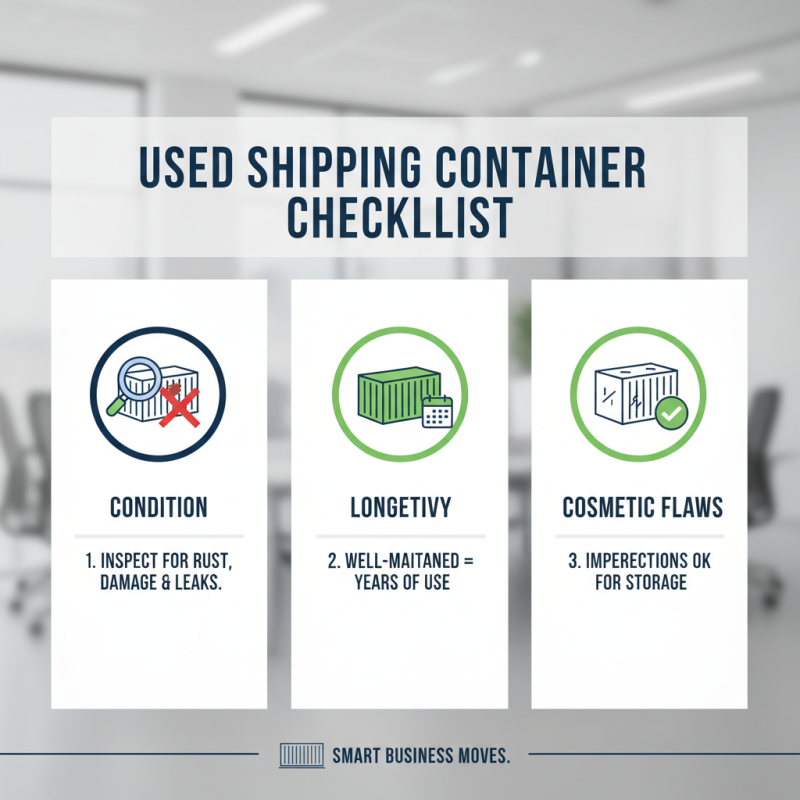
When considering used shipping containers for your business, several factors should be top of mind. First, check the condition of the container. Look for rust, structural damage, or leaks. A well-maintained container can serve you for years. However, cosmetic flaws might not be a dealbreaker. If you're using the container for storage, imperfections are often acceptable.
Another important consideration is the intended use. Will you use it for storage, for a mobile office, or even as a pop-up shop? Different needs call for different specifications. Make sure the container meets your requirements in size and features. It’s essential to visualize how you plan to utilize the space. Poor planning can lead to wasted resources or functional limitations.
Shipping container modifications can also impact your decision. Some containers can be customized to fit specific business needs. This could include insulation, ventilation, or windows. While these modifications can enhance usability, they can add to your costs and timeline. Balancing your budget with your vision can be challenging but necessary for a successful purchase.