Why Choose Battery Liquid Cooling Pipes for EV Batteries?

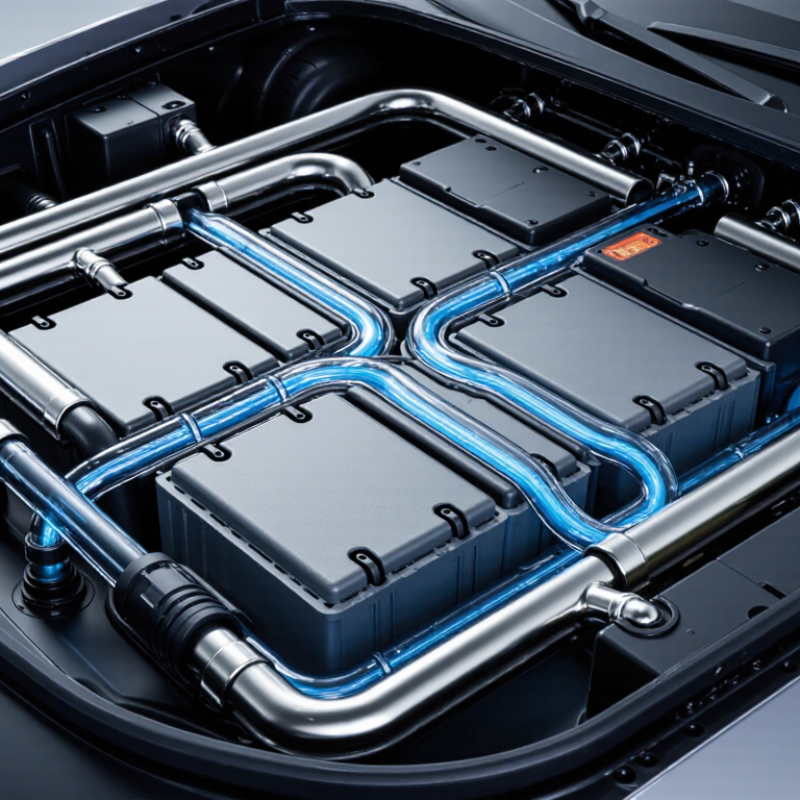
Electric vehicles depend on stable battery temperatures for safety, performance, and service life. During fast charging or steep climbs, cells generate considerable heat inside a compact battery pack. A Battery Liquid Cooling Pipe carries coolant through carefully designed channels, helping remove that heat more evenly than passive air cooling.

The detail matters. Engineers consider pipe material, wall thickness, flow resistance, bending radius, and connection reliability. A well-designed system can keep temperature differences between cells under better control. This supports consistent power delivery and reduces stress on sensitive battery components. It also helps manufacturers manage limited space beneath the vehicle floor. Every millimeter matters.

Still, no cooling pipe is perfect.

Field experience shows that performance depends on the entire thermal system, not one component. Coolant quality, pump control, sealing, vibration resistance, and installation accuracy all influence long-term results. A pipe may transfer heat efficiently in laboratory testing, yet perform differently after years of road vibration and temperature changes. That gap deserves honest attention.

Choosing the right Battery Liquid Cooling Pipe therefore requires more than comparing product images or advertised flow rates. Buyers should review thermal data, pressure testing, corrosion resistance, connector design, and compatibility with the battery architecture. Independent validation can provide stronger confidence than unsupported claims. Practical testing remains essential.

This article examines why liquid cooling pipes are increasingly used in EV batteries. It considers their thermal role, design benefits, manufacturing requirements, and possible limitations. The goal is not to present cooling pipes as a universal solution. Instead, it offers a realistic basis for selecting safer, more dependable thermal management components.
Why Choose Battery Liquid Cooling Pipes for EV Batteries?

What Are Battery Liquid Cooling Pipes in EV Battery Systems?

Battery liquid cooling pipes are hollow channels designed to carry coolant through an EV battery pack. They sit close to battery cells, modules, or cooling plates. Their purpose is to move heat away during charging, acceleration, and repeated high-power use. The coolant absorbs heat from the battery area and transfers it to a heat exchanger or chiller.

These pipes are commonly made from lightweight metals or engineered polymers. The selected material must resist corrosion, pressure changes, vibration, and temperature cycling. Their shape also matters. Flat channels can improve contact with cooling surfaces, while flexible sections help absorb movement during vehicle operation. Seals, connectors, and bends require careful design because even a small leak can damage electrical components.

In practical testing, a pipe layout may look efficient on a drawing but perform unevenly inside a crowded pack. Coolant can favor shorter paths, leaving distant cells warmer. Engineers therefore check flow resistance, temperature differences, pressure, and joint reliability under real driving conditions. Sensors may reveal a few degrees of variation that simulation missed. That is not a failure; it is useful evidence. Poor routing can also complicate maintenance and increase assembly time. Clearances around cables and cell restraints must remain visible and accessible. A reliable cooling pipe system is not simply a tube carrying liquid. It is part of a controlled thermal network, and small design choices can affect battery life, safety, and charging consistency.


How Do Liquid Cooling Pipes Regulate Battery Temperature?

Liquid cooling pipes regulate EV battery temperature by carrying coolant through channels beside or beneath cell modules. As cells charge or deliver power, internal resistance creates heat. The coolant absorbs this heat through the pipe wall, then transports it to a radiator or chiller. Simple in principle. Not always simple in practice.

Temperature sensors monitor several points, including the warmest module area. A controller adjusts pump speed and coolant flow when readings rise. During fast charging, flow may increase before the pack reaches a critical temperature. Valves can redirect coolant between zones, helping reduce hot spots and temperature differences across the pack. Keeping cells within a narrow range supports predictable power output and slows uneven aging.

Pipe geometry matters. Thin walls improve heat transfer, while wider channels reduce pressure loss. Engineers must balance both choices, because a powerful pump consumes energy and adds complexity. Poor contact between a pipe and its cooling plate can leave a small but damaging warm region. During practical inspections, leaks, blocked channels, trapped air, and sensor drift deserve attention. A system may look efficient on paper yet perform differently after vibration and repeated thermal cycling. Material compatibility also matters where coolant, seals, and metal parts meet.

Even temperature control is the goal, but perfect uniformity is difficult. That limitation deserves honest testing.

Why Is Thermal Management Essential for EV Battery Performance?

Why Choose Battery Liquid Cooling Pipes for EV Batteries?

Thermal management is essential because an EV battery performs best within a narrow temperature range. Too much heat can accelerate cell aging and reduce charging efficiency. Low temperatures can increase internal resistance and limit available power. During rapid charging, heat builds around cells, busbars, and connection points. Liquid cooling pipes transfer this heat more evenly than passive air systems. Heat moves quickly.

In practical battery testing, engineers monitor temperature differences between the center and edges of a module. A few degrees can affect cell balance over repeated driving cycles. Properly designed pipes maintain stable contact with cooling plates while using limited space. They also support predictable temperature control during hill climbs, traffic, and fast charging. Small leaks matter. Material selection, pressure testing, and corrosion resistance require careful verification. However, no cooling design is perfect. Poor pipe placement may leave hot spots near crowded connections. Complex channels can also increase manufacturing difficulty and service time. Reliable systems therefore combine accurate thermal modeling with physical testing under changing loads. That approach helps protect battery life, safety margins, and consistent vehicle performance.

As discharge current increases, resistive heat rises approximately with the square of current (I²R). Battery liquid cooling pipes help transfer this heat away from cells, reduce temperature differences across the pack, and keep the battery closer to its recommended operating range for safer and more consistent performance.

The values are normalized to 1C operation and assume constant internal resistance; actual heat generation varies with cell design, temperature, age, and state of charge.

What Materials and Designs Are Used in Cooling Pipes?

Battery liquid cooling pipes are built from materials that balance heat transfer, weight, corrosion resistance, and manufacturing cost. Aluminum is widely considered because it is light and conducts heat efficiently. Copper transfers heat faster, but its higher density can increase pack weight. Stainless steel offers strong pressure resistance, though it usually adds mass and may need careful thermal design.

Polymer-based pipes can reduce weight and simplify routing. However, the inner layer must resist glycol-based coolant, pressure changes, and long-term temperature cycling. Multilayer structures are useful when one layer provides chemical protection and another supplies mechanical strength. Material compatibility matters. Small coolant leaks can damage electrical insulation and create serious safety concerns.

Pipe geometry also affects battery performance. Flattened channels can sit close to cell surfaces and reduce thermal distance. Serpentine paths improve coverage, while parallel channels may lower pressure loss when balanced correctly. Brazed aluminum plates provide compact contact, but poor joining can create hidden weak points. Flexible sections help absorb vibration and assembly movement. Not always enough.

In practical pack development, engineers check flow distribution, weld quality, burst pressure, and thermal uniformity. A pipe that cools one area extremely well may leave another area warmer. That unevenness can accelerate cell aging. Designers should also leave inspection and service space around joints. Compact packaging is attractive, but it can make repairs difficult. The best design is rarely the smallest one.

How Do Battery Cooling Pipes Improve EV Safety and Longevity?

Battery liquid cooling pipes help EV packs control heat more evenly than air-based systems. During fast charging, cells can heat rapidly near their electrical connections. A coolant flowing through nearby pipes removes this heat before hot spots spread across the module. That matters.

Stable temperatures support safer battery operation. Excessive heat can accelerate chemical reactions, damage separators, and increase the risk of thermal runaway. Liquid cooling does not eliminate that danger. It gives the battery management system more time to detect abnormal temperature changes and reduce charging power. Engineers also monitor coolant pressure, flow rate, and pipe temperature during testing.

Temperature balance affects battery longevity as well. Cells age unevenly when one section stays warmer than another. This imbalance may reduce usable range and create earlier performance differences between cells. A well-designed pipe layout keeps cooling paths short and distributes heat more consistently. In practical inspections, technicians look for blocked channels, weakened seals, and early signs of corrosion. Small leaks can become serious if ignored. The design is not perfect.

Pipe material, coolant compatibility, vibration resistance, and thermal expansion all require careful evaluation. A pipe that performs well in a laboratory may face different conditions on rough roads, during winter charging, or after years of pressure cycles. Regular diagnostics remain important, even with advanced cooling hardware.

Why Choose Battery Liquid Cooling Pipes for EV Batteries? - How Do Battery Cooling Pipes Improve EV Safety and Longevity?

Data Dimension Typical Engineering Value or Comparison How Battery Cooling Pipes Help Effect on EV Safety and Longevity
Preferred cell operating temperature Approximately 15–35 °C for many lithium-ion battery applications Channels coolant close to the cells or modules and removes heat continuously during charging and driving. Reduces operation outside the temperature range associated with efficient electrochemical performance.
Temperature uniformity A pack design commonly aims to keep cell-to-cell temperature difference within about 3–5 °C. A distributed pipe layout can provide more even heat removal than cooling from only one side of a module. Limits uneven aging, localized resistance increase, and electrical imbalance between cells.
Heat-transfer medium Water-glycol coolant typically transfers heat much more effectively than still air because liquids have higher density and heat capacity. The pipe wall transfers heat from the battery surface to a circulating coolant loop. Supports stable temperatures during high-load events such as rapid acceleration and fast charging.
High-power charging heat Charging heat rises with current and is approximately proportional to I²R, where I is current and R is resistance. Cooling pipes remove resistive heat while the battery is charging, helping maintain controlled cell temperature. Helps reduce thermal stress and can support repeatable charging performance when correctly designed.
Thermal response time Liquid systems generally respond faster than passive air systems under short-duration high loads. Forced coolant flow removes heat directly from the thermal interface instead of relying mainly on air circulation. Reduces the duration of elevated temperature conditions that accelerate battery degradation.
Cold-weather heating Low temperatures increase lithium-ion internal resistance and reduce available power and charging acceptance. The same coolant circuit can distribute heat from a heater or other thermal source throughout the battery pack. Improves low-temperature readiness and helps reduce the risk of charging under unsuitable conditions.
Thermal runaway management Cooling cannot guarantee prevention of thermal runaway, which requires cell, module, electrical, and pack-level protections. Removes normal operating heat and may help slow heat propagation when combined with barriers, venting, monitoring, and shutdown controls. Lowers routine thermal stress but must be part of a complete battery safety architecture.
Battery aging factors High temperature, low temperature, high state of charge, and high current can all accelerate capacity loss or power fade. Maintains a more controlled thermal environment across different operating conditions. Can help preserve usable capacity and reduce cell-to-cell aging variation over repeated cycles.
Cooling-pipe material requirements Common requirements include corrosion resistance, coolant compatibility, pressure resistance, dimensional stability, and electrical isolation where needed. Well-designed pipes maintain reliable coolant circulation without contacting electrically active components. Reduces the risk of leakage, corrosion, electrical faults, and loss of cooling performance.
Leak and pressure control A liquid loop requires pressure testing, sealed joints, expansion management, and leak detection. Properly routed pipes and validated joints maintain flow under vibration, thermal cycling, and vehicle movement. Improves long-term reliability and prevents coolant from reaching sensitive battery electronics.
Overall suitability for modern EVs Liquid cooling is more complex than air cooling but is widely suited to high-energy, high-power, and fast-charging battery packs. Provides controllable heat removal and heating through a compact, integrated thermal-management circuit. Offers a strong balance of thermal control, charging capability, safety support, and battery service life when engineered and maintained correctly.

Note: Values are general engineering ranges and design targets. Actual performance depends on cell chemistry, pack geometry, coolant, flow rate, ambient conditions, controls, and safety-system design.

Get a Quote
910-483-7828