For many businesses, a dead vehicle battery is more than a small inconvenience. It can delay deliveries, interrupt field service, and leave employees waiting in unsafe roadside conditions. A Portable Car Jump Starter offers a compact backup when a fleet vehicle, company van, or service truck refuses to start. It stores power in the vehicle. It also reduces dependence on another driver’s vehicle.
Automotive battery specialist Eric Theil, founder of Antigravity Batteries, has offered a practical reminder: “A jump starter is only useful when it is charged, accessible, and suitable for the vehicle.” That sentence deserves attention. Businesses often purchase emergency equipment, then store it beneath tools or forget monthly inspections. The device becomes invisible until the worst moment.
A reliable Portable Car Jump Starter should match the fleet’s engine sizes, battery types, and operating conditions. Look for clear power ratings, protected clamps, reverse-polarity alerts, and a durable case. Cold mornings matter. So do dusty workshops and repeated daily use. A built-in light may help during nighttime checks, while USB ports can support phones and inspection equipment.
The decision is not only about peak current. It concerns preparation, training, and maintenance. Staff should know where the unit is stored and how to connect it safely. They should also understand when a damaged battery needs professional service instead. A jump starter cannot repair every electrical fault. That limitation is important.
In practice, small oversights remain possible. Charging schedules can be missed. Labels can fade. Yet a documented inspection routine makes this equipment far more dependable for business operations.
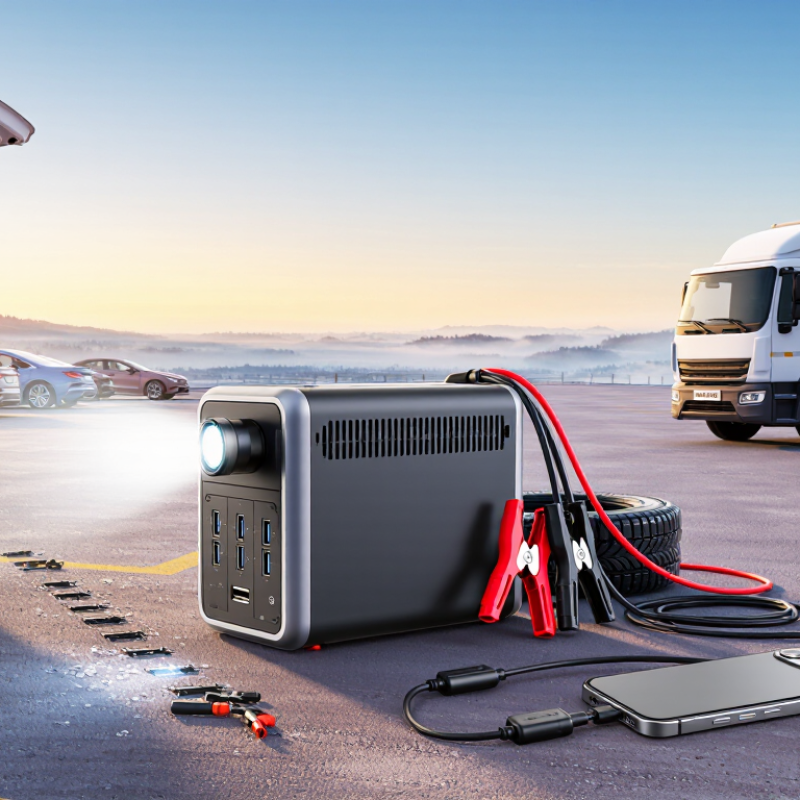
A portable car jump starter is a compact battery pack that can restart a vehicle without another car. It usually includes insulated clamps, a charging port, and simple status lights. Inside, a rechargeable lithium battery stores enough energy for a short engine start. The unit connects directly to the vehicle battery through the positive and negative terminals.
For a business, this tool can support delivery vans, service vehicles, rental cars, and roadside teams. I have seen a driver solve a dead-battery problem in a cold parking area within minutes. No second vehicle was needed. The device fitted under a seat and remained ready for unexpected delays. That practical convenience can reduce missed appointments and protect working hours.
However, a jump starter is not a repair tool. It cannot fix a failed alternator, damaged cables, or a battery with internal damage. Check the vehicle voltage before connection. Follow the operating instructions carefully. Keep the clamps clean and the unit charged. It should not be used when the casing, cables, or battery shows damage. Cold weather may also reduce its performance. I once treated a nearly empty unit as reliable, and it failed when needed. That mistake changed our storage routine. The equipment now receives a monthly charge check and a visual inspection. Small details matter.

A portable car jump starter stores electrical energy in an internal lithium battery. When connected correctly, it sends a short, high-current pulse to the vehicle’s starter circuit. The starter motor then turns the engine, while the vehicle battery supplies support. It does not replace the battery permanently.
Inside the unit, a control circuit checks voltage, polarity, and clamp contact. Many models block power when the clamps are reversed. This protection matters in busy business environments, where users may work quickly. ADAC’s 2024 breakdown statistics reported starter-battery problems in 44.1% of roadside failures. That figure shows why battery support remains practical for delivery fleets, rental services, and mobile technicians. AAA also reported assisting nearly 31 million stranded motorists in 2023, highlighting the operational cost of roadside interruptions.
The procedure is simple but not careless. Switch off the vehicle, connect the positive clamp, then the negative clamp to a suitable grounding point. Activate the starter unit, wait briefly, and crank for only a few seconds. After the engine starts, remove the clamps in reverse order. A deeply damaged battery may still refuse to start. Cold weather can reduce available power, too. I have seen users blame the device when loose clamps caused the failure. That assumption needs checking. The alternator may recharge the battery during driving, but it cannot repair an aged battery. A portable jump starter is useful insurance, not a complete maintenance plan.
A portable car jump starter gives businesses a faster response when a vehicle battery fails. The 2023 roadside assistance report from the American Automobile Association recorded more than 32 million service calls in the United States. Battery problems remain a frequent cause. For delivery teams, service vans, and rental operations, one compact device can reduce waiting time near a loading dock or roadside.
The financial benefit is practical. A jump starter can help employees restart a vehicle without immediately arranging external assistance. The U.S. Department of Energy estimates that an idling light-duty vehicle may consume about 0.16 to 0.39 gallons of fuel per hour. A quicker recovery may limit fuel waste, missed appointments, and unnecessary dispatch costs. It also supports business continuity during cold mornings, when battery performance commonly declines. That matters.
Operational safety still requires discipline. Staff should inspect cables, charge the unit, and follow the vehicle manufacturer’s connection procedure. A jump starter is not a substitute for battery testing. In real fleet use, repeated failures may indicate corrosion, aging batteries, or charging-system faults. The device solves the immediate problem, not the underlying one. That limitation deserves attention. A simple inspection log can record usage, charging dates, and recurring vehicle faults, giving managers better maintenance evidence. Some teams may expect perfect reliability from a small device. That is unrealistic. Even a well-maintained unit can lose capacity if stored in extreme heat.
For a business fleet, a portable car jump starter can reduce delays during roadside battery failures. It helps drivers restart vehicles without waiting for another vehicle. In daily operations, that difference can protect appointments, deliveries, and staff time. Choose a model with enough peak current for your vehicle types. A diesel van may need more power than a small petrol car. Check the battery capacity, too. High peak current alone does not guarantee useful performance.
Look for reverse-polarity protection, short-circuit protection, and clear status indicators. These features reduce mistakes during stressful roadside work. Strong clamps and thick cables should reach awkward battery terminals. An IP-rated casing helps protect the unit from dust and light rain. Operating temperature matters in winter, while a built-in light can help in dark parking areas. USB charging is useful, but it should not replace dependable starting power. I once relied on a nearly empty unit. It failed when needed most. That experience changed our inspection routine.
A portable car jump starter gives businesses a fast backup when a vehicle battery fails away from a workshop. Delivery teams can keep one in a van, while property managers can store another near parking areas. Service companies may use it for fleet cars, utility carts, or small equipment with compatible batteries.
Use it carefully. Check the vehicle manual before connecting the clamps. Confirm the battery voltage and inspect the terminals for damage or heavy corrosion. Turn off lights, radios, and other electrical loads. Connect the red clamp to positive and the black clamp to a suitable negative point, when the manufacturer allows it. Keep the unit on a stable surface, away from fuel vapors and rain. Wear eye protection in busy maintenance areas. Never force a connection.
Maintenance affects reliability. Recharge the unit after every use, even after a short boost. Check its charge level during weekly fleet inspections. Wipe the clamps clean and examine cables for cuts, loose grips, or heat marks. Store the starter in a dry compartment, not beside a heater or in direct summer sunlight. Test it monthly with an approved procedure. Record the inspection date.
Small details matter. A forgotten cable can stop a morning route. I have seen teams trust a full display too quickly; the battery may still be weak. Replace damaged equipment instead of improvising repairs. Staff should receive short, practical training and record unusual behavior, such as slow cranking or repeated overheating.
| Business Use Case | Typical Vehicle or Operation | Recommended Quantity | How It Is Used | Operational Benefit | Suggested Maintenance Routine |
|---|---|---|---|---|---|
| Delivery and service fleets | Passenger cars, vans, and light commercial vehicles | One unit per vehicle or one unit per two vehicles when vehicles are parked together | Start a vehicle with a discharged battery when roadside assistance is not immediately available | Reduces vehicle downtime and helps drivers return to scheduled routes | Inspect before each shift; recharge after use; perform a full charge check monthly |
| Vehicle rental operations | Rental cars and light utility vehicles | One shared unit for each parking or service area | Support vehicle preparation teams when a battery loses charge during storage or cleaning | Improves fleet readiness without moving vehicles or waiting for external assistance | Store in a clean, dry cabinet; record charge status during vehicle inspections |
| Property and facility management | Maintenance vans, security vehicles, and site utility carts | One unit at each main facility or maintenance depot | Provide emergency starting support for vehicles operating across large properties | Limits delays for maintenance, security, and inspection teams | Assign a responsible employee; inspect cables, clamps, casing, and charge indicator monthly |
| Roadside assistance teams | Service vehicles responding to passenger vehicles and light trucks | At least one unit in every response vehicle | Deliver portable starting assistance at locations where mains power is unavailable | Provides a compact alternative to larger workshop equipment for suitable vehicles | Clean clamps after use; recharge immediately; remove damaged units from service |
| Construction and field operations | Pickup trucks, site vehicles, and small equipment with compatible starting systems | One unit per active worksite or field supervisor vehicle | Support equipment start-up during remote work where electrical outlets may be limited | Improves mobility and reduces dependence on another running vehicle | Protect from dust, water, and extreme heat; inspect before transport to each site |
| Automotive workshops | Cars and light commercial vehicles undergoing inspection or repair | One unit per work area, depending on vehicle volume | Move vehicles with discharged batteries before testing, servicing, or customer collection | Saves floor space compared with moving a larger support vehicle into the work area | Keep clamps insulated and cables neatly stored; test the unit at least monthly |
| Emergency and public-service fleets | Support cars, utility vehicles, and backup transport | One unit per designated vehicle or response station | Provide backup starting capability during power interruptions, cold weather, or extended parking | Adds a portable contingency tool for time-sensitive operations | Include in fleet readiness checks; maintain a written inspection and recharge log |