What is the Use of Transport Containers in Logistics and Cargo Management?
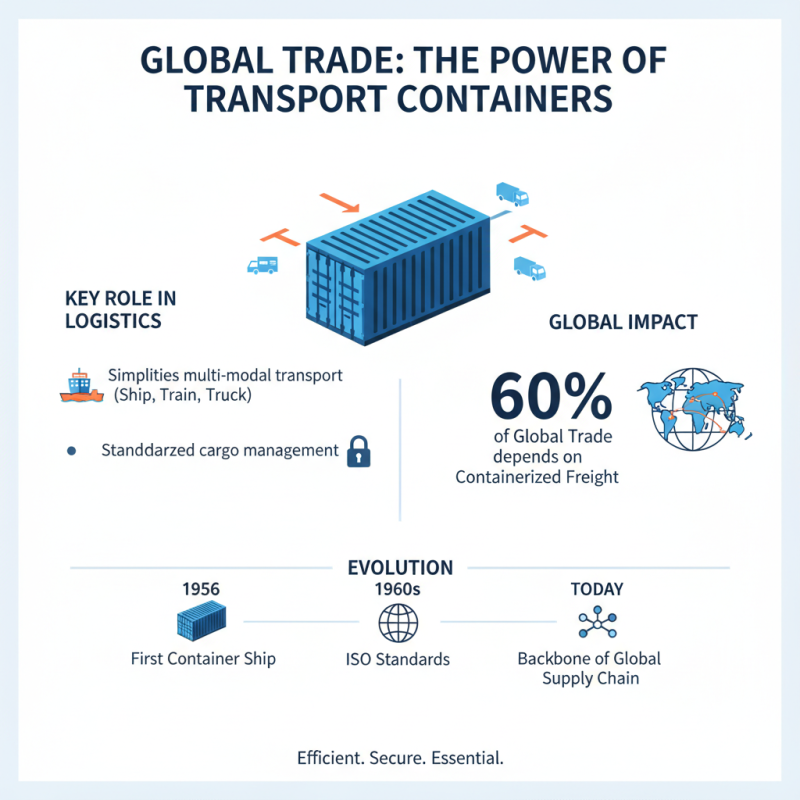
Transport containers play a vital role in logistics and cargo management. The global shipping industry relies heavily on these containers. According to a report by the World Bank, around 90% of global trade is carried by sea. This statistic underscores the importance of efficient cargo transport systems.
Transport containers offer various benefits. They ensure goods are protected during transit. Their standardized sizes facilitate easy stacking and storage. However, challenges exist. Container shortages can disrupt supply chains. Additionally, not all containers are maintained properly. This can lead to losses in goods and delays.
The demand for transport containers continues to rise. The logistics sector predicts a 4.3% annual growth through 2025. As e-commerce expands, the need for reliable cargo management increases. Companies must adapt to these trends. Investing in better infrastructure is essential. Proper management of transport containers can enhance efficiency and reduce costs. The journey towards optimization requires reflection and improvement in current practices.
The Role of Transport Containers in Global Supply Chain Dynamics
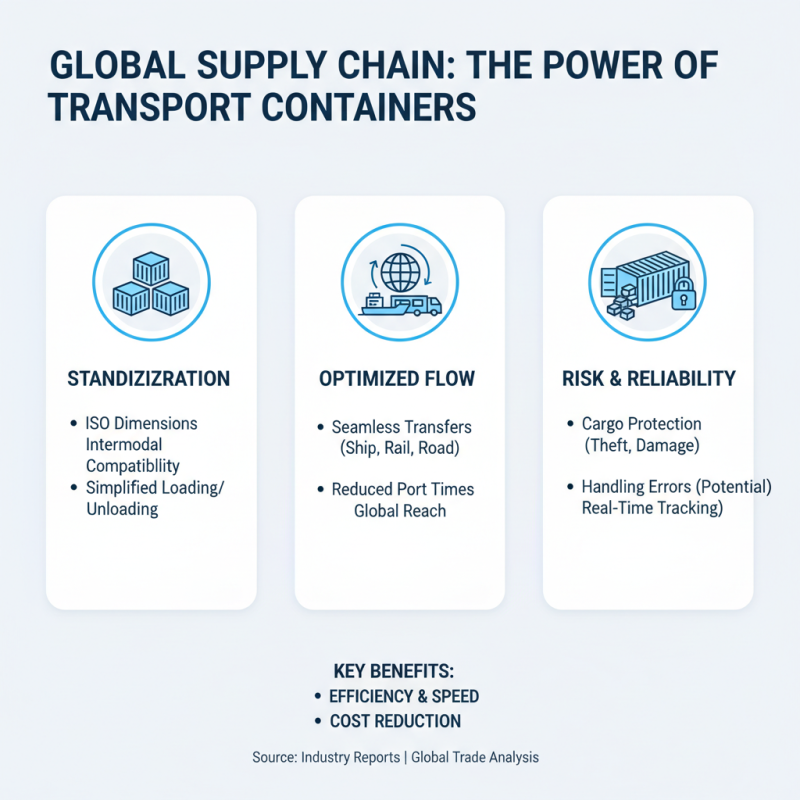
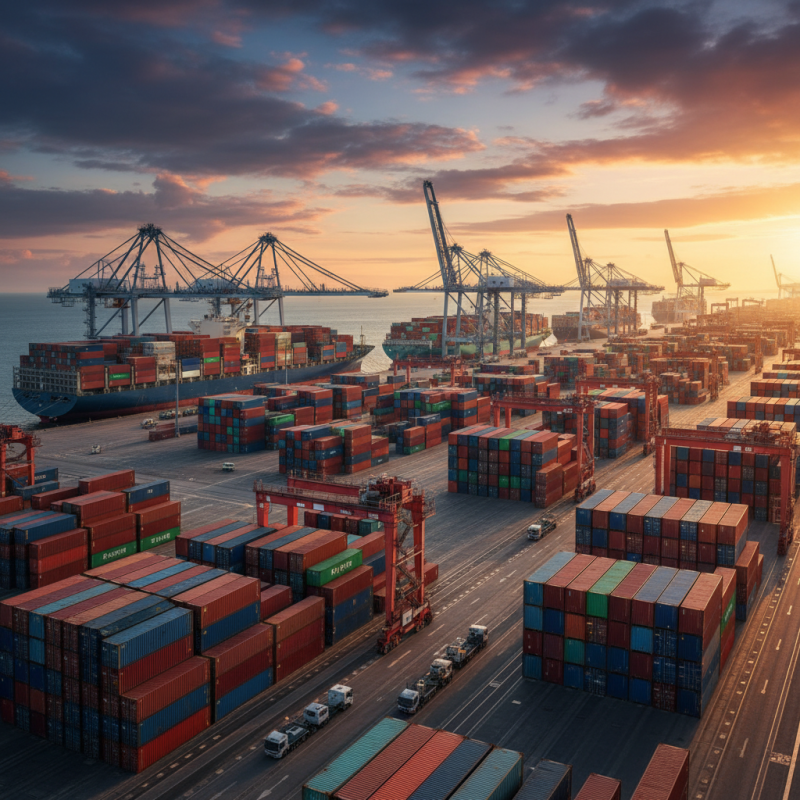
Transport containers play a pivotal role in global supply chain dynamics. They provide a standardized way to move goods across various modes of transport. This standardization simplifies loading and unloading processes at ports and terminals. It reduces the risk of damage during transit, but that’s not always guaranteed. Containers can be mismanaged, leading to potential losses.
However, the efficiency of transport containers goes beyond just protection. They enhance inventory management. Businesses can track containers in real-time, improving visibility. This tracking helps in planning and reduces the chances of stockouts or overstock. Yet, not every company fully utilizes this technology. Many fall short in implementing real-time tracking, missing opportunities for optimization.
Moreover, the environmental impact of transport containers is worth considering. They can reduce carbon footprints when utilized effectively. However, empty containers often sit idle, producing unnecessary emissions. This inefficiency calls for innovative solutions. There's room for improvement in how we plan and manage these resources within the supply chain. Effective utilization remains a challenge that prompts industry reflection.
Types of Transport Containers and Their Specific Uses in Logistics
Transport containers play a vital role in logistics and cargo management. They protect goods during transit and facilitate efficient handling. There are various types of containers tailored for specific uses.
Standard shipping containers are the most common. They are sturdy and can hold a wide range of products. These containers are usually 20 or 40 feet long. They can be stacked, saving space in warehouses and on ships. Is this space utilization always the best? Sometimes, overcrowding can lead to damaged goods.
Reefer containers are another type, designed for temperature-sensitive cargo. These containers maintain a specific temperature throughout transportation. Foods and pharmaceuticals often require such careful handling. However, inefficiencies can occur if temperature controls fail. This could lead to spoilage and loss, an issue that must be taken seriously.
Open-top and flat-rack containers serve unique needs too. Open-top containers are ideal for taller loads, while flat-racks accommodate heavy machinery. Properly securing these loads is crucial; otherwise, risks increase during transit. Balancing the diverse requirements for different items is a constant challenge in logistics management.
Usage of Different Types of Transport Containers in Logistics
This chart illustrates the distribution of various types of transport containers used in logistics, highlighting their specific uses in cargo management.
Impact of Containerization on Shipping Efficiency and Cost Reduction
Containerization has transformed the logistics and shipping landscape. It standardizes cargo transport, making it easier and faster. Containers come in various sizes, but their uniformity simplifies handling. Forklifts and cranes easily load and unload them at ports. This consistency eliminates delays when switching between transport modes.
The impact of containerization on shipping efficiency is substantial. Traditional methods often faced congestion and loading challenges. Containers streamline the process, allowing for quicker turnaround times. Yet, not every port has adapted well. Some still struggle with container handling efficiency. Inefficiencies can lead to higher costs, which negate savings from containerization.
Cost reduction is another significant benefit of using transport containers. They maximize space utilization on ships, reducing shipping costs per unit. However, infrastructure issues persist. Not all logistic hubs have the necessary resources to manage container traffic. This gap can hinder the overall cost advantages. Addressing these challenges is crucial for reaping the full benefits of containerization.
Challenges in Transport Container Management and Supply Chain Optimization
Transport container management faces several challenges. The efficiency of logistics relies on these containers, yet problems often arise. One major issue is fluctuating demand. Seasonal changes can lead to an excess or shortage of containers. For instance, a surge during the holiday season may flood warehouses. This imbalance complicates the shipping process.
Another challenge is container tracking. Misplacement of containers can delay shipments. Manual tracking methods create room for errors. Using advanced technology, like RFID, could streamline this process but may still require significant investment. Additionally, many companies struggle with poor communication. Information silos lead to inconsistent data and misinformed decisions.
Finally, maintenance of containers is often overlooked. Aging containers can be costly to repair. Yet, companies may delay necessary maintenance to cut costs. This decision can backfire, leading to operational disruptions. Reflecting on these challenges can drive improvements in the supply chain. Effective strategies must be implemented to optimize logistics.
What is the Use of Transport Containers in Logistics and Cargo Management? - Challenges in Transport Container Management and Supply Chain Optimization
| Dimension |
Description |
Challenges |
Optimization Strategies |
| Container Types |
Different types such as dry containers, refrigerated containers, etc. |
Selection of appropriate container type for goods |
Training staff on container selection |
| Inventory Management |
Managing containers and cargo inventory |
Tracking usage and location of containers |
Implementing RFID or GPS tracking systems |
| Loading Efficiency |
Efficient loading and unloading of containers |
Minimizing time spent in loading/unloading |
Using automation and standardizing loading procedures |
| Damage Control |
Preventing damage to goods during transport |
Proper handling and securing of cargo |
Training on best practices for packing and securing cargo |
| Regulatory Compliance |
Following international shipping regulations |
Staying updated on changes in regulations |
Regular audits and compliance training |