2025 Top Trends in Cargo Container Usage and Innovations for Shipping Industry
As the global shipping industry continues to evolve, the significance of cargo containers cannot be overstated. These essential components of international trade have not only revolutionized the way goods are transported but have also become a focal point for innovation and efficiency in logistics. In 2025, we are set to witness transformative trends in cargo container usage that will reshape the landscape of shipping, driven by advancements in technology, sustainability initiatives, and changing market demands.
In this overview, we will explore the top trends expected to redefine cargo container logistics, from the integration of smart technology and automation to the increasing emphasis on eco-friendly practices. The shipping industry is navigating a shift towards more resilient and adaptable supply chain solutions, making the need for advanced cargo container designs and functionalities more crucial than ever. As we delve into these innovations, we will highlight how they are not only enhancing operational efficiency but also addressing the growing pressures of environmental sustainability within the sector. Through a closer examination of these trends, it becomes clear that the future of cargo container usage will be pivotal in driving a more connected and responsible global trade system.

Current State of Cargo Container Usage in the Shipping Industry
The current state of cargo container usage in the shipping industry reflects a dynamic landscape driven by technological advancements and evolving market demands. As global trade continues to expand, the utilization of cargo containers has become more critical than ever, ensuring efficient transport of goods across the globe. Standardization of container sizes has facilitated smoother intermodal transport, allowing for seamless transfers between ships, trucks, and trains. Consequently, this has led to reductions in shipping times and overall costs, making logistics more fluid and responsive to the needs of businesses.
Moreover, environmental concerns are significantly shaping container usage trends within the industry. Shipping companies are increasingly adopting greener practices, such as retrofitting their fleets with eco-efficient engines and exploring innovative materials for container construction. This not only aims to lower the carbon footprint but also enhances the lifespan and durability of containers, which is vital for reducing waste in the supply chain. The ongoing push towards greater sustainability is influencing how containers are designed and utilized, pushing the industry towards a more responsible and forward-thinking approach to shipping.
2025 Top Trends in Cargo Container Usage
This chart illustrates the projected usage of different types of cargo containers in the shipping industry for the year 2025. Standard containers are expected to dominate the market, followed by refrigerated and tank containers, highlighting significant trends in container utilization for various shipping needs.
Emerging Technologies Impacting Cargo Container Design and Efficiency
The shipping industry is undergoing a significant transformation driven by emerging technologies that enhance the design and efficiency of cargo containers. Recent reports indicate that the global market for smart containers, which are equipped with tracking and monitoring technologies, is expected to reach $5 billion by 2025. These innovations are crucial as they allow for real-time data collection on cargo conditions, enabling better management of temperature-sensitive items and improving overall supply chain transparency. As a result, shippers can drastically reduce losses and ensure compliance with safety regulations.
Moreover, advancements in materials science are leading to the development of lighter and more durable cargo containers. According to a study by the International Maritime Organization, lighter containers can improve fuel efficiency by up to 10%, which is significant considering that shipping accounts for nearly 3% of global greenhouse gas emissions. Innovations such as the use of composite materials not only enhance the strength-to-weight ratio but also contribute to sustainability goals within the industry. As cargo container design continues to evolve with these emerging technologies, the shipping industry is poised for a future that emphasizes efficiency, safety, and environmental responsibility.
2025 Top Trends in Cargo Container Usage and Innovations for Shipping Industry
| Trend |
Description |
Impact on Efficiency |
Emerging Technology |
| Smart Containers |
Use of IoT sensors to monitor cargo conditions in real-time. |
Improves cargo safety and reduces losses. |
IoT, Big Data Analytics |
| Automated Handling |
Robotics and automation systems for loading and unloading. |
Increases speed and reduces labor costs. |
Robotics, AI |
| Eco-friendly Containers |
Containers made from sustainable materials. |
Lowers environmental impact and meets regulations. |
Sustainable Materials, Green Technologies |
| Blockchain Tracking |
Use of blockchain for transparent supply chain management. |
Enhances accountability and traceability. |
Blockchain Technology |
| Modular Container Design |
Flexible container designs that can be easily adapted. |
Increases adaptability for various cargo types. |
3D Printing, Modular Engineering |
Sustainability Trends in Cargo Container Manufacturing and Usage
In recent years, the shipping industry has experienced a significant shift towards sustainability, particularly in the manufacturing and usage of cargo containers. According to a report from the International Maritime Organization, shipping accounts for nearly 3% of global greenhouse gas emissions, driving the need for eco-friendly practices. As a result, innovations such as lightweight materials and modular designs are becoming increasingly commonplace. By utilizing advanced composite materials, manufacturers can reduce the weight of containers, thereby minimizing fuel consumption during transit.
Moreover, there is a growing emphasis on the circular economy within the cargo container sector. Recent studies indicate that up to 80% of shipping containers are reused multiple times before being retired. This not only extends the lifecycle of each container but also reduces the demand for new materials. The World Economic Forum has projected that by 2025, the use of recycled materials in container manufacturing could rise by 30%, further contributing to the industry's sustainability goals. Such trends highlight a transformative approach that prioritizes environmental responsibility while also addressing operational efficiencies in shipping logistics.
Innovations in Cargo Tracking and Logistics Management Systems
In 2025, the shipping industry is expected to witness significant advancements in
cargo tracking and
logistics management systems,
transforming how goods are monitored and transported. With global trade projected to exceed
$25 trillion, the demand for efficient logistics solutions will continue to climb.
According to a report by the
International Maritime Organization, adopting advanced tracking technologies could
reduce shipping costs by up to
20%, making it a priority for industry stakeholders.
Key innovations in tracking systems include the use of
IoT technology and
blockchain for enhanced transparency and
real-time monitoring of cargo. IoT sensors can provide continuous data on the location and
condition of containers, while blockchain ensures secure and tamper-proof records of every
transaction. A study from
Global Newswire indicates that the smart logistics market is
anticipated to reach
$45 billion by 2026, highlighting the
growing investment in these technologies. These integrated systems not only streamline operations
but also enhance supply chain resilience, significantly mitigating disruptions caused by unforeseen events.
Furthermore, AI-driven analytics are becoming increasingly pivotal in
logistics management, enabling companies to predict demand fluctuations and
optimize route planning. Research from
McKinsey reveals that integrating AI can improve delivery
times by up to 10% and reduce fuel consumption substantially,
making it an essential tool for sustainability. As these innovations unfold, the shipping industry
is poised to embrace a future that prioritizes
efficiency,
reliability, and
environmental responsibility.
The Future of Autonomous Shipping and Its Impact on Container Usage
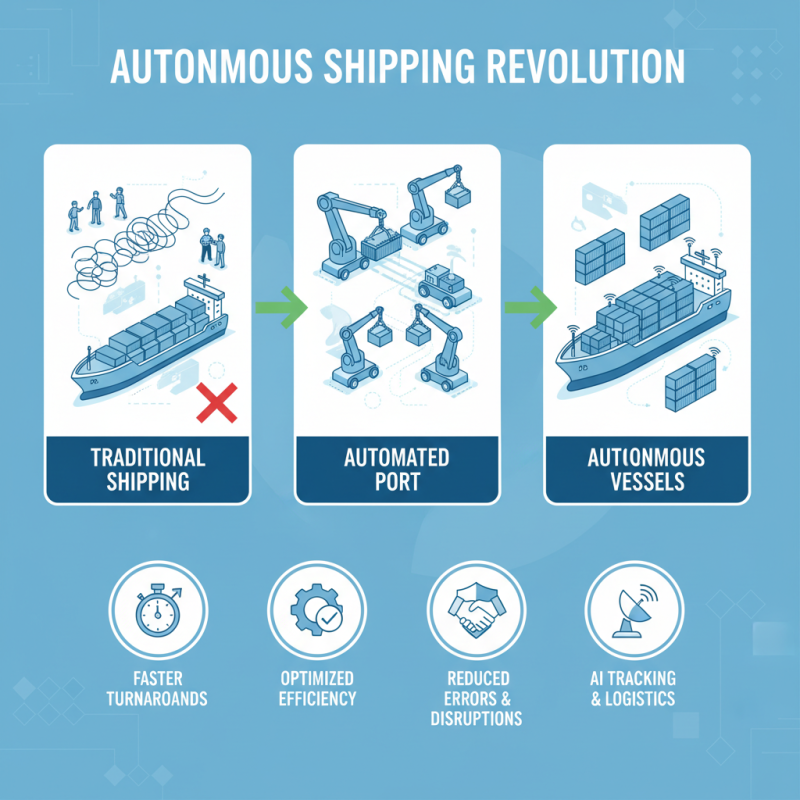
The advent of autonomous shipping technology marks a significant paradigm shift in the cargo container usage within the shipping industry. As vessels become increasingly automated, the efficiency of container loading and unloading processes is expected to improve dramatically. Autonomous ships can streamline operations, reducing turnaround times in ports and minimizing disruptions related to human error or labor disputes. This technological evolution will facilitate a more dynamic and responsive supply chain, where containers are managed and tracked using advanced sensors and AI-driven systems.
Moreover, autonomous shipping is likely to transform the design and function of cargo containers themselves. With an increase in data collection capabilities, containers will become smarter, equipped with sensors that monitor temperature, humidity, and security throughout their journey. This innovation not only enhances cargo safety but also optimizes storage space and loading strategies, making it possible to maximize the utilization of each container. As shipping companies adopt autonomous fleets, the reliance on traditional operational models will diminish, leading to a reimagining of logistics frameworks that prioritize automation and real-time data analytics. Ultimately, the integration of autonomous technologies promises to redefine cargo container usage, paving the way for more sustainable and efficient shipping practices.