China Top PE Coloring Masterbatch Suppliers?

China has become a major production base for polyethylene color concentrates, serving packaging, agricultural film, pipe, cable, and consumer goods manufacturers. This makes supplier selection more complex than comparing price lists. A reliable evaluation should examine pigment dispersion, carrier compatibility, batch consistency, technical support, and export experience.

Industry research supports this wider view. Grand View Research identifies packaging as a leading application area for the global masterbatch market. Smithers also reports continuing demand for color and additive solutions in flexible packaging and durable plastics. PlasticsEurope’s market publications show polyethylene remains one of the most widely used polymer families worldwide. These findings help explain why China’s PE Coloring Masterbatch suppliers compete across both high-volume commodity grades and specialized formulations.

However, supplier rankings are rarely absolute. Public reports often combine color, additive, black, and white masterbatch segments. Their market boundaries may differ. Therefore, this guide focuses on practical evidence, including factory capability, laboratory testing, pigment quality, technical documentation, and customer feedback. A strong supplier should provide a clear technical data sheet, recommended let-down ratio, migration information where relevant, and samples for production trials.

Small details matter.

A uniform pellet surface can indicate stable processing, but it cannot prove final performance. Buyers should test color strength, melt flow, heat stability, and dispersion under actual extrusion conditions. This article reviews leading Chinese suppliers through an experience-based and evidence-conscious lens, while recognizing that product fit matters more than popularity. Supplier claims deserve verification. That is where careful purchasing begins.
China Top PE Coloring Masterbatch Suppliers?

What Is PE Coloring Masterbatch?

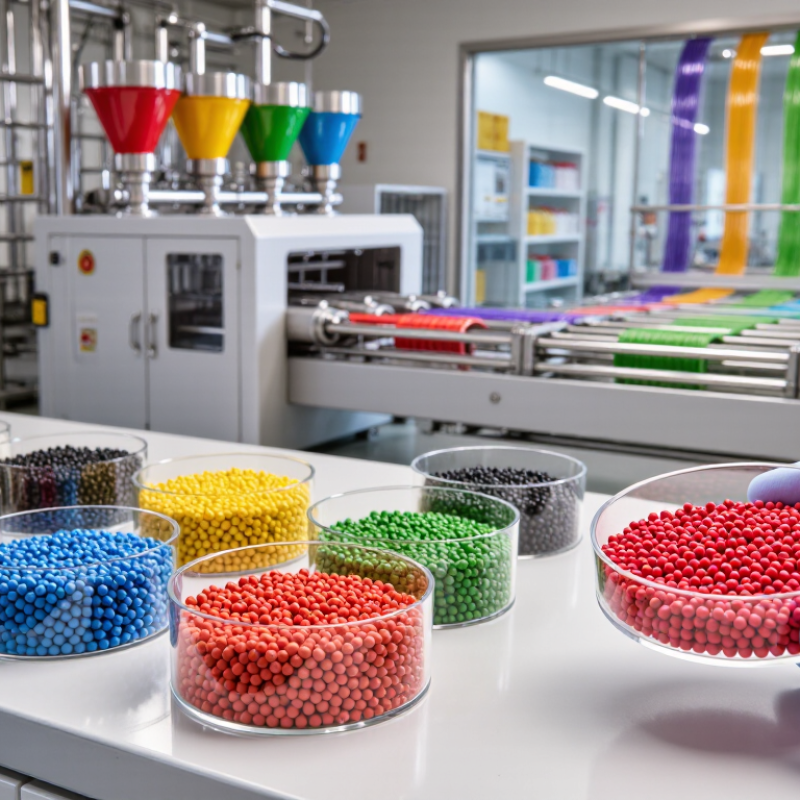
PE coloring masterbatch is a concentrated plastic additive used to color polyethylene products. It combines pigments, carrier resin, and carefully selected processing aids. The pigment is distributed through the carrier during controlled compounding. Manufacturers then mix the masterbatch with natural PE resin during extrusion or molding. Small pellets, strong color.

The carrier resin should match the application, such as film, pipe, bottle, or injection-molded parts. A suitable masterbatch improves dispersion and reduces pigment dust in the workshop.

Typical use levels range from 1% to 5%, but the correct ratio depends on shade strength and product thickness. Operators should check melt temperature, screw speed, and residence time. Excessive heat can weaken color stability or create surface streaks.

Reliable suppliers usually provide pigment information, dosage guidance, technical data, and batch traceability. Buyers should request molded samples, light-resistance results, migration data, and compatibility testing before regular production. A color that looks correct on a white laboratory plaque may appear different in a thin film. This happens often. Production trials matter more than attractive samples. Color matching is rarely perfect on the first attempt, especially when recycled PE or different resin grades are involved. Careful suppliers discuss these limitations instead of promising identical results in every process.


How to Evaluate PE Coloring Masterbatch Suppliers

China Top PE Coloring Masterbatch Suppliers?

Evaluating PE coloring masterbatch suppliers requires more than comparing prices. Request a representative sample and test it in your actual polyethylene process. Check color strength, dispersion, melt flow, and heat stability. A good supplier should provide a clear technical data sheet and batch-specific certificate of analysis. Ask how pigment selection changes across film, injection molding, and blow molding applications. Different processing temperatures can produce different results.

Traceability matters. Reliable suppliers should explain raw material sources, production controls, and storage conditions. Ask for samples from several batches, not only one polished sample. Compare them under identical dosage, temperature, and lighting. Small shade differences may become visible in large film rolls. Also review packaging quality, delivery consistency, technical response time, and complaint handling. Documentation should be easy to verify, not vague or incomplete. No supplier is perfect. A rushed evaluation can still miss costly production problems.

Tips: Request a trial order before signing a long-term contract. Test moisture, dispersion, and color deviation with your own equipment. Confirm compliance documents for your target market and application. Ask for written recommendations on dosage and processing temperature. Keep retained samples for later comparison. A low price may hide unstable concentration. Do not judge performance from color alone. Evaluate the whole production result.

Leading PE Coloring Masterbatch Suppliers in China

Leading PE Coloring Masterbatch Suppliers in China

China’s leading PE coloring masterbatch suppliers usually support film, injection, blow molding, and extrusion applications. Experienced suppliers should explain pigment selection, carrier compatibility, and recommended dosage clearly. Their technical teams often provide trial samples for controlled testing. This matters when producing shopping bags, containers, pipes, or agricultural films.

Reliable suppliers should offer batch records, color measurements, and basic quality certificates. Ask for data on dispersion, heat stability, migration performance, and moisture control. A good supplier also tracks raw material lots. That detail can reduce shade variation between deliveries. However, a strong supplier may still produce a weak color match under different processing conditions. Real production trials remain necessary.

Tips: Request a small trial batch before signing a large order. Test it on your actual PE resin, equipment, temperature, and screw speed. Compare color under daylight and factory lighting. Check packaging seals carefully. Ask how complaints are investigated and corrected. Clear answers show practical reliability. Cheap prices can hide higher dosage needs. That mistake is easy to miss. Suppliers with responsive engineers, stable testing procedures, and transparent documentation are usually safer choices for long-term cooperation.

China Top PE Coloring Masterbatch Suppliers? - Leading PE Coloring Masterbatch Suppliers in China

Supplier Evaluation Dimension Typical Chinese Supplier Range What Buyers Should Verify Relevance to PE Applications
Carrier Resin Polyethylene-based carrier, including LDPE, LLDPE, HDPE, or a compatible blend Carrier compatibility, melt flow rate, processing temperature, and food-contact status where required Supports uniform dispersion and reduces the risk of gels, streaks, and poor surface appearance
Pigment Type Organic pigments, inorganic pigments, carbon black, titanium dioxide, or effect pigments Pigment identity, purity, heavy-metal compliance, heat stability, and migration performance Determines color strength, opacity, weatherability, heat resistance, and regulatory suitability
Recommended Let-Down Ratio Commonly 0.5%–5.0%, depending on pigment concentration and required color depth Technical data sheet, shade card, target color, film thickness, and application-specific dosage guidance Affects production cost, color consistency, mechanical properties, and final opacity
Typical Product Forms Uniform pellets or granules designed for extrusion, blown film, injection molding, or blow molding Pellet size consistency, dust level, feeding behavior, and compatibility with automatic dosing equipment Improves feeding accuracy and minimizes processing interruptions
Color Consistency Control Usually controlled through laboratory color measurement and production batch comparison Color measurement method, reference standard, batch-to-batch tolerance, and approval sample process Important for packaging, consumer products, films, pipes, and molded parts requiring repeatable shades
Heat Resistance Product-specific; many PE grades are formulated for processing temperatures commonly used in polyethylene conversion Maximum recommended processing temperature, residence-time limits, and color-change test results Prevents fading, discoloration, pigment degradation, and loss of appearance during processing
Light and Weather Resistance Varies from standard indoor grades to enhanced outdoor grades using suitable pigment systems and stabilizers Blue-wool rating, accelerated weathering data, UV exposure conditions, and intended service environment Essential for agricultural film, outdoor containers, construction products, and long-life plastic articles
Quality Management Quality systems commonly include incoming-material inspection, laboratory testing, and batch release procedures Quality certificate, inspection records, traceability system, retained samples, and corrective-action process Reduces variation in color, dispersion, moisture, pellet quality, and production performance
Regulatory Documentation Documentation may include safety data sheets, technical data sheets, and declarations for applicable markets Applicable food-contact, restricted-substance, toy-safety, packaging, and environmental compliance documents Required when colored PE products are used for food packaging, toys, medical items, or regulated exports
Customization Capability Custom shades, carrier selection, pigment concentration, opacity, and application-specific formulations are commonly available Sample development procedure, color-matching method, development charges, and approval timeline Helps match brand colors, recycled-resin variations, thin-gauge films, and demanding molding conditions
Packaging Options Common options include moisture-resistant bags, lined sacks, cartons, and palletized export packaging Net weight per bag, pallet configuration, moisture protection, labeling, and shipping-mark requirements Protects pellets during storage and transport and supports efficient warehouse handling
Buyer Selection Priority Best evaluated through application trials rather than price alone Compare dispersion, color strength, dosage, compliance, delivery reliability, technical support, and total cost A structured trial and documentation review provides a more reliable basis for selecting a PE coloring masterbatch supplier

Note: The ranges and evaluation points above are industry reference guidance. Actual performance depends on pigment chemistry, carrier resin, processing conditions, product specification, and the supplier’s documented test results.

Key Products and Services Offered by Chinese Suppliers

Chinese PE coloring masterbatch suppliers offer more than standard color concentrates. Their key products include black, white, and custom-color masterbatches for films, pipes, packaging, and molded products. Many suppliers use PE-compatible carrier resins, organic pigments, inorganic pigments, and selected processing additives. The correct formulation depends on melt flow, loading level, processing temperature, and final-use requirements. Color matching is often supported through laboratory samples and digital color measurement. However, a sample that looks perfect under factory lighting may appear different in daylight.

Services usually include formulation development, small-batch trials, quality inspection, and production scaling. Experienced technical teams can check dispersion, moisture, filter pressure, and color stability. Some suppliers also provide customized pellet sizes, packaging, labeling, and export documentation. Reliable factories should share test data, production controls, and traceable batch information. Ask about pigment concentration, recommended dosage, and compatibility before ordering. No supplier is perfect. Communication gaps can still cause costly color variation.

Tips: Request a physical sample, not only a digital color image. Test it on your actual PE resin and equipment. Compare samples under several light sources. Confirm storage conditions and shelf life. Keep an approved reference plaque for future batches. A written specification helps, but practical trials remain essential.

How to Select the Right Supplier for Your Application

China Top PE Coloring Masterbatch Suppliers?

How to Select the Right Supplier for Your Application

Selecting a Chinese PE coloring masterbatch supplier requires more than comparing price lists. According to Grand View Research, the global masterbatch market was valued at about USD 12.1 billion in 2023. This scale increases supplier choice, but also increases quality variation. Start with carrier compatibility, pigment dispersion, melt flow rate, and recommended let-down ratio. A PE film supplier may need different performance from a rotational molding producer. Request trial samples using your actual resin, extrusion temperature, screw speed, and target color. A small laboratory match can hide production problems.

Ask for a current certificate of analysis, technical data sheet, and batch-to-batch color records. Important checks include moisture, ash content, pigment concentration, migration performance, and weathering resistance. For regulated packaging, verify applicable food-contact documentation before purchase. PlasticsEurope reported global plastics production of approximately 414 million tonnes in 2023, showing how small formulation errors can affect large production volumes. Supplier audits should examine weighing systems, dispersion equipment, retained samples, and complaint handling. A reliable supplier explains deviations instead of promising perfect results. That matters.

Do not select solely by the lowest offer. A cheaper masterbatch may require higher dosage, create filter blockage, or cause shade drift after cooling. I would test at least three production batches, not one. My own practical caution is simple: even a strong technical report cannot replace a factory trial under real conditions.

Get a Quote
910-483-7828