What Are the Top Hardox Liner Types in 2026?

Wear liners do a quiet job until a chute plugs, a hopper thins, or a dump body needs repair. The scale is substantial: the World Steel Association reported 1.88 billion tonnes of global crude steel production in 2024, while the USGS estimated world iron ore mine production at about 2.5 billion tonnes. These figures do not measure liner wear directly, but they show the scale of material handling where abrasion-resistant plate can matter.

A Hardox Liner is not one universal product. Common choices include Hardox 400 and 450 for general abrasion resistance, Hardox 500 Tuf for wear combined with impact, and harder grades such as Hardox 550 or 600 for severe sliding abrasion. SSAB’s grade and application guidance is useful for comparing hardness, toughness, and fabrication requirements. The right fit still depends on the material, impact angle, plate thickness, and maintenance access. Hardness alone is an imperfect shortcut.

This guide compares the leading Hardox liner types for 2026 and explains where each may suit chutes, crushers, hoppers, and truck bodies. Expect practical trade-offs, not a magic grade. Even good specifications cannot replace inspecting the actual wear pattern; that detail is easy to miss. A liner that lasts longer on paper may be harder to cut, weld, or replace in a tight maintenance window.
What Are the Top Hardox Liner Types in 2026?

What Are Hardox Liners and How Do They Protect Equipment?

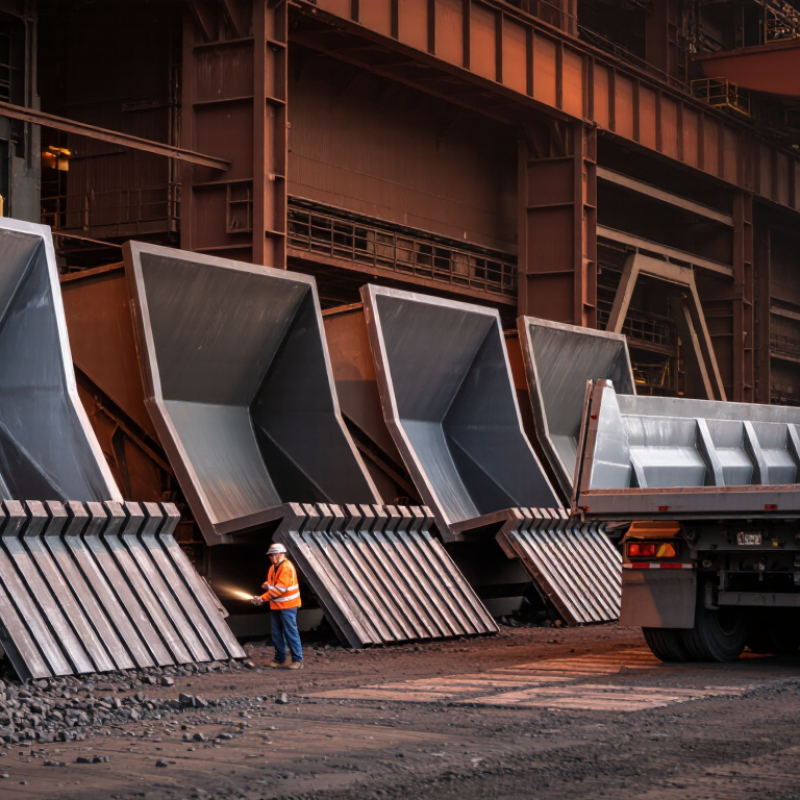
A Hardox liner is a replaceable plate made from abrasion-resistant steel. It shields equipment surfaces from sliding rock, gravel, ore, and other abrasive material. Liners are commonly fitted inside chutes, hoppers, dump bodies, and buckets. As material strikes or scrapes the plate, the liner takes much of the wear instead of the equipment’s main structure. Less direct wear.

Protection depends on more than steel hardness. Plate thickness, support, fit, and the type of material all matter. For example, sharp stones dropping onto a poorly supported panel can cause impact damage, even when the surface resists abrasion. Gaps around fasteners may also trap material and accelerate local wear. Details count.

In practice, operators should inspect high-wear areas for thinning, cracks, loose fasteners, and uneven contact. A liner does not stop wear; it makes wear more manageable and can simplify repairs by allowing a damaged plate to be replaced. It may also add weight, and choosing a very thick plate is not automatically better. The right design depends on the equipment, load, and operating conditions, so field wear patterns deserve careful review.


Which Hardox Grades Are Commonly Used for Liners in 2026?

Hardox 400, 450, and 500 are commonly considered for wear liners, but the right grade depends on what the liner actually faces. Hardox 400 suits moderate abrasion and situations where forming or repair matters. Hardox 450 is a frequent middle-ground choice for chutes, truck bodies, and material-handling equipment. It balances wear resistance with practical fabrication needs. Impact changes everything.

Hardox 500 can be useful where sliding abrasive material causes rapid surface loss, such as in transfer points handling crushed rock. Its higher hardness may extend service life, but it can make bending and welding more demanding. Plate thickness, joint design, and approved fabrication procedures matter as much as the grade number. Not always.

A sensible selection starts with the wear pattern: fine, fast-moving particles behave differently from large rocks that strike the plate. Check impact severity, liner support, replacement access, and the cost of downtime. A harder grade is not automatically the better choice; excessive impact can still damage a liner. For a reliable specification, compare current grade data and fabrication guidance with the actual operating conditions. Small site details can change the answer.

What Are the Main Hardox Liner Types by Equipment and Application?

Liner choice depends on the equipment and the material it handles. In dump trucks and haul bodies, floor liners face sliding rock, while side liners take impact during loading. Replaceable floor panels can make repairs more manageable in heavily worn zones. Fit matters. Poorly aligned seams may catch material and wear unevenly.

Hoppers and chutes need liners matched to the flow path. At transfer points, impact-resistant plate can protect the wall where falling aggregate hits; smoother liners may help material move through less abrasive sections. Crusher feed areas often need robust impact protection, while conveyor transfer chutes may benefit from replaceable panels near the impact zone. Details vary with feed size and moisture. Wet fines can cling where dry rock flows freely.

Thickness alone is not a reliable selection rule. A heavier liner may resist wear, but it adds weight and can make replacement harder. That trade-off deserves a site check. Look for wear patterns, impact marks, and buildup during inspections, then adjust the liner layout where conditions demand it.

How Do Hardox Liner Designs Differ in Shape and Construction?

Liner shape determines how well a chute or hopper handles impact, sliding wear, and material buildup. Flat plates suit straight walls and are simple to replace. Curved sections follow transfer points, where rock changes direction and strikes the surface. Modular tiles fit localized wear zones, but their joints can catch fine material. Fabricated liners may combine a base plate with replaceable wear pieces; the added seams need careful inspection.

Construction matters as much as shape. A one-piece plate has fewer joints, while bolted sections allow faster replacement in confined spaces. Countersunk fasteners reduce protrusions, but thin plates can distort around holes under impact. ASTM G65-16(2021) compares abrasion resistance using a dry-sand/rubber-wheel test; Procedure A runs for 6,000 wheel revolutions under a 130 N load. It is a useful material comparison, not a direct prediction of service life. Actual wear also depends on particle size, impact angle, moisture, and plate support.

Tips: Map wear after a real operating interval, then compare the pattern with liner seams and material flow. A neat drawing can still miss an awkward maintenance reach. Check bend radii, backing contact, and bolt access before fabrication. Recheck after installation; field conditions often expose assumptions the design team did not notice.

How Can You Select and Maintain the Right Hardox Liner?

Selecting a wear liner starts with the material, not the hardness rating. Quenched-and-tempered steel plate suits sliding abrasion with moderate impact; overlay plate can help where wear is concentrated. Ceramic-composite liners may resist severe sliding wear, but sharp impacts can crack them. Check the feed size, drop height, moisture, and whether material slides or strikes the wall. A 20-millimeter rock landing on a chute behaves differently from fine, damp ore moving across it.

Compare test results carefully. ASTM G65 measures abrasion using a dry-sand and rubber-wheel method, reporting material loss by volume. Lower loss suggests better performance in that test, but it does not predict service life in every chute. Ask suppliers for test conditions and certificates, then inspect the liner after a trial period. Measure remaining thickness at fixed points; a phone photo beside a ruler can reveal uneven wear. Hardness alone can mislead.

Tips: Keep a simple wear map. Check bolt tightness and cracks during scheduled shutdowns. Replace loose panels before impact damage spreads. A small oversight matters.

Selection is iterative. If wear concentrates near an inlet, adjust the liner layout or add local protection rather than specifying maximum hardness everywhere. Record tonnage, material moisture, and replacement dates. The records may be imperfect, but they are more useful than memory when choosing the next liner.

What Are the Top Hardox Liner Types in 2026? - How Can You Select and Maintain the Right Hardox Liner?

Liner Type Common Applications Best Suited For Key Selection Factors Maintenance Guidance
Flat wear plate Hopper walls, bin floors, truck bodies, transfer points, and equipment panels. Sliding abrasion from bulk solids where a relatively flat, replaceable wear surface is practical. Assess material abrasiveness, impact level, plate thickness, available space, attachment method, and the structural capacity of the supporting surface. Inspect high-wear zones regularly. Measure remaining thickness at repeatable locations and replace plates before wear reaches the supporting structure or fasteners.
Formed or bent liner Chutes, curved transitions, buckets, and equipment with angled or contoured surfaces. Applications where a close-fitting shape helps guide material and limit gaps where solids can collect. Confirm the required bend radius and forming procedure with the plate supplier. Consider plate thickness, design geometry, attachment access, and the direction of material flow. Check bends, edges, welds, and attachment points for cracking, loosening, or localized wear. Avoid unapproved field heating or forming.
Impact liner Feed chutes, dump zones, crusher inlets, and points where material changes direction or drops onto a surface. Areas exposed to repeated impact as well as abrasion, particularly where large or heavy material strikes the liner. Evaluate impact energy, drop height, material size, support behind the plate, and whether a resilient backing or different liner material is needed. Inspect for dents, cracks, loose fixings, and wear around impact zones. Check the supporting structure because liner damage can hide underlying deformation.
Replaceable wear panel Chute sections, conveyor transfer points, screening equipment, and high-wear areas that need planned replacement. Equipment where access for changing smaller sections is easier than replacing a large continuous plate. Plan panel dimensions, lifting and handling, access for removal, joint layout, fastening method, and the risk of material catching at panel edges. Use a consistent inspection schedule and record wear by panel location. Replace worn panels promptly and check joints and fasteners during each service interval.
Wear strip or edge liner Bucket lips, side edges, scraper contact zones, and narrow surfaces subject to concentrated wear. Localized abrasion where reinforcing or replacing the full surface would be unnecessary. Match strip placement to the actual wear pattern. Check edge geometry, attachment access, clearances, and whether the added material affects operation. Inspect strip ends and attachment points for lifting or cracking. Replace strips before wear exposes the base component or changes its working profile.
Perforated or screened wear plate Screen decks, grizzly sections, and applications that require material to pass through openings while the surface resists wear. Applications combining screening or drainage with abrasive contact. Consider opening size and pattern, required open area, material flow, support spacing, impact, and the effect of openings on plate strength. Check for blocked openings, cracking between openings, and uneven wear. Clean openings safely and inspect supporting members for damage.
Selection and upkeep checklist All liner installations. Choosing a liner configuration and extending reliable service life. Identify the wear mechanism, material characteristics, impact conditions, operating temperature, geometry, installation constraints, and acceptable downtime. Select plate grade and thickness using current supplier data and engineering requirements. Keep inspection records, compare thickness measurements over time, secure fasteners, repair damaged joints, and follow approved cutting, welding, and forming procedures. Use suitable isolation and protective equipment during inspection and repair.
Get a Quote
910-483-7828