Choosing the right Glass Magnesium Rock Wool Sandwich Panel depends on more than appearance or price. Each panel type serves a different building condition, from industrial walls to cleanroom partitions and fire-rated enclosures. Core density, surface coating, joint design, and panel thickness can change performance significantly. A 50-millimeter panel may suit an indoor partition, while a thicker panel may better control heat loss in a cold storage area.
This guide examines common panel types, including flat-faced, corrugated, concealed-fixing, fire-resistant, and hygienic options. It compares their thermal insulation, acoustic control, fire behavior, moisture resistance, and installation requirements. Small details matter. A poorly sealed joint can allow drafts, moisture, or sound leakage. Reliable selection should include tested fire ratings, documented thermal values, factory quality records, and clear installation instructions. Manufacturer claims deserve verification.
Practical evaluations also show that no single panel type fits every project. A textured exterior may improve durability, yet it can complicate cleaning. Higher rock wool density can support better fire performance, but it may increase weight and handling demands. These trade-offs are easy to overlook. Site climate, structural spacing, maintenance access, and local building requirements should guide the final choice. This article offers a clear comparison for designers, contractors, and buyers who need dependable information before ordering. Some recommendations may still require professional review, especially where fire safety or hygiene standards are strict.
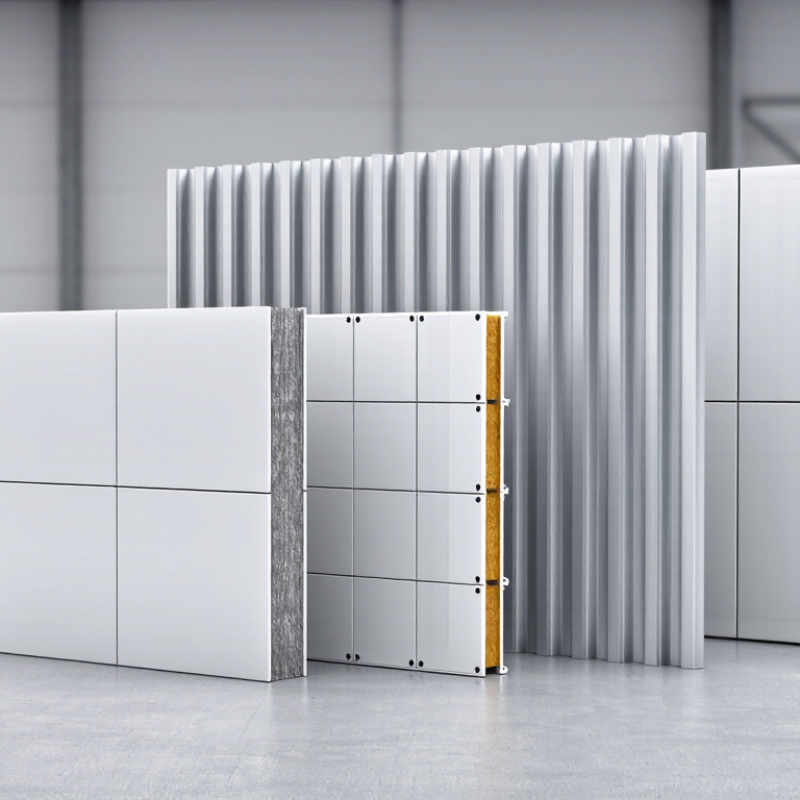
Glass magnesium rock wool sandwich panels combine rigid glass magnesium boards with a mineral wool core. The outer boards provide a flat, durable surface for wall and ceiling systems. Rock wool sits between them as the main insulation layer. Its fibrous structure traps air and slows heat movement. It also helps reduce sound transmission between rooms. The core is usually bonded to the facings under controlled pressure. This creates a stable composite panel with consistent thickness. In real projects, joint quality matters as much as panel selection.
Panel types mainly differ by core density, thickness, facing finish, and edge profile. Higher-density rock wool can improve fire resistance and impact performance, but it may increase weight. Thicker cores usually provide better thermal insulation. Smooth facings suit clean interior spaces, while textured or coated surfaces can support demanding service areas. Tongue-and-groove edges may reduce visible gaps during installation. Still, no panel works perfectly in every climate. Moisture exposure, fastener spacing, and cutting accuracy can change performance. A small damaged edge may allow water into the core. Installers should seal joints carefully and verify the tested fire, thermal, and acoustic ratings for the complete assembly. Local building requirements and qualified engineering review remain essential.

Glass magnesium rock wool sandwich panels are best classified through surface finish and board type. Surface finish affects appearance, cleaning, and installation tolerance. Smooth panels suit offices, corridors, and controlled industrial rooms. Their flat faces reveal dents quickly. Embossed finishes hide minor marks better. Textured surfaces can improve visual depth, but they collect dust around deeper patterns. Pre-painted finishes provide stronger color control and easier maintenance. However, coating quality still depends on substrate preparation and edge sealing.
Glass magnesium board type changes the panel’s practical role. Standard boards support general wall and ceiling applications. Fire-resistant grades are selected where tested reaction-to-fire performance is required. Moisture-resistant grades suit humid interiors, but they are not automatically waterproof. Structural or reinforced boards may improve screw holding and impact resistance. Installers should check density, thickness, reinforcement, and declared test results. The classification is useful, but not perfectly clean.
The 2023 UNEP Global Status Report states that buildings and construction produced 37% of global operational energy and process-related carbon emissions in 2022. The IEA’s 2024 buildings analysis also places building operations near 30% of global final energy demand. These figures strengthen the case for efficient envelope systems. Still, a thicker panel is not always better. Joint design, thermal bridging, and damaged edges can reduce real performance. A small site inspection often reveals more than a polished brochure.
Glass magnesium rock wool sandwich panels are commonly classified by core density and thermal performance. Low-density cores are lightweight and suitable for walls where moderate insulation is acceptable. Medium-density cores offer a practical balance between thermal resistance, strength, and handling. High-density cores provide better compression resistance and acoustic control, but they are heavier and may not always insulate better.
Rock wool’s thermal conductivity often falls near 0.035–0.045 W/m·K, depending on density, fiber structure, moisture, and manufacturing quality. A thicker core usually delivers greater thermal resistance than density alone. This point is easy to overlook. Higher density can improve stability, yet excessive compression may reduce the trapped air that supports insulation. Real project testing should guide the final selection.
Tips: Compare declared thermal conductivity, core thickness, joint design, and moisture protection together. Check the panel’s tested performance under local temperature conditions. Field experience shows that poorly sealed joints can weaken an otherwise efficient envelope. I would not choose a panel from density figures alone. Fire resistance, fastening quality, and installation tolerances also deserve careful review. A small gap around a panel edge can become a noticeable heat-loss path.
Glass magnesium rock wool sandwich panels vary by core density, facing thickness, joint design, and surface treatment. For fire resistance, choose noncombustible rock wool with tested glass magnesium facings. Higher-density cores can slow heat transfer and preserve panel stability during exposure. Yet performance belongs to the complete assembly, not the panel alone. Seams, penetrations, fasteners, and supporting frames can change the result. Ask for tested fire ratings under the intended installation conditions.
For soundproofing, denser rock wool usually improves airborne noise reduction, especially around workshops and equipment rooms. Panel thickness also matters. However, poor joints can create small acoustic leaks that weaken an otherwise strong specification. For moisture control, select treated facings, sealed edges, and suitable vapor-control details. Glass magnesium boards can resist humidity, but they are not automatically waterproof. Condensation may still form inside walls when insulation and ventilation are poorly coordinated. This is often overlooked.
Tips: Match panel density to the actual risk. Check fire, acoustic, and moisture test data from recognized laboratories. Inspect corners and cut edges during installation. A thicker panel is not always better. In practice, drainage, airtight joints, and careful detailing often decide long-term performance. Recheck the design when the building’s climate or interior humidity changes.
Top Glass Magnesium Rock Wool Sandwich Panel Types?
Applications and Selection Criteria for Different Building Requirements
Glass magnesium rock wool sandwich panels combine non-combustible mineral insulation with rigid, moisture-resistant facings. Their performance depends on the complete assembly, not the core alone. In industrial workshops, the panels can reduce heat transfer and control reverberation around machinery. For cold rooms, tight joints and suitable vapor control matter more than nominal thickness. Clean interiors may also benefit from smooth, low-maintenance surfaces.
Different buildings require different panel configurations. Warehouses usually prioritize fire resistance, span capability, and fast installation. Office partitions may need better acoustic separation and a refined surface finish. Agricultural buildings face dust, condensation, and chemical exposure, so edge protection and coating compatibility deserve careful review. In humid coastal areas, installers should inspect fasteners and cut edges regularly. Small gaps can become expensive problems.
Selection should begin with the required fire rating, thermal target, acoustic performance, and panel dimensions. Verify test reports for the actual thickness, joint design, and support spacing. Do not rely on a generic certificate. Check whether the panel suits the roof, wall, or partition system. On site, uneven framing can distort joints and reduce airtightness. Experienced installers dry-fit several panels before final fastening. This simple step prevents many alignment errors. Yet it is often skipped. Designers should also allow for maintenance access, drainage, and future repairs. A thicker panel is not automatically the best choice. Weight, handling limits, local climate, and approved building regulations must guide the final specification.
| Panel Type | Typical Core and Facing | Typical Thickness | Key Performance Characteristics | Recommended Applications | Main Selection Criteria |
|---|---|---|---|---|---|
| Standard Wall Panel | Rock wool core, commonly 80–140 kg/m³, faced with glass magnesium boards on both sides | 50–150 mm | Good thermal insulation, non-combustible mineral core, improved sound absorption, rigid and relatively lightweight construction | Office buildings, commercial partitions, schools, hospitals, workshops and general industrial walls | Required U-value, fire classification of the complete assembly, panel span, joint design and indoor humidity conditions |
| Fire-Resistant Wall Panel | Higher-density rock wool core, typically 120–180 kg/m³, with fire-resistant glass magnesium facings | 75–200 mm | High resistance to flame spread; mineral wool is generally non-combustible, while the final fire rating depends on the tested panel assembly | Fire compartments, plant rooms, warehouses, logistics buildings, escape-route walls and high-risk industrial areas | Required fire-resistance period, reaction-to-fire class, joint behavior, penetrations, support system and local building regulations |
| Roof Sandwich Panel | Rock wool core with glass magnesium inner and outer boards; exterior surface may receive a waterproof protective finish | 80–200 mm | Thermal resistance, fire protection and acoustic control; requires properly sealed joints and adequate roof drainage | Factories, warehouses, agricultural buildings, sports halls and low- to medium-slope roof systems | Roof slope, snow and wind loads, waterproofing details, vapor-control strategy, drainage and maintenance access |
| Acoustic-Performance Panel | Open-textured or higher-density rock wool core with carefully sealed glass magnesium facings and acoustically designed joints | 75–150 mm | Rock wool helps absorb airborne sound; actual sound reduction depends on thickness, density, joints, flanking paths and room construction | Machine rooms, music and media spaces, generator rooms, traffic-facing buildings and industrial enclosures | Target sound reduction, dominant frequency range, reverberation control, airtightness and treatment of openings and service penetrations |
| External Insulated Wall Panel | Medium- or high-density rock wool core with weather-resistant glass magnesium outer board and interior lining board | 100–200 mm | Low thermal conductivity, commonly about 0.035–0.045 W/m·K for rock wool, with good dimensional stability and fire performance | Cold-storage shells excluding refrigeration-room systems, production buildings, public buildings and energy-efficient envelopes | Climate zone, target thermal transmittance, thermal bridges, moisture exposure, vapor diffusion and exterior coating durability |
| Cleanroom and Hygienic Panel | Rock wool core enclosed by smooth, sealed glass magnesium boards with low-dust joints and compatible surface coatings | 50–150 mm | Smooth cleanable surfaces, low particle release when correctly finished, fire resistance and moderate thermal insulation | Food-processing areas, laboratories, controlled production rooms, medical support spaces and pharmaceutical facilities | Cleanability, joint tightness, chemical resistance, hygiene requirements, pressure differentials, moisture resistance and certification needs |
| High-Humidity Interior Panel | Moisture-resistant glass magnesium boards with a rock wool core and sealed edges; fasteners and joints require compatible protection | 50–120 mm | Better resistance to intermittent humidity than ordinary gypsum-based linings; performance depends on formulation, sealing and exposure conditions | Utility rooms, commercial kitchens, wash areas, pool-support spaces and humid industrial interiors | Continuous versus intermittent moisture, water exposure, ventilation, edge sealing, fastener corrosion resistance and surface-finish compatibility |
| Heavy-Duty Industrial Panel | Higher-density rock wool core with thicker glass magnesium facings and reinforced joint or framing details | 100–200 mm | Enhanced rigidity, impact resistance and fire insulation; heavier construction requires suitable handling and supporting members | Factories, workshops, distribution centers, equipment enclosures and buildings exposed to frequent impact or vibration | Impact level, panel span, fixing spacing, structural loads, lifting method, joint strength and replacement or repair requirements |