China Top Structural Grating Manufacturers and Suppliers

China’s Structural Grating industry serves factories, platforms, walkways, drainage areas, and industrial access systems worldwide. This guide introduces leading Structural Grating manufacturers and suppliers in China, focusing on practical selection rather than simple company lists.

Experienced buyers usually examine material grade, load capacity, panel dimensions, surface treatment, and production consistency. Common options include galvanized steel, stainless steel, aluminum, and specialized alloys. Each material performs differently under moisture, chemicals, impact, and repeated foot traffic. Details matter.

A reliable supplier should provide clear drawings, technical data, inspection records, and traceable quality procedures. Factory audits can reveal more than polished brochures. Look for cutting accuracy, weld quality, flatness, and secure packaging. Small defects may become expensive installation problems. Not every supplier offers the same engineering depth. That is worth remembering.

The strongest manufacturers often support customized bearing bars, cross bars, clips, stair treads, and platform layouts. They should also explain applicable standards and testing methods without making vague promises. Project experience matters, especially for coastal plants, heavy workshops, and elevated maintenance platforms.

Still, no supplier is perfect. A low price may reflect thinner material, limited testing, or weaker after-sales support. A detailed quotation can prevent confusion, but it cannot replace independent verification. Buyers should compare samples, certifications, delivery records, and communication quality before placing large orders. This review aims to provide a balanced starting point for engineers, contractors, distributors, and procurement teams seeking dependable Chinese Structural Grating partners.

China Top Structural Grating Manufacturers and Suppliers

What Is Structural Grating and Where Is It Used?

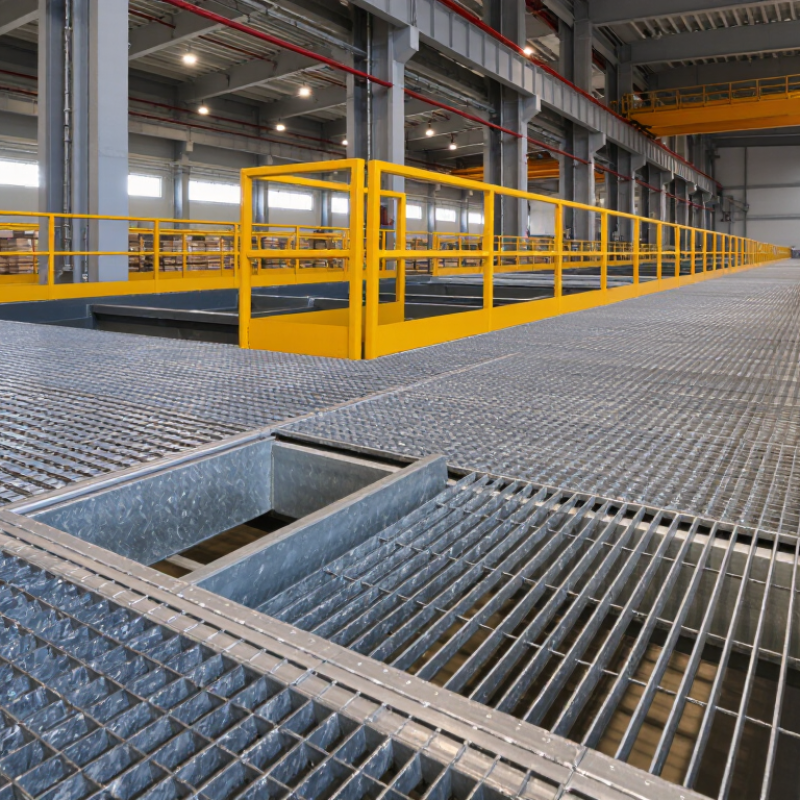
Structural grating is a load-bearing platform made from steel, stainless steel, or reinforced aluminum bars. Bearing bars carry the main load. Cross bars lock them into a stable grid. The open pattern reduces weight while allowing light, air, water, and debris to pass through.

It is used on industrial walkways, stair treads, drainage covers, mezzanines, platforms, and maintenance areas. In wastewater plants, the grid helps workers cross wet zones while limiting standing water. On offshore facilities and chemical sites, corrosion-resistant materials can improve service life. Engineers select bar depth, spacing, surface finish, and load rating according to span, traffic, and local conditions. A serrated surface can improve grip, but it may feel harsh under thin footwear. That detail is easy to overlook.

Suppliers should provide clear drawings, material certificates, load tables, and traceable quality records. Experienced buyers also check welding consistency, panel dimensions, edge treatment, and packing protection. A site measurement should happen before production. Small errors can create difficult installation gaps. Structural grating is not automatically suitable for every floor; heavy vehicles, impact loads, and fire conditions may require a separate engineering review.

Tips: Keep spans short where practical, and inspect supports before installation. Do not judge strength by appearance alone. Ask for tested load data, verify the finish fits the environment, and plan safe lifting points.

Key Materials and Manufacturing Processes for Structural Grating

Structural grating starts with a material decision, not a welding machine. Carbon steel offers strength and economy for platforms, stairs, and industrial walkways. Stainless steel suits washdown zones, corrosive vapors, and hygiene-sensitive facilities. Aluminum reduces dead load, but it needs careful span and deflection checks. FRP resists corrosion and insulates electrically, although its fire and UV performance requires verification. The World Steel Association reported 1.88 billion tonnes of crude steel production in 2024. That scale supports broad steel availability, but availability never replaces grade control.

Manufacturers commonly use welded, press-locked, or swage-locked construction. Welded grating joins bearing bars and cross rods at fixed intersections. Press-locked grating forms deep cross-bar slots, creating a clean surface without visible welds. Serrated bearing bars improve traction in oily or wet areas. Hot-dip galvanizing then adds a zinc barrier, with surface preparation strongly affecting durability. The International Energy Agency estimates that steel production creates roughly 7–9% of global energy-related emissions. Therefore, recycled content, service life, and repairability deserve attention. I still find specifications too focused on price. That is a costly blind spot.

Tips: Confirm load tables, span direction, open-area requirements, and slip resistance before ordering. Request material certificates and coating records. Measure twice. Check every cutout. Small errors can delay installation, even when the grating itself is well made.

China Top Structural Grating Manufacturers and Suppliers - Key Materials and Manufacturing Processes for Structural Grating
Material Category Common Material Designation Typical Manufacturing Process Surface Protection or Finish Key Performance Characteristics Common Structural Grating Applications Relevant Standards and Design References Important Selection Considerations
Carbon Steel Low-carbon structural steel, such as ASTM A36 or equivalent grades Steel bars are cut to length, bearing bars are arranged at the specified spacing, and cross bars are welded or mechanically locked into the bearing bars. Panels are then trimmed and inspected. Hot-dip galvanizing is widely used after fabrication. Black steel, painted, or powder-coated finishes may also be specified for controlled environments. High strength, good weldability, broad availability, and generally lower initial material cost than stainless steel or aluminum. Factory platforms, walkways, stair treads, equipment access areas, drainage covers, and industrial maintenance platforms. ASTM A36 or equivalent structural steel specifications; NAAMM MBG 531 and local structural design codes may be used for grating selection and load evaluation. Requires corrosion protection in humid, chemical, coastal, or outdoor environments. Load capacity depends on bearing-bar size, span, spacing, and support conditions.
Hot-Dip Galvanized Steel Fabricated carbon-steel grating with a zinc coating Grating is fabricated first, cleaned and chemically treated, then immersed in molten zinc. The zinc coating bonds metallurgically to the steel surface. Hot-dip zinc coating; the coating thickness is controlled according to the applicable galvanizing specification and steel thickness. Improved atmospheric corrosion resistance and good durability for outdoor and industrial service. Zinc also provides sacrificial protection to exposed steel. Outdoor platforms, water-treatment facilities, plant walkways, utility structures, access covers, and areas exposed to rain or condensation. ASTM A123/A123M is commonly referenced for zinc coatings on iron and steel products; ISO 1461 is also widely used internationally. Welding, cutting, and drilling after galvanizing can expose bare steel and may require approved repair treatment. Drainage and venting are necessary for hollow or enclosed components during galvanizing.
Stainless Steel AISI 304/304L or AISI 316/316L stainless steel Bearing bars and cross bars are welded, press-locked, or fabricated using stainless-compatible tooling. The finished panels may be pickled and passivated. Mill finish, pickled and passivated, mechanically polished, or electropolished, depending on hygiene and appearance requirements. Excellent corrosion resistance, low maintenance, and good performance in wet or hygienic environments. Grade 316 generally offers better resistance to chlorides than grade 304. Food-processing areas, chemical plants, marine facilities, pharmaceutical plants, wastewater plants, and cleanable service platforms. ASTM A240/A240M for stainless plate and sheet chemistry references; ASTM A967/A967M may be used for chemical passivation treatments. Material selection must consider chloride concentration, temperature, pH, chemical exposure, and crevice conditions. Stainless steel has a higher material cost than carbon steel.
Aluminum 6061-T6 or comparable structural aluminum alloy Aluminum bearing bars are assembled with cross bars by welding, swaging, or press-locking. Fabrication must account for aluminum’s lower melting temperature and thermal expansion. Mill finish, anodized finish, or powder coating. Anodizing can improve surface durability and appearance. Low density, good corrosion resistance in many atmospheric environments, and easier manual handling than steel. Its elastic modulus and strength are lower than those of steel. Lightweight platforms, roof access walkways, transport equipment, architectural structures, and installations where lifting loads must be minimized. ASTM B221/B221M is commonly used for extruded aluminum structural shapes; project-specific aluminum design standards should be applied for load calculations. Deflection can govern design because aluminum is less stiff than steel. Avoid unsuitable contact with dissimilar metals unless galvanic corrosion is controlled.
Fiberglass-Reinforced Plastic FRP grating using resin reinforced with glass fibers Typically manufactured by pultrusion or molded compression processes. Pultruded panels use continuous load-bearing profiles, while molded panels use integrated resin-and-glass structures. Resin-rich surface, grit broadcast surface, concave surface, or molded-in anti-slip texture. Resin systems may include polyester, vinyl ester, or phenolic formulations. Electrical non-conductivity, corrosion resistance, low maintenance, and good slip resistance. Mechanical properties vary significantly with resin system and manufacturing method. Chemical-processing areas, wastewater facilities, offshore access routes, electrical substations, and locations where spark or electrical conductivity is a concern. ASTM F3059 and project-specific FRP design criteria may be referenced; manufacturer load tables must be used because properties are product-specific. Check fire-smoke performance, UV resistance, resin chemical compatibility, temperature limits, and long-term deflection. Do not substitute FRP load data for steel load data.
Press-Locked Grating Carbon steel, stainless steel, or aluminum press-locked construction Cross bars are forced into pre-punched or pre-cut slots in the bearing bars and secured by pressure, mechanical deformation, or welding at selected intersections. Common finishes include hot-dip galvanizing for carbon steel, passivation for stainless steel, and anodizing or powder coating for aluminum. Clean appearance, smooth top surface, and suitability for applications requiring closely spaced cross bars or special visual patterns. Architectural walkways, platforms, ventilation screens, drainage covers, and areas requiring a smooth or customized panel appearance. Applicable material standards and project grating specifications; load ratings should be verified using the finished panel geometry. Slot depth, cross-bar engagement, panel orientation, and weld or lock integrity affect performance. The bearing bars must run perpendicular to the primary support span.
Welded Grating Usually carbon steel, galvanized steel, stainless steel, or aluminum Cross bars are resistance-welded or otherwise welded to bearing bars at each intersection. Panels are then cut, edged, and fitted with accessories where required. Hot-dip galvanizing, paint, powder coating, passivation, or untreated mill finish, according to the base material and service environment. Strong and reliable intersection connections, good load transfer, and suitability for heavy-duty platforms and industrial access systems. Heavy equipment platforms, plant floors, stair treads, trench covers, loading areas, and industrial walkways. NAAMM MBG 531 and project structural requirements are commonly used to evaluate panel geometry, loads, and support conditions. Specify bearing-bar depth and thickness, cross-bar spacing, clear span, concentrated loads, impact loads, and deflection limits rather than relying only on panel weight.
Serrated-Surface Grating Steel, stainless steel, or aluminum grating with serrated bearing-bar tops Teeth or serrations are formed on the top surface of bearing bars before or during panel fabrication. The bars are then assembled using welded or press-locked construction. Galvanized, passivated, anodized, painted, or untreated according to the base material. Improved traction compared with plain-top grating, particularly where water, oil, ice, or other contaminants may be present. Outdoor stairs, ramps, process platforms, wet areas, drainage channels, and industrial walkways. Slip-resistance requirements should be evaluated under the applicable local building, workplace safety, and project specifications. Serration improves grip but does not eliminate the need for housekeeping, drainage, suitable footwear, or formal slip-resistance testing where required.
Heavy-Duty Structural Grating Typically deeper and thicker carbon-steel, galvanized-steel, or stainless-steel bearing bars Heavy bearing bars are cut and assembled with closely controlled cross-bar spacing. Welding, edge banding, lifting features, and support details are engineered for higher service loads. Hot-dip galvanizing, industrial coating systems, or stainless-steel passivation depending on corrosion exposure. Higher load capacity and improved resistance to concentrated wheel or equipment loads when properly designed and supported. Forklift routes, vehicle access covers, heavy plant platforms, industrial floors, loading zones, and trench systems. Load calculations should follow the project structural code, applicable grating standards, and verified manufacturer load tables. Vehicle loads, impact, fatigue, support bearing length, panel deflection, edge reinforcement, and removable-panel lifting requirements must be considered.
Typical Design and Quality Checks Applies to all structural grating material categories Review drawings, verify material certificates, check bearing-bar orientation and spacing, inspect welds or mechanical locks, confirm dimensions, and examine coatings or surface treatments. Coating thickness, adhesion, surface condition, passivation, paint coverage, and repair areas should be checked against the purchase specification. Proper design and inspection help ensure load-carrying performance, dimensional fit, slip resistance, corrosion protection, and safe installation. All platforms, walkways, stairs, covers, access structures, and maintenance areas using structural grating. Project specifications may reference ASTM, ISO, EN, OSHA, local building codes, and recognized grating design manuals depending on the installation location. Final selection should be based on clear span, support layout, design loads, service environment, allowable deflection, opening-size limits, accessibility, and maintenance requirements.

How to Evaluate Structural Grating Manufacturers and Suppliers

Choosing China Top Structural Grating Manufacturers and Suppliers requires more than comparing prices. Evaluate how each supplier understands your operating conditions. Ask about load ratings, span requirements, surface treatment, and installation environment. A reliable manufacturer should provide drawings, material certificates, and clear tolerance data. Look for documented quality checks at cutting, welding, galvanizing, and final packing stages.

Request a production sample, not only a polished catalog image. Inspect weld consistency, bar alignment, serrated surfaces, and edge finishing. Confirm whether steel grades match the project specification. Traceability matters. Each batch should connect to inspection records and delivery documents. Suppliers with export experience should explain packaging methods, lead times, and replacement procedures without vague promises. A low quote may exclude testing, accessories, or local compliance needs.

Tips: Compare three suppliers using the same technical checklist. Speak with the quality manager, not only sales staff. Ask for recent project evidence, but verify it independently. Factory videos can help, yet they are not proof. An on-site audit remains stronger. Also, allow time for revisions. Small drawing errors can create expensive fitting problems. No supplier is flawless. The best choice is usually the one that admits limitations, records risks, and responds with measurable corrective actions.

Leading China Structural Grating Manufacturers and Their Capabilities

China’s leading structural grating manufacturers combine material expertise with practical production capacity. Many offer welded, press-locked, and serrated grating for platforms, walkways, stairs, drainage covers, and industrial access areas. Their capabilities often include cutting, panel welding, surface treatment, and custom load-bearing designs.

Reliable suppliers begin with project details, not only a requested price. They review span, load, bearing bar size, opening dimensions, steel grade, and environmental exposure. Factory quality teams may check weld strength, panel geometry, zinc coating thickness, and packing conditions. Traceable material certificates also help buyers verify consistency. In practice, communication still matters. A technically correct drawing can fail if site measurements are incomplete or misunderstood.

Tips: Request drawings, test reports, coating data, and a sample panel before mass production. Confirm tolerances and delivery terms in writing. Ask how damaged panels are handled. A low quotation may hide thinner bars or weaker finishing. No factory is perfect, so a transparent supplier should explain limitations and correction procedures. Comparing suppliers by documentation, inspection discipline, and engineering support gives a clearer view of their real capabilities than price alone. Capable manufacturers should also suggest safer layouts when a proposed design seems unsuitable, even if that slows the order.

Product Selection, Quality Standards, Pricing, and Delivery Considerations

Choosing among China’s structural grating manufacturers requires more than comparing catalog prices. The World Steel Association reported China produced 1,019.1 million tonnes of crude steel in 2023. That capacity supports broad product availability, but it does not prove consistent grating quality. Ask suppliers for steel mill certificates, welding procedures, load tables, and batch traceability. Factory experience matters.

Product selection should match span, load, environment, and installation method. Press-locked grating suits many platforms, while welded grating often handles heavier industrial loads. Confirm bearing-bar size, cross-bar spacing, surface treatment, and tolerance before ordering. Quality checks should reference ISO 9001 systems, ISO 1461 galvanizing requirements, and applicable ASTM or EN loading standards. Request coating-thickness records and independent inspection for critical projects. Small gaps can become expensive problems.

Pricing changes with steel costs, coating weight, machining, packaging, and freight. World Bank commodity reports show repeated volatility in steel-related prices, so a quote should state its validity period. Compare complete landed cost, not only the factory price. Delivery estimates should include drawing approval, production, galvanizing, inspection, and port handling. For urgent projects, keep safety stock. I would also request recent production photos and a sample panel, because paperwork can look better than workmanship. No supplier is perfect. A missed question today may become a site delay tomorrow.

Structural Grating Product Selection: Approximate Open Area by Bearing-Bar Pitch

This chart compares the estimated open area of common structural grating layouts. The calculation assumes 5 mm bearing-bar width, 5 mm cross-bar width, and a constant 100 mm cross-bar pitch. Larger bearing-bar pitch generally increases drainage and ventilation, while load capacity depends on bearing-bar depth, thickness, span, support conditions, and the applicable project standard.

For purchasing decisions, confirm load ratings, surface treatment, dimensional tolerances, certification requirements, material availability, fabrication scope, and delivery lead time with the supplier. Geometry-based open-area values do not replace an engineering load calculation.

Get a Quote
910-483-7828