China Top 10 RFID Printer Manufacturers for Global Buyers
Choosing an Rfid Printer for international operations involves more than comparing speed, price, or brand recognition. A reliable machine must print sharp labels, encode RFID inlays accurately, and maintain consistent performance during long production runs. It should also integrate with warehouse software, support common label materials, and provide accessible technical assistance. Small errors matter. A misencoded pallet label can delay receiving, inventory checks, or shipment release.
This guide, “China Top 10 RFID Printer Manufacturers for Global Buyers,” examines manufacturers through practical purchasing criteria. These include encoding stability, print resolution, media compatibility, software integration, factory experience, quality control, and after-sales support. Product demonstrations are useful, but they do not reveal everything. Buyers should also request sample labels, test difficult materials, and verify service response times before placing large orders.
Mark Roberti, a widely recognized RFID industry analyst and founder of RFID Journal, stated, “RFID is not a technology project; it is a business process improvement project.” His observation remains important for global buyers. The best Rfid Printer is not always the fastest or cheapest model. It is the one that fits the real workflow. Sometimes, a simpler printer performs better because operators understand it quickly. No ranking is permanently perfect. Supplier capabilities change, and regional requirements differ. This overview therefore offers a practical starting point, not a final decision. Careful testing still matters.
RFID Printer Technology and Its Role in Global Supply Chains
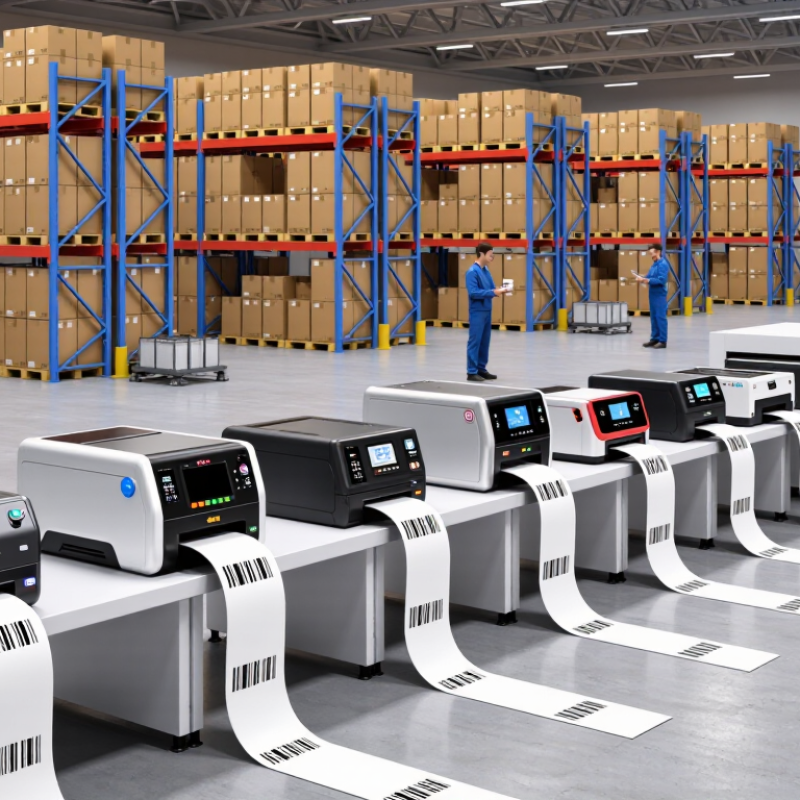
RFID printers connect digital inventory records with physical products moving through global supply chains. They encode data onto RFID labels, then print readable text, barcodes, and handling instructions. In warehouse operations, this combination reduces manual scanning and improves item visibility. Small errors matter. Incorrect encoding can stop a shipment at a receiving dock.
A reliable printer must handle different label materials, antenna designs, and operating temperatures. Industrial teams usually test read distance, print contrast, adhesive strength, and data accuracy before wider deployment. Integration with warehouse and enterprise software also matters. A stable workflow sends product details directly to the printer, reducing repetitive typing. However, RFID performance depends on metal surfaces, liquids, packaging density, and reader placement. The printer cannot solve every environmental problem.
Global buyers should examine service access, spare-part availability, calibration procedures, and operator training. These details often influence long-term uptime more than headline print speed. In practice, a pilot project with real cartons and mixed products reveals hidden weaknesses. Not every rollout succeeds. Some teams underestimate label waste, network interruptions, or changing product dimensions. Regular verification remains necessary, especially when suppliers, warehouses, and transport partners use different processes. A well-managed RFID printing system creates clearer tracking records, faster receiving, and more dependable supply chain decisions.
Key Criteria for Evaluating Chinese RFID Printer Manufacturers
Choosing among China’s top RFID printer manufacturers requires more than comparing catalog prices. Global buyers should examine factory experience, engineering depth, and production consistency. Ask how many years the manufacturer has supported RFID applications. Request sample labels using your actual inlays, materials, and print layouts. A smooth demonstration is not enough.
Print quality must remain stable across different media widths and operating speeds. Check encoding accuracy, rejected-tag rates, print-head life, and calibration procedures. The manufacturer should explain how its systems handle damaged inlays or failed reads. Clear test records matter. Vague promises do not.
A reliable supplier also provides traceable quality controls, documented inspections, and responsive technical support. Review electrical safety documentation and export-related compliance for your target markets. Confirm software compatibility, replacement-part availability, installation guidance, and response times. Speaking with current industrial users can reveal weaknesses that factory tours hide. A perfect scorecard is unrealistic. One weakness may remain, especially in after-sales service. I would record it openly, then decide whether the risk fits the project. Pricing deserves attention, but unstable output can cost more through reprints, downtime, and rejected shipments.
Comparison of Product Features, Certifications, and Export Capabilities
China’s top RFID printer manufacturers differ sharply in product design, certification depth, and export readiness. A practical comparison should examine print resolution, encoding accuracy, thermal transfer support, and compatibility with UHF or HF labels. Models offering 203, 300, or 600 dpi suit different label sizes and data requirements. High-speed units may process more labels per minute, but they can require stricter media calibration. That detail is often overlooked.
Certification evidence matters. Reliable manufacturers commonly provide ISO 9001 quality records, CE documents, RoHS declarations, and FCC test reports for relevant markets. Buyers should check whether each certificate covers the exact printer model, not just the factory. Export capability also deserves close attention. Assess multilingual software, regional power options, customs documentation, spare-part supply, warranty terms, and technical response times. A manufacturer with strong domestic sales may still lack consistent overseas support. This is where comparisons become less convenient, but more honest.
Tips: Request a live encoding test using your own RFID inlays. Confirm read-and-write accuracy, rejected-label handling, and print quality after continuous operation. Ask for recent shipping references and sample export documents. Compare total ownership costs, not only the unit price. Some vendors promise short lead times, yet production schedules can change. Leave room for that risk. A small pilot order is wiser than relying on polished specifications alone.
China RFID Printer Manufacturers: Global Buyer Comparison Framework
A neutral, non-vendor benchmark of the product features, compliance references, and export-readiness factors commonly used when evaluating China-based RFID printer suppliers.
The benchmark uses a 0–100 evaluation scale. Product criteria reflect widely used RFID printer specifications, including UHF EPC Gen2 / ISO 18000-63 compatibility, 203–600 dpi print resolution, Ethernet and USB connectivity, and support for major global compliance references such as CE, FCC, and RoHS. Export-readiness considers documentation, international logistics support, warranty handling, and after-sales service.