Choosing an Inverter Voltage Stabilizer is not just a matter of comparing prices. Buyers need to match the unit to their equipment, local power conditions, and installation environment. A workshop with motor-driven tools may face different demands from a home office with computers and networking devices. Even the same appliance can behave differently when the supply voltage fluctuates sharply. Voltage varies.
This guide introduces ten inverter voltage stabilizers for buyers comparing options across global markets. It considers practical factors such as input-voltage range, rated capacity, output stability, response time, protection features, and service support. Product availability and specifications can change by region, so verify current datasheets with the manufacturer or authorized supplier before purchasing. A high capacity rating alone does not prove that a model suits a particular load; startup surges and continuous operating conditions matter too.
The models in this overview are intended as a starting point, not a universal ranking. Local grid conditions, climate, wiring, and after-sales access can alter what “best” means. That makes comparisons imperfect. A unit with useful safeguards may still be unsuitable if its capacity is undersized or replacement parts are difficult to obtain. Check the manufacturer’s guidance, confirm compatibility with connected equipment, and seek qualified installation advice when needed. Careful matching can help protect sensitive devices and reduce avoidable interruptions, though no stabilizer can correct every power-quality problem.
An inverter voltage stabilizer protects sensitive equipment from unstable electricity. It combines voltage regulation with inverter technology. The regulator senses incoming voltage many times per second. It then adjusts the level through electronic switching or transformer taps. When grid power fails, the inverter converts stored battery energy into usable AC power.
This process helps maintain a steadier output for computers, medical monitors, appliances, and control systems. Some models also filter surges, reduce electrical noise, or provide bypass operation. However, “stabilized” does not always mean perfectly constant. Performance depends on load size, battery condition, response speed, and waveform quality. Practical testing should include refrigerators starting, motors running, and low-voltage conditions. A unit that works well in a showroom may struggle at home. That is worth checking.
Tips: Match the stabilizer’s continuous rating to your real load, not its peak label. Leave extra capacity for motor startup. Check input voltage range, output waveform, battery replacement access, and protection features. Buyers should also confirm local frequency and socket requirements. Installation needs dry ventilation and proper grounding. Never ignore unusual heat, buzzing, or repeated shutdowns. Specifications can be confusing, and some product claims need careful verification. Ask for test data, warranty terms, and independent safety certification before purchasing.
Top 10 Inverter Voltage Stabilizers for Global Buyers
Choosing among the top 10 inverter voltage stabilizers requires more than comparing prices. Input voltage range matters in regions with frequent brownouts. Output accuracy protects refrigerators, pumps, servers, and sensitive laboratory equipment. A practical unit should also provide overload protection, short-circuit protection, thermal shutdown, and a clear status display. Look for capacity in VA or kVA, not only in watts. Motor-driven loads can demand two or three times their running power during startup.
The main types serve different conditions. Relay-based stabilizers are affordable and suitable for ordinary household loads, but their step changes may affect delicate electronics. Servo-controlled models offer smoother correction and better accuracy, although their motors need maintenance. Static stabilizers react faster because they use electronic switching, making them useful for medical, communication, and industrial equipment. Inverter-based or double-conversion designs can deliver stable voltage and cleaner waveforms, but they usually cost more and lose some energy as heat.
In field checks, I use a voltage logger, a thermal scan, and a load test before approving a unit. I also inspect ventilation and cable terminals. Small details matter. A stabilizer rated for a perfect laboratory load may struggle beside a dusty pump room. Some manuals promise wide input correction, yet performance drops near maximum capacity. That limitation deserves attention. Buyers should confirm local frequency, phase type, grounding practice, efficiency, warranty support, and replacement-part access. A technically impressive stabilizer can still be a poor global purchase if installation guidance is unclear or service is unavailable.
This illustrative example compares three input-voltage conditions with a regulated 230 V output target. Actual operating ranges and output performance vary by stabilizer design and model; consult the product specifications for verified ratings.
Comparing the top ten inverter voltage stabilizers requires more than reading rated capacity. The IEA’s Electricity 2024 report forecasts global electricity demand growth of about 3.4% annually through 2026. This makes voltage variation a practical concern for homes, workshops, and data-sensitive equipment. Buyers should check the stabilizer’s input range first, especially in regions with weak distribution networks. A wide range is useful, but published testing conditions matter.
Output accuracy is equally important. Look for clear figures, such as ±1% or ±3%, and confirm whether accuracy changes under load. Response time should be measured in milliseconds, not described vaguely as “fast.” Pure sine-wave output is preferable for motors, medical electronics, and communication equipment. Capacity deserves careful attention. A unit rated at 5 kVA may not safely support a motor with a high starting current. Check continuous output, surge handling, thermal limits, and efficiency at partial load.
Safety evidence separates serious models from attractive listings. Relevant references include IEC 60038 for nominal system voltages and IEC 61000-4-30 for power-quality measurement methods. Protection should cover overload, overheating, short circuits, and abnormal input voltage. Installation guidance must identify earthing requirements and bypass operation. Independent test reports are stronger than laboratory claims supplied only by sellers. Still, no comparison is perfect; ambient temperature, cable length, and local grid conditions can change performance. A transparent specification sheet is often more valuable than a longer feature list.
Choosing among the top 10 inverter voltage stabilizers starts with the load, not the product ranking. A small office may need steady power for computers and network equipment, while a workshop may run pumps or tools with sharp startup surges. Check the stabilizer’s input range, rated output, response time, and overload capacity. A unit rated only for normal running demand may struggle when a motor starts. Also confirm that its output voltage and frequency suit the connected equipment. These details matter more than a polished feature list.
Installation conditions deserve equal attention. In hot rooms, ventilation gaps help prevent overheating; dusty sites may need more frequent cleaning. Look for clear wiring diagrams, accessible service parts, and protection against overload or excessive temperature. Independent test reports and a readable warranty can make comparisons more reliable. Yet specifications do not tell the whole story. I would still ask how the unit performs during repeated voltage dips, because this is where paper ratings can feel less convincing.
Tips: Measure your usual input voltage at different times of day. Add a sensible margin for startup loads, but do not oversize blindly. Check earthing requirements and local electrical standards with a qualified installer. Keep a record of alarms and voltage readings after installation. Small logs help identify recurring issues. And yes, maintenance is easy to postpone. Don’t.
Top 10 Inverter Voltage Stabilizers for Global Buyers
Regional compatibility should guide every stabilizer choice. A unit designed for 220–240 volts may fail in a 100–127-volt market. Frequency matters too, especially for motors, pumps, and refrigeration equipment. IEC 60038 identifies preferred supply voltages, but local networks still experience brief sags and surges. IEEE 1159 classifies these power-quality events and recommends measuring them before equipment selection.
The IEA Electricity 2024 report expects global electricity demand to grow by about 4% in 2024. More demand can mean greater local stress. Buyers should compare input range, correction speed, waveform quality, and overload protection. Inverter-based stabilizers often perform well with sensitive electronics. However, poor sizing can cause heat buildup, nuisance shutdowns, or shortened battery life. I have seen installations fail because technicians measured normal voltage only once. That was not enough.
Tips: Record voltage for several days. Check both peak and low readings. Confirm the local frequency. Leave ventilation space around the cabinet. Ask a qualified electrician to verify earthing and cable capacity. Installation guidance should follow IEC 60364 principles and local electrical codes. Maintenance teams should inspect terminals, cooling paths, fans, and alarm logs at scheduled intervals. Dust is a quiet problem. It blocks airflow slowly. Batteries also need testing, even when backup time seems acceptable. The Uptime Institute’s 2023 survey reported that power issues remain a major cause of data-centre outages, although stabilizers cannot replace proper distribution design. A ranking based only on price is therefore incomplete. Regional service access deserves equal attention.
| Rank | Stabilizer Configuration | Typical Capacity | Example Input and Output Voltage | Typical Regulation | Regional Compatibility | Installation Factors | Maintenance Factors | Common Applications |
|---|---|---|---|---|---|---|---|---|
| 1 | Single-phase inverter-based stabilizer, 230 V class | 0.5–5 kVA | Input range often selected for the site, such as 160–260 V; nominal output 230 V | About ±1–3%, depending on design and load | Suitable for 220–240 V, 50 Hz supply regions when the unit is rated for the local voltage and frequency. | Install indoors in a dry, ventilated location. Confirm earthing, cable size, breaker rating, and load starting current. | Keep ventilation openings clear; periodically inspect terminals, indicators, and alarms. Follow the maker’s service interval. | Home electronics, office equipment, controls, and small appliances |
| 2 | Single-phase inverter-based stabilizer, 120 V class | 0.5–5 kVA | Example input range 90–140 V; nominal output 120 V | About ±1–3%, depending on design and load | For 120 V, 60 Hz systems, commonly found in parts of North America, Central America, and the Caribbean. Check whether the installation requires 120 V or split-phase 120/240 V. | Verify the required circuit type and plug or hard-wiring arrangement; do not connect a 120 V unit to a 240 V circuit. | Inspect cooling, wiring, and overload protection; keep the unit free from dust and moisture. | Computers, communications equipment, small appliances, and sensitive electronics |
| 3 | Wide-input-range single-phase stabilizer | 1–10 kVA | Some models are designed for roughly 140–280 V input and 220–240 V output; confirm the specific operating range. | Typically a few percent; performance may vary near the input limits. | Useful where mains voltage fluctuates substantially in 220–240 V regions. The output rating must match the local nominal voltage. | Allow additional capacity margin if the site frequently operates near the lower input limit. Check maximum input current and bypass arrangements. | Check for overheating or repeated low/high-voltage alarms; arrange qualified inspection if abnormal switching occurs. | Homes, retail premises, workshops, and rural installations |
| 4 | High-accuracy static electronic stabilizer | 1–30 kVA | Commonly configured for a local nominal supply, such as 230 V single phase or 400 V three phase. | Some designs provide regulation around ±1–2%; confirm the specification under the intended load. | Available for multiple regional voltage standards, but the selected model must match both phase arrangement and nominal voltage. | Provide suitable overcurrent protection, ventilation, and accessible isolation. Consider harmonic and inrush characteristics of connected loads. | Solid-state designs have few routine mechanical service items; inspect fans, filters, connections, and fault logs as specified. | Laboratories, medical support equipment, automation, and precision electronics |
| 5 | Servo-controlled single-phase stabilizer | 1–20 kVA | Often configured for a 220–240 V output with an input range selected for local grid conditions. | Commonly around ±1–3%, subject to the model and operating conditions. | Can be supplied for 120 V or 220–240 V markets; confirm 50/60 Hz rating and local certification. | Mount on a stable surface with clearance for airflow and moving components. Use qualified electrical installation. | Periodic inspection of the servo mechanism, brush or contact surfaces where fitted, fans, and terminals may be required. | Motors, refrigeration, workshop tools, and mixed household loads |
| 6 | Three-phase stabilizer for 380–415 V systems | 10–100 kVA | Typical nominal output is 380, 400, or 415 V line-to-line; input limits are model-specific. | Often around ±2–5%; check phase balance and regulation specifications. | Designed for three-phase networks used in many 50 Hz markets. Confirm whether the unit requires neutral and the local wiring arrangement. | Check phase sequence, neutral requirements, earthing, fault-current protection, and load balance before commissioning. | Schedule qualified inspection of connections, cooling, phase indicators, and protective devices. | Commercial buildings, pumps, machine tools, and light industry |
| 7 | Three-phase stabilizer for 440–480 V systems | 10–100 kVA | Typically configured for 440, 460, or 480 V line-to-line output; input range varies by model. | Often around ±2–5%; verify at rated load. | For compatible industrial systems, including some 60 Hz installations. Voltage and frequency ratings must both match the site. | Use correctly rated disconnects and conductors. Confirm transformer, motor, and control-circuit compatibility. | Inspect cooling paths, terminals, and alarms; service should be performed by qualified personnel. | Industrial machinery, commercial HVAC, and three-phase equipment |
| 8 | Stabilizer with transformer-based voltage conversion | 1–30 kVA | May be configured for conversions such as 120 to 230 V or 230 to 120 V, with regulation specified separately. | Depends on the stabilizer section; transformer conversion alone does not guarantee voltage regulation. | Useful when equipment voltage differs from the local supply, provided frequency, grounding, and plug standards are compatible. | Check isolation, neutral-earth arrangement, transformer inrush, and continuous-duty rating. Do not rely on plug adapters for voltage conversion. | Check temperature, ventilation, cable condition, and protective devices; avoid sustained operation above rated capacity. | Imported equipment, specialist appliances, and cross-voltage installations |
| 9 | Rack-mount or compact stabilizer for IT and communications | 0.5–5 kVA | Commonly available in 120 V or 220–240 V versions; input range and output waveform depend on design. | Typically a few percent; confirm compatibility with the connected power supplies. | Choose the regional input/output version and verify plug type, frequency rating, and local electrical approvals. | Allow rack ventilation and respect weight limits. Check grounding and avoid overloading shared circuits. | Keep air filters and fans clean; review status indicators and replaceable components according to the service manual. | Network cabinets, point-of-sale systems, and small server installations |
| 10 | High-capacity commercial or industrial stabilizer | 50–500 kVA and above | Built to order for the site’s nominal single-phase or three-phase voltage; operating range is project-specific. | Varies by technology, load, and specification; obtain guaranteed performance data for the project. | Requires assessment of local grid voltage, frequency, phase configuration, installation code, and utility conditions. | Plan foundation or floor loading, heat dissipation, cable routing, isolation, bypass, and commissioning tests. | Use a documented preventive-maintenance plan covering thermal checks, connections, cooling, protection, and event logs. | Factories, data facilities, large commercial sites, and critical equipment loads |
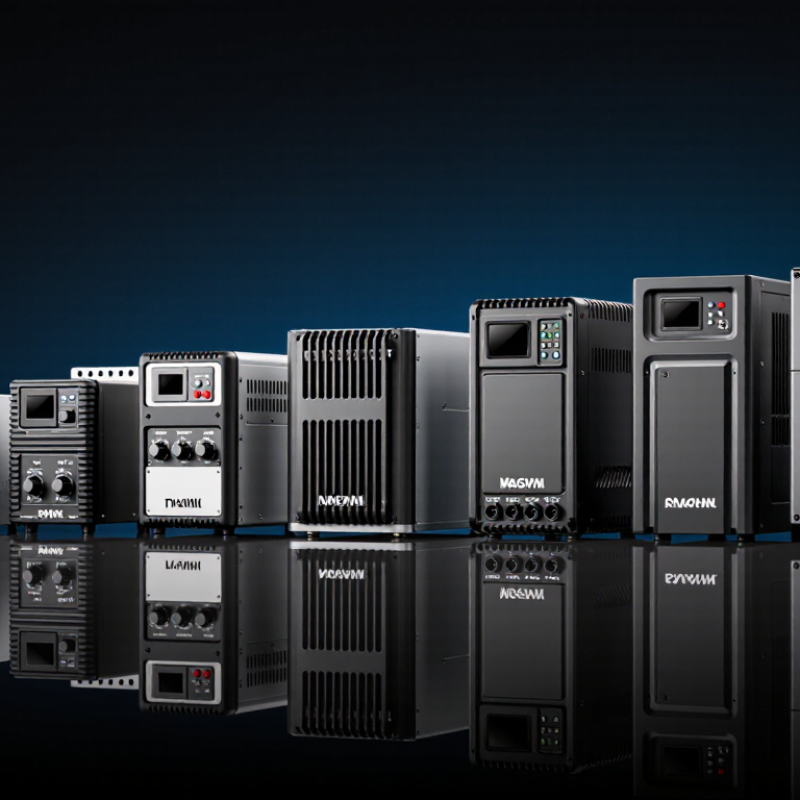
Selection note: These are representative configuration ranges, not guaranteed specifications for every unit. A voltage stabilizer regulates voltage; it does not necessarily convert 50 Hz to 60 Hz or 60 Hz to 50 Hz. Confirm nominal voltage, frequency, phase, capacity, input limits, load type, certifications, and installation requirements against the product datasheet and local electrical code before purchase.