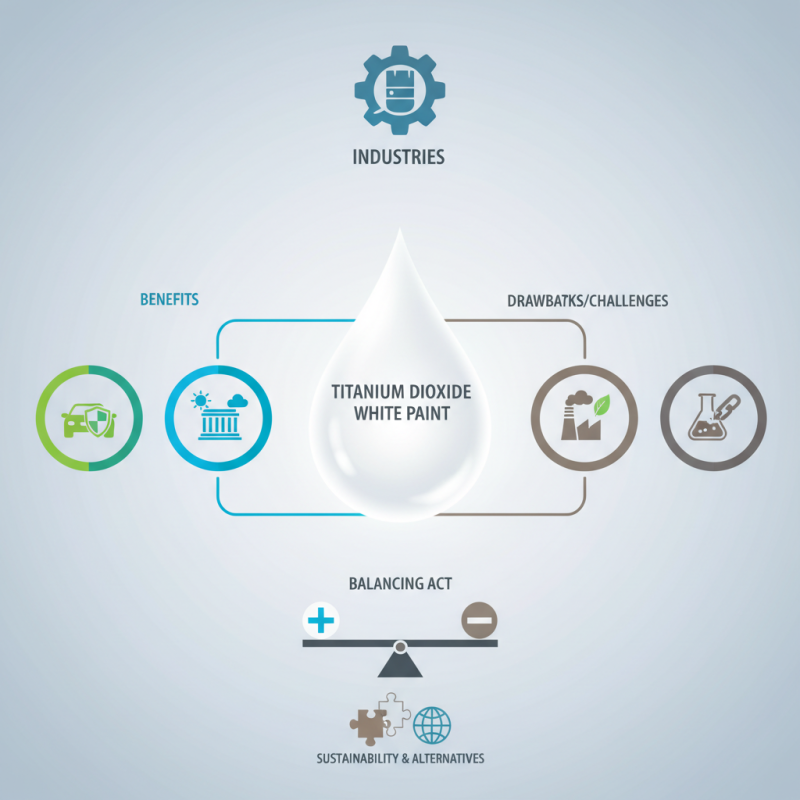
What Makes Titanium Dioxide White Paint Essential for Industries?
Titanium Dioxide White Paint is a fundamental component in various industries. Its unique properties contribute to superior opacity and brightness. This makes it the go-to choice for manufacturers aiming for vibrant coatings.
In the automotive and construction sectors, Titanium Dioxide White Paint ensures durability and protection. It withstands harsh environmental conditions, enhancing product longevity. However, the reliance on this chemical raises important questions about environmental impact and sustainability.
Some alternatives exist, yet they often fall short. Industries face a balancing act—maintaining quality while addressing ecological concerns. Evaluating the role of Titanium Dioxide White Paint necessitates careful consideration of its benefits and drawbacks.
The Importance of Titanium Dioxide in White Paint Formulations
Titanium dioxide (TiO2) is a cornerstone in white paint formulations, widely recognized for its superior opacity and brightness. Its unique properties make it essential across various industries, from automotive to construction. According to a 2022 market report, the global titanium dioxide market value was estimated at $19 billion, with a compound annual growth rate of 5.5% expected through 2030. This significant growth underscores the compound's role in enhancing the aesthetic appeal of products.
The effectiveness of titanium dioxide stems from its high refractive index and excellent covering power. Industrial applications often rely on TiO2 for durability and environmental resistance. However, sourcing sustainable titanium dioxide remains a challenge. The extraction and processing can lead to environmental degradation if not managed responsibly. Approximately 70% of the world’s titanium dioxide supply comes from mining operations, raising concerns about ecological impacts.
Despite its benefits, the industry is undergoing scrutiny regarding health and environmental safety. Studies indicate potential risks associated with inhalation of titanium dioxide nanoparticles. Discussions on safer alternatives are on the rise, but currently, titanium dioxide remains irreplaceable in many white paint formulations. Balancing its utility with sustainable practices is essential for the future.
Key Properties of Titanium Dioxide That Enhance Paint Performance
Titanium dioxide (TiO2) stands out as a cornerstone in the manufacturing of white paint. This pigment merits attention due to its robust light-scattering ability. According to the European Coatings Journal, TiO2 offers a reflectance of over 90% in the visible spectrum, making it incredibly effective in providing opacity and brightness. Its unique properties help enhance color depth in various applications.
Another notable feature of titanium dioxide is its UV resistance. A report by the American Coatings Association highlights how this property protects paint from fading and degradation. As a result, paints infused with TiO2 are ideal for outdoor applications. However, this durability raises questions about environmental impacts. The production and disposal of TiO2-based paints must be approached cautiously.
Moreover, titanium dioxide has a relatively non-toxic profile, making it a safer choice for consumers. Yet, some studies suggest potential health risks in inhalable forms. Ongoing research is essential to evaluate these concerns. Balancing performance with safety remains a challenge for manufacturers. Overall, titanium dioxide's benefits are profound, but scrutiny in its application is equally vital.
Applications of Titanium Dioxide White Paint Across Various Industries
Titanium dioxide (TiO2) is a crucial component in the production of white paint, widely used across various industries. Its exceptional opacity and brightness make it a preferred choice for manufacturers. According to a recent industry report, the global titanium dioxide market is expected to exceed $20 billion by 2025. This growth reflects the increasing demand for high-quality pigments in construction, automotive, and consumer goods.
In the construction sector, titanium dioxide enhances durability and resistance to weathering. Coatings containing TiO2 can last longer, reducing maintenance costs for property owners. Additionally, in the automotive industry, it provides a bright finish that improves aesthetic appeal. Reports suggest that vehicles with TiO2-based paint retain their gloss longer, creating a positive impression among consumers.
While the benefits of titanium dioxide are clear, there are environmental concerns tied to its production. Some manufacturing processes release harmful byproducts. Balancing these environmental impacts with the need for high-performance paint remains a challenge. Companies must seek sustainable practices while maintaining product efficacy. Despite these hurdles, the role of titanium dioxide in various industries continues to be indispensable.
Applications of Titanium Dioxide White Paint Across Various Industries
Environmental and Health Considerations of Using Titanium Dioxide
Titanium dioxide (TiO2) is widely recognized for its brilliant white pigment in various industries. While its use is prevalent, it is essential to consider environmental and health impacts. TiO2 can enter ecosystems during production and disposal. This raises concerns about water quality and wildlife safety. Understanding these implications is crucial for industries relying on this compound.
The health ramifications of titanium dioxide exposure are also under scrutiny. Inhalation of TiO2 particles has been linked to respiratory issues. Workers in manufacturing environments should prioritize safety measures to minimize exposure. Adequate ventilation and protective gear are vital to mitigate potential risks.
**Tip:** When using TiO2 in products, always check for eco-friendly alternatives. Innovations in pigment technology are evolving. New materials can provide similar benefits without harming the environment.
**Tip:** Regularly review workplace safety guidelines. Keeping updated on health regulations can protect workers and maintain a safe environment. Consider training sessions on handling materials safely.
The balance between industry needs and safety is delicate. Ongoing research will help clarify the long-term effects of titanium dioxide usage. Advocating for responsible practices can pave the way for safer alternatives and healthier environments.
Future Trends in Titanium Dioxide Technology for White Pigments
Titanium dioxide remains a pivotal component in white paint production. It provides high opacity, excellent brightness, and exceptional durability. As industries evolve, future trends in titanium dioxide technology promise innovations that will enhance these properties. Researchers are exploring nano-coatings and advanced composites. These developments could lead to paints that are even more efficient.
One major trend is the push for sustainability. Companies are seeking eco-friendly alternatives that reduce environmental impact. Titania photocatalysts are being studied for their ability to purify air while maintaining pigment efficiency. This trend is crucial for industries focused on sustainability.
Tips: Always consider the longevity of materials you choose. Look for high-quality titanium dioxide for better performance. Embrace new technologies to stay ahead.
The ongoing research in titanium dioxide technology suggests potential advancements. However, challenges remain. Balancing cost and performance can be difficult. Industry players must stay informed about these developments. Adaptability is key. Embracing innovation while reflecting on existing processes can lead to progress.
What Makes Titanium Dioxide White Paint Essential for Industries? - Future Trends in Titanium Dioxide Technology for White Pigments
| Aspect | Details |
| Chemical Composition | Titanium Dioxide (TiO2) |
| Primary Use | Pigment in Paints and Coatings |
| Appearance | Bright white color |
| Durability | Highly resistant to fading and chalking |
| Market Demand | Increasing demand across construction, automotive, and consumer goods |
| Environmental Impact | Sustainability focus leading to cleaner production processes |
| Future Trends | Nanoparticle technology and bio-based alternatives |