7 Tips for Sourcing Orthopedic Spine Implants?

Sourcing Orthopedic Spine Implants is not a price-comparison exercise. A low quote can look attractive beside a crowded operating-room schedule, but it says little about traceability, clinical evidence, or dependable delivery. Buyers need to examine the device, the supplier, and the support behind each order.

Surgeon and patient-safety expert Atul Gawande wrote, “Better is possible. It does not take genius. It takes diligence.” That principle is relevant here, though it is not a spine-implant-specific quotation. Diligence means checking product documentation, approved indications, material specifications, sterilization information, and compatibility with existing instruments. It also means asking how the supplier handles lot records, complaints, recalls, and service needs. Details matter.

This guide presents seven practical checks for comparing suppliers of Orthopedic Spine Implants. It considers quality systems, clinical support, delivery reliability, pricing transparency, and product lifecycle planning. A polished catalog is not proof. Ask for evidence, then verify it with qualified clinical, regulatory, and procurement teams. There is no perfect checklist; local needs differ, and some trade-offs deserve a second look. The aim is a more informed decision, not a rushed promise of better outcomes.
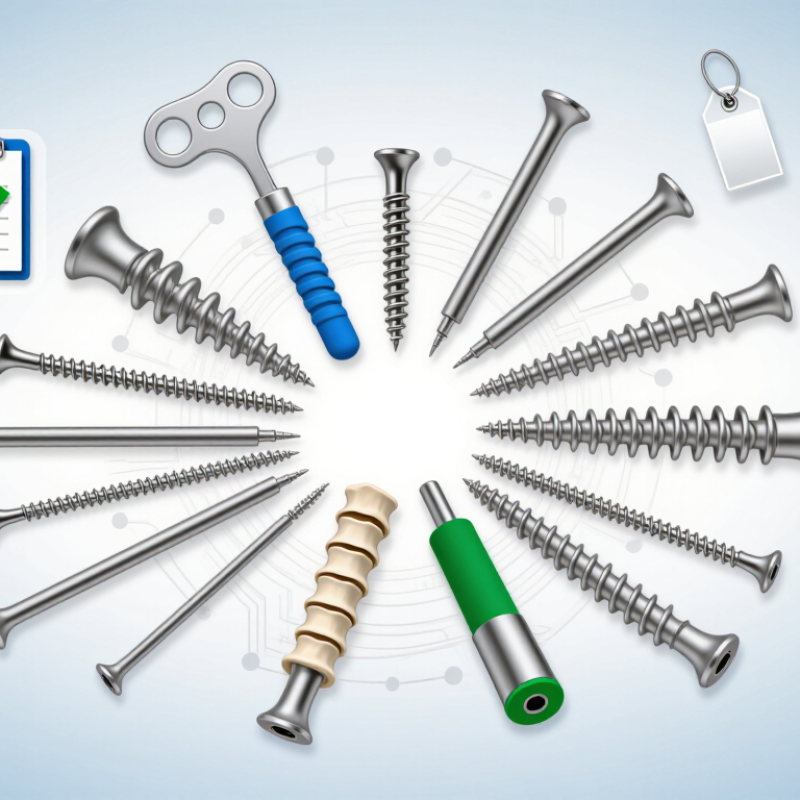
7 Tips for Sourcing Orthopedic Spine Implants?

Clarify Clinical Needs and Implant Specifications

Before comparing quotes, define the clinical need with the treating team. Specify the spinal region, intended procedure, patient anatomy, and key functional requirements. A cervical construct and a lumbar fixation system serve different purposes; one specification cannot cover both. Record required implant dimensions, fixation method, material, and any limits on available sizes. Small details matter.

Ask surgeons to review the specification before procurement begins. A trial component that feels suitable on paper may not match the instruments or workflow used in the operating room. Confirm system compatibility, packaging, sterilization status, and the availability of relevant sizes. Keep product documentation and lot traceability easy to retrieve. These checks support safer, more predictable preparation, though they cannot replace clinical judgment.

Compare suppliers against the same written requirements, not price alone. Request clear technical documents, evidence supporting stated performance, and realistic delivery timelines. Confirm how shortages, damaged packaging, or specification changes will be handled. That sounds obvious. It is easy to miss when teams work from different lists. A shared checklist, reviewed by clinical, procurement, and sterile-processing staff, can expose gaps before an implant reaches the operating room. Revisit it when surgical techniques or patient needs change.


Verify Regulatory Compliance and Supplier Credentials

Before comparing prices, confirm that each implant is authorized for sale in the destination market. Requirements vary by country and device class. Check the relevant regulator’s public database, not only a supplier’s summary. Match the listing to the exact catalog number, intended use, and legal manufacturer. Small mismatches matter.

Review current quality-system certificates and confirm their scope covers the manufacturing site and implant type. Check issue and expiry dates, then verify the certificate with its issuer when possible. Ask for traceability records linking each sterile package to a lot, sterilization release, and manufacturing site. Confirm that labels and instructions for use meet destination-market requirements. Keep copies.

Credentials deserve equal scrutiny. Confirm the supplier’s registered legal name, operating address, authorized distribution role, and regulatory contact. Request documented procedures for complaints, field actions, and product changes. Ask how quickly buyers receive notices. Ask directly. A polished binder is not proof. Cross-check references and consider a risk-based audit, especially when records are incomplete or generic. No checklist removes judgment: a valid certificate may not cover the product you intend to purchase.

7 Tips for Sourcing Orthopedic Spine Implants? - Verify Regulatory Compliance and Supplier Credentials
# Sourcing Checkpoint Evidence to Review Practical Acceptance Check
1 Confirm authorization for the target market Applicable market authorization or conformity documentation, product classification, intended use, and the exact device model or configuration covered. Match the documentation to the destination country, device, intended use, and supplier’s role. Requirements vary by market and product; do not rely on a generic certificate.
2 Verify regulatory status independently For U.S. products, check relevant FDA records and the applicable marketing pathway, such as 510(k) clearance, PMA approval, or an applicable exemption. For EU products, review applicable MDR documentation and CE-marking evidence. Confirm that the status applies to the specific device and intended use. FDA establishment registration or device listing alone does not mean FDA approval or clearance.
3 Assess the quality management system A current quality-system certificate, its scope and sites, certification-body details, and relevant audit or quality-system records. In the U.S., account for the FDA Quality Management System Regulation (QMSR), effective February 2, 2026. Verify certificate validity and scope with the certification body. Confirm that the system covers the activities performed, such as design, manufacturing, or distribution; certification alone does not establish product authorization.
4 Clarify the supplier’s legal role and credentials Legal entity details, manufacturing-site information, applicable registrations or licenses, distribution authorization, and documented responsibility for regulatory submissions and post-market obligations. Identify whether the seller is the legal manufacturer, contract manufacturer, or distributor. Confirm that the contracting entity is authorized to supply the product and can provide required records.
5 Review design, material, and performance evidence Device specifications, material and processing records, risk-management documentation, and test reports against standards applicable to the device and its claims. Examples may include relevant ASTM or ISO test methods for spinal implant performance. Check that reports identify the tested configuration, methods, acceptance criteria, and results. Do not assume a standard or test applies to every implant; confirm relevance to the device and intended use.
6 Confirm traceability, labeling, and change control Labeling and instructions for use, lot or serial-number records, applicable UDI information, and procedures for notifying customers about product or process changes. Confirm that supplied products can be traced to manufacturing and distribution records, and that labeling matches the authorized configuration and destination market. UDI obligations depend on the applicable jurisdiction and device.
7 Validate sterile supply and ongoing support, when applicable For products supplied sterile, review sterilization validation, packaging and shelf-life evidence, and defined handling conditions. Also review complaint, adverse-event, recall, and field-action processes. Check that sterility and packaging evidence covers the supplied product and packaging configuration, and that remaining shelf life meets purchasing requirements. Agree on prompt notification and cooperation for safety issues or recalls.

Assess Implant Materials, Design, and Compatibility

Tip 1: Check the material, not just the catalogue description. Review documented composition, corrosion resistance, fatigue testing, and traceability for each implant. Ask whether the evidence reflects the intended spinal application. A polished brochure is not proof. Material performance depends on design and use, too.

Tip 2: Look closely at design details. Compare dimensions, fixation features, and available sizes with the needs of the surgical team and patient population. Request technical drawings and clear test summaries. A small difference in screw geometry or instrument access can affect workflow. Fit matters. Do not assume that a familiar-looking design performs the same way.

Tip 3: Confirm compatibility before purchasing. Check that implants, connectors, and instruments are designed and validated to work together. Review imaging conditions and relevant handling or sterilization instructions in the supplied documentation. Keep records linking product identifiers to technical files and lots. A shortlist can look convincing on paper and still miss a practical detail. I would revisit it with clinicians and supply staff, rather than rely on price or a single comparison sheet.

Review Quality Controls, Sterility, and Traceability

Orthopedic spine implants require careful sourcing because quality problems may not be obvious during a visual check. Ask suppliers for documented quality controls, including incoming-material inspections, production checks, and records of how nonconforming items are handled. Review whether inspection criteria are clear and consistently recorded, rather than relying on verbal assurances. Request evidence that changes to materials or manufacturing processes are reviewed and approved through a controlled procedure. These records help purchasing teams assess whether quality is managed throughout production.

Check sterility information for the specific product and packaging configuration. Confirm whether implants arrive sterile or require processing, and follow the manufacturer’s instructions for use. Packaging should be intact, with clear labeling and no signs of damage or moisture. Small details matter. For traceability, confirm that each implant can be linked to its lot or serial number, production records, and relevant inspection documentation. Ask how the supplier handles a field safety notice or a potential product issue, and how quickly affected units can be identified. A supplier’s answers should be specific and supported by records. A checklist can still miss gaps; revisit it when products, packaging, or processes change.

Compare Total Cost, Supply Reliability, and Support

When sourcing orthopedic spine implants, compare the full episode cost, not just the quoted implant price. Include trays, sterilization, freight, consignment terms, staff training, and the time needed to reconcile invoices. AHRMM has reported that supply chain expenses can approach 30% of a hospital’s operating budget, making small purchasing differences meaningful. Ask suppliers to provide itemized pricing and explain how substitutions affect compatibility and workflow. The spreadsheet may still miss something.

Supply reliability deserves equal scrutiny. Premier’s 2022 survey of hospital leaders found that 90% had experienced medical supply shortages. Ask prospective suppliers for fill-rate history, back-order frequency, and typical recovery times—not just assurances. Check whether essential components ship together, and clarify escalation contacts for urgent cases. A delivery window is useful; a documented contingency plan is better. Test it.

Support also has a real cost. Compare on-site coverage, response times, product education, and help with inventory review. Request service expectations in writing, then check them against feedback from operating-room and sterile-processing teams. Their experience may expose delays a procurement report cannot. I would not treat the lowest bid as the best value; that shortcut can hide costs, and even a detailed comparison will have gaps. Keep reviewing actual invoices, delivery records, and staff feedback after the contract begins.

7 Tips for Sourcing Orthopedic Spine Implants

A practical example of how to weight key factors when comparing suppliers.

Suggested evaluation weights, totaling 100%: compare the full cost of ownership, verify delivery and supply continuity, and assess regulatory documentation, clinical evidence, product range, logistics, and support. These are planning weights—not market statistics. Adapt them to your clinical, regulatory, and procurement requirements.

Get a Quote
910-483-7828