7 Tips for Buying Trauma Kits in Bulk

Buying trauma kits in bulk can improve readiness, but only when the contents match real needs. A warehouse, school, clinic, and construction site face different risks. One oversized order may leave useful supplies unused while essential items run short. Start with a documented review of likely injuries, response times, storage conditions, and staff training.

Trauma surgeon Dr. Lenworth Jacobs has expressed the value of immediate help this way: “The person most likely to save your life is the person standing next to you.” That principle makes kit placement and usability matter as much as price. Compare suppliers for clear product descriptions, traceable manufacturers, sealed packaging, and reliable delivery dates. Check expiration dates and replacement policies before placing a large order. Ask whether each kit’s contents suit your setting and whether staff can use them after appropriate training. Small details count. A label hidden under straps is still a problem.

Bulk discounts deserve scrutiny. Calculate the full cost, including storage, inspection, replenishment, and eventual replacement. Confirm that the supplier can provide consistent stock, not merely an attractive first shipment. Request samples when possible, and inspect them before committing. Keep an inventory record with quantities, lot information, and review dates. Requirements change, and supply chains can disappoint. Even a careful plan may miss something; a scheduled review helps catch gaps before an emergency. These seven buying tips can help organizations purchase trauma kits thoughtfully, maintain them responsibly, and support a more prepared response.
7 Tips for Buying Trauma Kits in Bulk

Define the Intended Users and Emergency Scenarios

When buying trauma kits in bulk, identify the people expected to use them. A workplace first-aid team, school staff, and outdoor crews may have different training and response roles. Be specific: who is on site, how many people need coverage, and how long might emergency services take to arrive? A kit for a warehouse loading dock may need different placement and supplies than one carried in a field vehicle. Keep that in view.

Tip: Match kit contents to users’ training and written emergency procedures. Ask the organization’s safety lead or medical advisor to review the proposed contents. Avoid adding items that users have not been trained to handle. A well-stocked kit is not automatically a useful one.

Tip: Describe likely emergencies before setting quantities. Consider machinery areas, remote work sites, large events, or locations with many visitors. Note where kits will be stored, whether they face heat or dust, and how often staff can inspect them. Our first draft of a kit plan may miss a detail; walk the site with actual users and revise it. Record inspection dates and replacement needs, so unopened kits do not quietly become incomplete.


Set Kit Contents and Compliance Requirements

Before ordering trauma kits in bulk, define the emergencies staff may face. A warehouse with cutting equipment needs different supplies from a small office. Ask a qualified safety lead to review likely hazards, response times, and available training. Keep the contents practical. More items do not automatically make a kit more useful.

Check that each kit contains supplies your team can identify and use, such as gloves, gauze, dressings, and clear instructions. Match quantities to the number of people and locations served. Then review applicable workplace rules and recognized first-aid guidance for your region. Requirements can vary by industry and location, so verify them with the relevant safety authority or a qualified compliance professional. Do not assume one checklist fits every site.

Inspect sample kits before placing a large order. Check packaging, labels, instructions, and expiry dates, then confirm how replacement stock will be tracked. Simple details matter. A sealed pouch should be easy to find, and staff should know where it is kept. One overlooked issue is storage: heat, moisture, or dust can affect supplies. Build a review schedule into routine safety checks, and revise the contents when hazards or staffing change. Even a careful plan can miss something; invite trained responders to test it and share practical feedback.

7 Tips for Buying Trauma Kits in Bulk - Set Kit Contents and Compliance Requirements

Tip Procurement focus Contents and planning considerations Compliance and verification
1 Assess workplace hazards first Map work areas, likely injury types, worker counts, shift patterns, and travel time to medical care. Use the assessment to determine the number, size, and placement of kits. In the United States, OSHA 29 CFR 1910.151(b) addresses adequate first-aid supplies and trained personnel when an infirmary, clinic, or hospital is not in near proximity. The appropriate provision depends on workplace circumstances.
2 Define a standard kit configuration Create a written contents list for each workplace risk profile. Common supplies may include gloves, dressings, gauze, bandages, shears, and a tourniquet where appropriate and supported by training. Do not assume one contents list suits every site. OSHA does not prescribe one universal trauma-kit inventory; document how the selected contents address identified hazards.
3 Check applicable kit standards Compare supplier contents against the applicable workplace first-aid kit specification, including the intended kit type or class when relevant. ANSI/ISEA Z308.1 is a voluntary consensus standard for workplace first-aid kits and supplies unless adopted or otherwise required by an applicable rule, contract, or policy. Confirm the current edition and local requirements before ordering.
4 Match supplies to trained users Choose equipment that designated responders can use. Consider training coverage across shifts and locations, and whether instructions or familiarization are needed for specialized items. Verify training obligations for the workplace and jurisdiction. Buying equipment does not replace required training or an appropriate emergency-response plan.
5 Verify specifications before scaling up Request an itemized bill of materials, quantities, product specifications, packaging details, and substitution policy. Review a sample kit before approving the bulk order. Check that listed contents match what will be delivered. Confirm any required documentation, labeling, and product registrations with the supplier and relevant authorities.
6 Plan for expiry and replenishment Identify items with expiration dates, set inspection and restocking intervals, and estimate replacement needs over the full order quantity. Keep an inventory and inspection log. Follow product labeling and workplace procedures for storage, inspection, and replacement. Use a replenishment process that prevents expired, damaged, or missing supplies from remaining in service.
7 Confirm storage, access, and rollout Choose durable, clearly identifiable containers suited to the environment. Place kits where workers can access them promptly, and label locations consistently across sites. Check site-specific requirements and keep access and inspection responsibilities documented. For multi-site orders, confirm delivery quantities, storage conditions, and a consistent deployment plan.

Compare Suppliers, Configurations, and Bulk Pricing

Buying trauma kits in bulk is less about finding the lowest unit price and more about comparing what each supplier actually provides. Request itemized quotes showing kit contents, packaging, shipping, and any fees for custom configurations. A compact kit for a work vehicle may not suit a large facility with several response points. Compare the contents against your team’s training and likely needs, not just the product name. Details matter.

Ask suppliers for current product specifications, expiration dates where applicable, and clear replacement procedures. Confirm that staff can inspect and restock each configuration without guessing which items belong in it. A color-coded inventory sheet can help, but it needs to match the kit. It is easy to overlook that step. If possible, review a sample kit before placing a large order; photos may not show the size, layout, or ease of access.

Compare pricing at several order quantities, but calculate the delivered cost per kit rather than relying on a headline discount. Ask whether bulk pricing changes when you choose different configurations, and whether partial shipments affect freight costs. Check lead times, too. A low quote is less useful if supplies arrive after your planned rollout. Record assumptions in writing, then revisit them when quantities or contents change. Bulk buying can simplify procurement, but it can also multiply a small mismatch across every kit.

Assess Product Quality, Expiration Dates, and Storage Needs

When buying trauma kits in bulk, inspect a sample from each shipment before accepting the full order. Check every seal. Packaging should be intact, dry, and clearly labeled, with contents matching the item list. Look for sterile barriers, legible instructions, and materials showing no cracks, discoloration, or moisture damage. Ask for lot numbers and expiration dates, then record them by delivery batch. A low price is not useful if important components expire before the kits are needed.

Dates can vary across items in one kit, so inspect individual packages, not just the outer carton. Use the earliest expiration date when planning stock rotation. It is easy to miss a small date label during a rushed count; a simple spreadsheet can help, though it still needs regular checks. Keep records. Store kits in a cool, dry place away from direct sunlight, vehicle heat, and damp floors. Check the manufacturer’s storage guidance, since temperature limits differ by product. Shelves should keep cartons visible and accessible, without crushing the packaging. Recheck stored supplies on a set schedule, especially after a move or a season of extreme temperatures.

Plan Delivery, Inventory Tracking, and Restocking

7 Tips for Buying Trauma Kits in Bulk

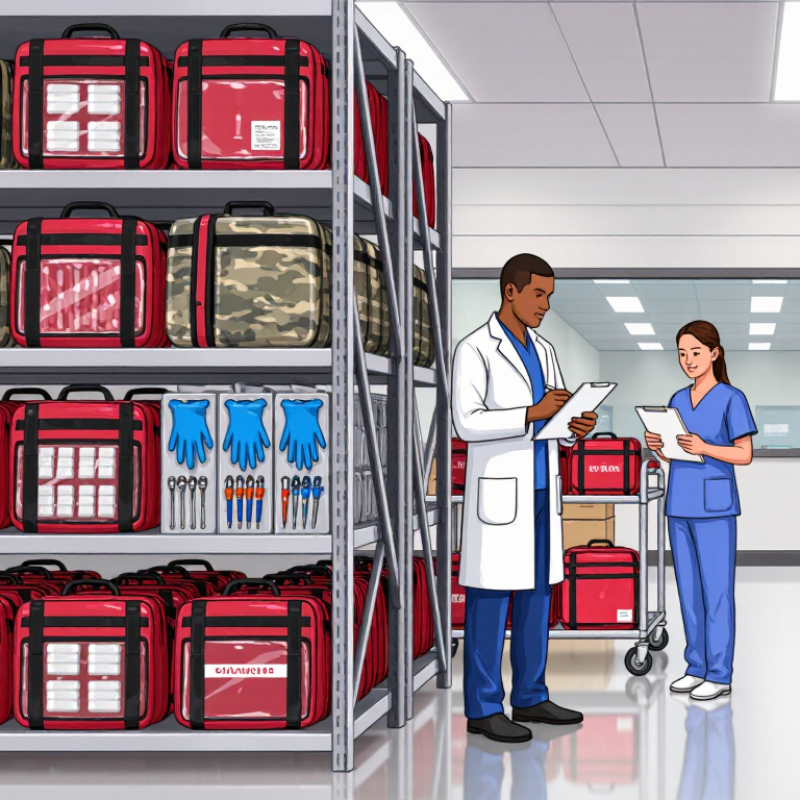
Plan delivery around real storage capacity, not an idealized warehouse. A large shipment needs a dry, secure area and clear access routes. Ask suppliers to confirm quantities, packaging, and arrival dates before dispatch. Split deliveries when shelves are limited or several sites need supplies. At receiving, compare cartons with the order and inspect seals, labels, and visible damage. Keep the paperwork.

Track each kit by location, quantity, and expiration date. A shared spreadsheet may work for a small team, but assign one person to update it after every move. For multiple sites, use a consistent naming system, such as “North entrance cabinet.” Record lot details when available, and set reminders before supplies expire. A spreadsheet can still miss a box moved during a busy shift. That happens. Physical spot checks matter.

Restock against a written minimum level, rather than waiting until a cabinet looks empty. Set the threshold based on expected use, delivery lead time, and emergency plans. Check kits on a regular schedule, and after any use or relocation. Rotate older stock forward, while keeping items stored as their labels direct. No process is flawless; staff may forget to log a used item. A short restocking checklist beside the storage area can catch that gap and make follow-up easier.

Trauma Kit Restocking: A Reorder-Point Example

Example quantities calculated from an assumed monthly usage of 8 kits, a 2-month delivery lead time, and a 25% safety buffer.

When on-hand inventory reaches 20 kits, place a replenishment order: 16 kits cover expected use during the lead time, and 4 provide a safety buffer. Track actual usage and supplier lead times regularly, then adjust these example figures to match your operation.

Article Source:

Get a Quote
910-483-7828