PE Tape is easy to overlook: a narrow strip holding a carton closed, bundling cables, or protecting a smooth panel during handling. Yet its performance depends on details. The polyethylene backing must flex without tearing, while the adhesive must grip the actual surface under real storage and temperature conditions. A tape that works on clean cardboard may behave differently on dusty plastic. Small details count.
Packaging also carries a material footprint. The OECD’s Global Plastics Outlook (2022) reports that packaging generated 40% of global plastic waste in 2019. That figure covers plastic packaging broadly, not PE Tape alone, but it explains why material choice and application deserve scrutiny. PE Tape can support secure packing and temporary protection, though it is not automatically the best choice for every job or disposal pathway. That is the trade-off. Buyers should compare adhesion, thickness, unwind behavior, and removal needs against the task—not just the roll price. I cannot responsibly attach a quotation to a named PE-tape specialist without a verifiable interview or technical source. That gap matters, too. A trustworthy guide should distinguish documented industry evidence from opinion, then explain where practical testing is still needed.
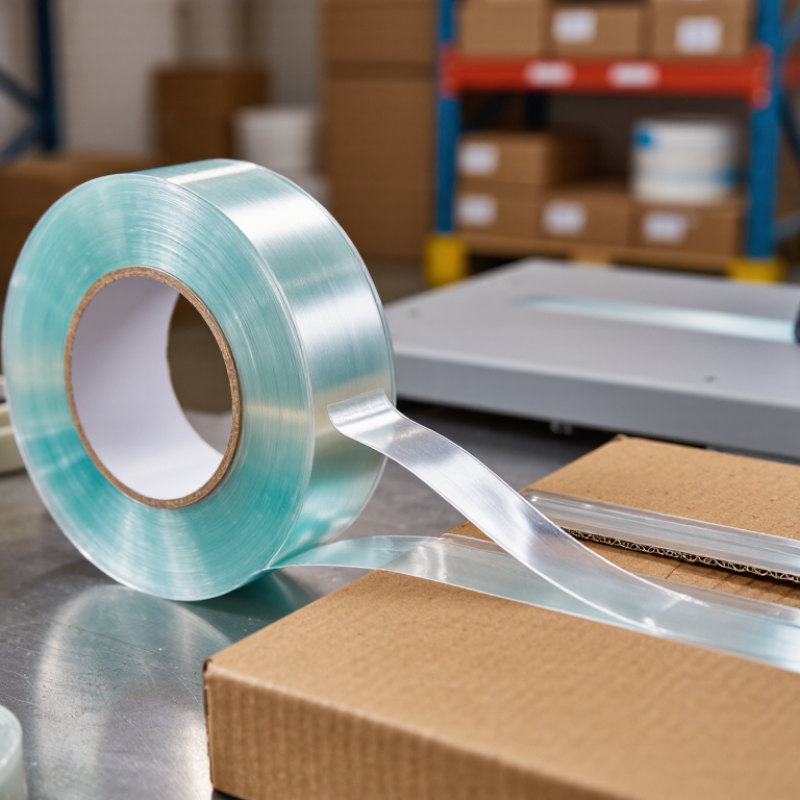
Polyethylene (PE) tape is a pressure-sensitive tape with a polyethylene backing and an adhesive coating. PE is made by joining ethylene molecules into long polymer chains, usually through industrial polymerization. The resin is then melted and formed into thin film, often by extrusion. The adhesive is applied separately; PE film alone does not make tape sticky. A simple distinction, but an important one.
The backing may use low-, linear-low-, or high-density polyethylene, each offering different flexibility, toughness, and surface feel. In packaging, a flexible film can conform around corners and resist moisture; in industrial settings, thicker or reinforced versions may help protect surfaces during handling. PlasticsEurope’s Plastics – the Fast Facts 2023 report records global plastics production at 400.3 million tonnes in 2022, with LDPE/LLDPE and HDPE/MDPE together representing about 26.6 percent. That scale helps explain why PE is a widely available tape-film material, though it does not prove every PE tape performs alike. Adhesive chemistry, film thickness, temperature, and the surface being taped all matter. The small details matter. Even a familiar roll can behave differently on dusty, cold, or textured surfaces.

PE tape combines a flexible polyethylene backing with a pressure-sensitive adhesive. The backing bends around carton corners, bundled cables, and mildly curved parts without cracking easily. It also resists moisture and many common handling stresses. However, polyethylene has a low-energy surface, so adhesion depends heavily on the adhesive formulation and the surface being taped. Dust, oil, or condensation can weaken the bond. Small details matter.
The market context is substantial: the OECD’s 2022 Global Plastics Outlook estimates that packaging accounted for 31% of global plastics use in 2019. That figure is not specific to tape, but it shows why packaging materials need reliable, practical performance. In industry, PE tape can help protect surfaces, hold lightweight components, or seal packages. Its stretch and conformability are useful, though they do not replace choosing the right tape for a load, temperature, or exposure time. Peel adhesion can be compared using methods such as ASTM D3330; results still depend on test conditions.
Tips: Apply tape to a clean, dry surface, then press it firmly along the full length. Test a small area first, especially on textured plastics or painted parts. Check the stated service temperature, too. A tape that feels secure by hand may still lift after hours in heat or vibration.
Polyethylene tape is not one uniform product.
A common type uses a thin PE film backing with pressure-sensitive adhesive. It bends around cartons, cable bundles, and curved plastic parts without cracking easily. Some versions use low-density PE for flexibility; others use firmer film for more stable handling. Adhesive choice matters too. Acrylic adhesives often suit longer-term exposure, while rubber-based adhesives can provide quick initial grip. Performance still depends on surface cleanliness and temperature.
PE foam tape has a thicker, compressible backing. It can cushion light gaps, reduce vibration, or help join uneven surfaces. Double-sided PE tape places adhesive on both faces, often with a release liner for controlled application. Printed PE tape adds visible handling instructions or identification, though ink durability depends on the print system and exposure.
Small details count. Film thickness affects stretch and tear resistance; adhesive coating affects tack and residue. A dusty carton may defeat a good adhesive. I would test a short strip on the actual surface before choosing a roll, since neat samples do not always predict production results.
PE tape supports packaging by sealing cartons, bundling components, and protecting smooth surfaces during handling. Its flexible backing follows box edges and curved parts, while the adhesive helps hold seams through routine warehouse movement. The right choice depends on the carton, surface, temperature, and time in storage; one grade will not suit every job. A tape choice can still be wrong.
The scale of packaging makes dependable closure important. OECD’s 2022 Global Plastics Outlook reports that packaging accounted for 40% of plastic waste generated worldwide in 2019, out of 353 million tonnes. In the United States, the EPA estimated that containers and packaging generated 82.2 million tons of municipal solid waste in 2018, or 28.1% of the total. These figures describe packaging waste, not tape performance, but they underline why material use and secure handling deserve attention.
On production floors, PE tape can mark temporary zones, hold protective film, or keep light bundles together while parts move between stations. A worker can press a short strip over a carton seam and check whether the flaps stay closed under handling. For heavier loads, rough surfaces, or prolonged outdoor exposure, teams should test the tape under actual conditions and use a suitable fastening method when needed. Small tests help. Overlooked details, such as dust on a surface, can weaken adhesion.
| Application | How PE Tape Is Used | Useful Characteristics | Practical Considerations |
|---|---|---|---|
| Bundling and unitizing | Holds grouped items, such as pipes, profiles, or packaged components, together during handling and storage. | The flexible film backing can conform around bundled items and is available in tapes designed for different levels of holding force. | Choose a tape and application method suited to the bundle weight and surface. PE tape is not a substitute for load-rated strapping where heavy loads require it. |
| Surface protection | Temporarily covers or protects finished surfaces, panels, and components from dust, scuffs, or light handling marks. | The polyethylene backing provides a flexible protective layer; some products are formulated for clean removal from specified surfaces. | Adhesion and residue depend on the adhesive, surface, temperature, and time in place. Test on an inconspicuous area and follow the product's removal guidance. |
| Pipe and fitting work | Used in selected pipe-wrapping, marking, or temporary protection tasks, depending on the tape's specification. | A conformable film backing can wrap around curved surfaces and help cover seams or exposed areas. | For corrosion protection, sealing, or buried-pipe systems, use a tape specifically rated for that purpose and install it according to the system requirements. |
| Temporary masking and holding | Secures coverings, liners, or lightweight parts during assembly, transport, or short-term work. | Flexible film can be easy to apply to irregular shapes, while adhesive formulations vary to suit different surfaces and removal needs. | Confirm compatibility with the surface and the process. Heat, sunlight, and prolonged contact can affect adhesion and removability. |
| Packaging and transit protection | Helps secure protective film or keep selected packages and components together during shipment. | The backing is flexible and moisture-resistant, which can be useful when protecting items from incidental splashes or surface contamination. | Moisture resistance does not automatically make a taped joint waterproof. For routine carton sealing, select a tape designed and tested for the carton, load, and shipping conditions. |
| Insulation and HVAC tasks | Certain PE tapes are used to hold insulation facings, cover joints, or support duct-related work when specified for the application. | The film backing can conform to seams, and adhesive options are available for different temperature and substrate requirements. | Use a product rated for the operating temperature, substrate, and applicable building or HVAC requirements; a general-purpose PE tape may not be suitable. |
| Adhesive selection | PE tape may use different adhesive systems, including acrylic- or rubber-based formulations, selected for the intended task. | The adhesive affects initial tack, holding performance, temperature range, aging behavior, and removal characteristics. | Do not assume all PE tapes perform alike. Check the technical data for the specific product and test it under actual application conditions. |
When choosing PE tape, match it to the surface and the job, not just the roll’s appearance. A carton with a dusty, recycled-paper surface may need different adhesion from a clean plastic panel. Check the adhesive type and test a sample on the actual material. PE backing is flexible and moisture-resistant, but performance still varies with adhesive, thickness, and surface condition.
Consider how the tape will be applied and stored. A narrow strip may suit bundling, while wider tape can cover seams with fewer passes. Too much stretch during application can cause the tape to pull back later. More is not better. Compare tack, holding strength, and ease of removal against the package’s weight and handling conditions. Temperature matters, too: a tape that sticks well indoors may behave differently in a cold warehouse or on a warm production line. Check the supplier’s stated service range, then verify it under realistic conditions.
For outdoor or long-term use, assess exposure to sunlight, rain, and abrasion. Also ask whether clean removal matters, since adhesive residue can complicate reuse or finishing. Small trial rolls are useful. They reveal problems a specification sheet may miss, though one test cannot represent every surface or season. Record the surface, application pressure, and storage conditions when comparing samples.
Why density matters: Polyethylene’s relatively low density can help keep film backing lightweight. When selecting PE tape, also consider adhesion, backing thickness, temperature resistance, and the surface it must bond to. Values shown are approximate density ranges for the polymers themselves, not finished tape products.