An Inflatable Raft Boat is a portable watercraft built from air-filled chambers, reinforced fabric, and a stable floor system. Unlike a rigid boat, it gains most of its shape and strength from internal air pressure. Many models use welded PVC or coated polyester, while higher-end boats may use Hypalon-style materials for improved durability.
The working principle is straightforward. A hand pump forces air through one-way valves into separate chambers. As pressure increases, the tubes become firm and support the boat’s weight. Multiple chambers improve stability and provide limited backup if one section loses air. The floor may be inflatable, slatted, or made from removable boards. Oars move the boat through the water, while selected models accept small motors within their rated limits.
In practical use, setup quality matters. A properly inflated tube feels firm, but it should not become dangerously rigid under strong sunlight. Temperature changes affect air pressure. A cold morning can make the boat seem soft, while afternoon heat raises pressure. Experienced users inspect seams, valves, handles, and drain plugs before launching. They also carry a repair kit and avoid sharp rocks whenever possible.
This design is useful for fishing, rescue support, leisure trips, and calm-water exploration. However, it is not automatically safe in every environment. Wind, waves, passenger weight, and poor loading can quickly reduce control. It is easy to overstate an inflatable boat’s toughness. Manufacturer capacity ratings and local water-safety guidance deserve careful attention. Small details matter. A short inspection can prevent a long problem.
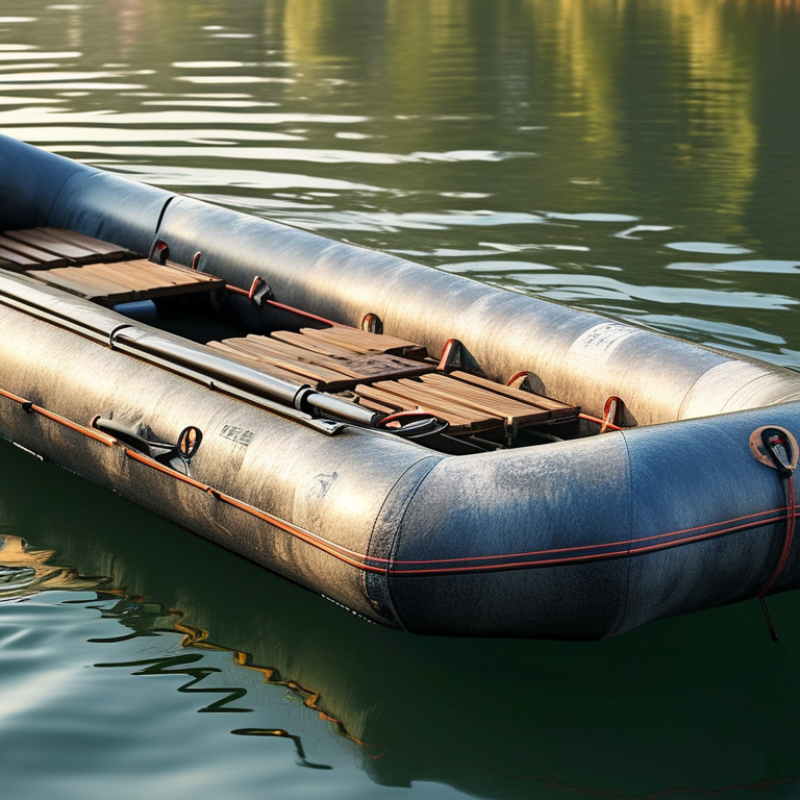
An inflatable raft boat is a lightweight vessel formed by air-filled tubes, an inflatable or rigid floor, and a transom when an outboard motor is fitted. Separate chambers create reserve buoyancy. If one chamber loses pressure, the others may keep the boat afloat, although performance can change quickly. Valves control inflation, while oars, a small motor, or both provide movement.
ISO 6185 defines inflatable boats through construction, buoyancy, propulsion, and intended operating conditions. Its class system connects the boat with its marine application, ranging from protected inland water to more exposed coastal or offshore use. The exact requirements depend on the relevant ISO 6185 part, engine power, passenger capacity, and hull configuration. A higher class is not simply a promise of unlimited safety.
On sheltered lakes, a compact low-power boat may suit fishing, rescue support, or short recreational trips.
Coastal models need stronger floors, secure fittings, and better resistance to waves and spray.
Offshore designs demand careful load control, reliable air pressure, and correctly rated safety equipment.
Air pressure matters.
In practical use, operators often carry too much gear and underestimate wind. That mistake reduces freeboard and makes turning less predictable. I have also found that a pressure gauge is more trustworthy than judging firmness by hand. Before launching, inspect seams, valves, handles, and the transom. The ISO class helps define capability, but real conditions still require conservative decisions.

An inflatable raft boat floats because its air chambers help displace water. In fresh water, with a density of about 1,000 kg/m³, Archimedes’ principle explains the lift. The water pushes upward with a force equal to the weight of displaced water. When the raft and passengers displace enough water, that upward force balances their total weight. Air pressure keeps the tubes expanded, but the displaced volume creates buoyancy. It is not the air alone that supports the boat.
Tips: Inflate each chamber firmly, but avoid excessive pressure in hot sunlight. Check seams, valves, and the floor before launching. Keep heavy equipment low and centered. A tilted raft can push less water evenly and become unstable. Use the stated load limit as a safety boundary, not a target.
A practical estimate helps. One cubic metre of displaced fresh water can support roughly 1,000 kilograms, before subtracting the raft’s own weight. A raft with 0.35 m³ of effective displacement cannot safely carry 350 kilograms in real conditions. Waves, movement, trapped water, and imperfect inflation reduce the margin. My first calculation might look reassuring, but real water is less cooperative. Separate air chambers add useful protection because one damaged tube may not remove all flotation. Still, the raft may handle poorly and should be moved toward shore promptly.
An inflatable raft floats because its air chambers displace water. In fresh water with a density of 1,000 kg/m³, the ideal buoyant force is calculated using Archimedes’ principle: F = ρ × g × V.
The chart shows the ideal buoyant force and the equivalent supported mass for different displaced water volumes. The supported mass includes the raft, passengers, equipment, and any safety allowance.
An inflatable raft boat uses sealed air chambers to create buoyancy and stability. Its performance depends heavily on the fabric layers, not air pressure alone. Most hulls use coated PVC or CSM fabric between 0.7 and 1.2 millimeters thick. A woven polyester base provides strength, while the outer coating resists water, abrasion, and sunlight.
PVC is common because it is flexible, economical, and suitable for heat-welded seams. It also folds compactly after deflation. However, stiff PVC can become less flexible in cold weather. CSM, often paired with a rubber-like inner structure, generally handles ultraviolet exposure, chemicals, and temperature changes better. It usually costs more and may add weight.
Thickness alone can mislead. A well-bonded 0.9 mm hull may outperform a poorly finished 1.2 mm hull. Practical inspection should include seam edges, valve fittings, rubbing strips, and floor attachment points. Press the inflated tube gently. It should feel firm, but not rock-hard. Small pressure changes are normal with temperature.
A thicker fabric is not automatically safer.
Real-world use exposes weaknesses quickly. Dragging the boat over sharp gravel can damage any coating. PVC repairs are often straightforward with compatible patches, while CSM may require more careful adhesive selection. I would also reconsider carrying capacity claims after testing the boat with real equipment, because published figures rarely reflect uneven loading or rough launch conditions.
An inflatable raft boat stays afloat through sealed air chambers inside its tubes. Most designs use two or more independent chambers, each with its own valve. This separation adds useful backup. If one chamber loses air, the others can still provide partial buoyancy. The boat may feel uneven, though. That problem can surprise inexperienced users.
Inflation systems usually include one-way valves, an air pump, and a pressure gauge. Each chamber should reach its specified PSI, meaning pounds per square inch. The rated PSI is not universal. It depends on the tube material, chamber size, and construction. Use the supplied measurement guidance rather than judging firmness by hand. Pressure matters. Temperature changes it. A cool morning can reduce pressure, while direct sunlight can raise it significantly. Overinflation may strain seams and valves.
Inflate the main chambers evenly, checking pressure after each one. Some raft boats have a separate floor chamber, which may require a different PSI rating. Never treat the tube rating as the floor rating. I once relied on touch instead of a gauge, and the boat felt stable until the water exposed the imbalance. That shortcut was careless. Check valve caps, listen for escaping air, and inspect the tubes before launching. A slow leak can become obvious only after several minutes under load. Do not guess. Even a small pressure difference can affect tracking, stability, and rowing effort.
An inflatable raft boat works by trapping air inside sealed tubes. Those tubes displace water and support the floor, passengers, and equipment. ISO 6185 provides design and testing requirements for inflatable boats, but it does not give every raft one universal passenger limit. The stated capacity depends on hull length, chamber design, engine power, and tested load conditions. Always read the capacity plate, not just the marketing description.
Capacity is only half the question. ISO 6185 load ratings include people and their equipment, so a cooler, battery, anchor, and fuel can reduce practical carrying capacity. Tube diameter also matters. Larger tubes provide more reserve buoyancy and better resistance to side roll. They can, however, increase windage and make the boat harder to control in gusts. Bigger is not automatically safer.
Trim changes quickly. One adult moving aft can lift the bow and reduce steering control. Heavy items should sit low and near the centerline. The U.S. Coast Guard’s 2023 Recreational Boating Statistics recorded 4,064 boating accidents, showing why loading discipline deserves attention. That figure does not prove that inflatable rafts caused those accidents. It does show that small handling errors can matter.
A simple dockside check helps: inflate each chamber to the manufacturer’s specified pressure, inspect the valves, then place expected gear aboard. Watch the waterline. If the floor flexes heavily or the bow rises sharply, the rated load may already be too optimistic for real conditions.