7 Tips for Choosing a Seamless Carbon Steel Pipe Supplier

Choosing a reliable Seamless Carbon Steel Pipe Supplier requires more than comparing prices on a quotation sheet. The right decision protects pressure systems, project schedules, and long-term operating costs. Pipe appearance can be misleading. A smooth surface does not prove consistent chemistry, wall thickness, or mechanical strength.

Experienced buyers examine the supplier’s manufacturing process, quality certifications, and inspection records. They ask for mill test certificates, heat numbers, dimensional reports, and traceability documents. Independent testing may also confirm tensile strength, hardness, chemical composition, and hydrostatic performance. Details matter. A small wall-thickness variation can affect installation and service life.

The supplier should understand your application, whether it involves boilers, structural supports, oil and gas equipment, or general industrial piping. Technical advice must match the selected grade, outside diameter, schedule, and operating conditions. Ask how the company handles production delays, rejected batches, packaging, and replacement claims. Clear answers reveal practical reliability.

Communication matters too. Slow replies often become costly misunderstandings. Sample pipes, factory photos, audit access, and customer references can provide useful evidence. However, documents alone are not enough. A certificate may be valid, yet the delivered batch still requires careful verification.

No supplier is perfect.

Even experienced purchasing teams can overlook freight damage, changing standards, or unclear Incoterms. That is why a careful evaluation should combine technical expertise, real production experience, transparent records, and honest communication. These seven practical tips will help you compare suppliers with greater confidence and fewer unpleasant surprises.
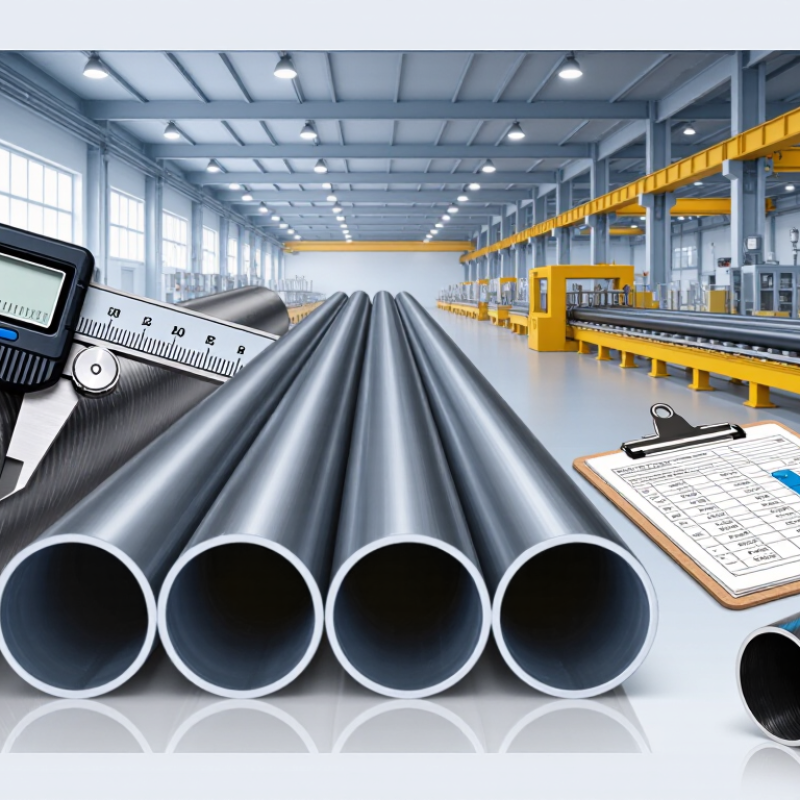
7 Tips for Choosing a Seamless Carbon Steel Pipe Supplier

Define Your Seamless Carbon Steel Pipe Requirements

Define Your Seamless Carbon Steel Pipe Requirements

A reliable purchase begins with a measurable specification, not a vague request for “carbon steel pipe.” Record the outside diameter, wall thickness, pipe length, end finish, quantity, and delivery tolerance. State the working pressure and temperature clearly. A pipe for a steam line needs different controls from one used for structural support.

Select the material grade according to service conditions. ASTM A106 commonly covers seamless carbon steel pipe for high-temperature service, while ASME B36.10M helps verify standard dimensions. Include the required test method, such as hydrostatic testing or ultrasonic examination. Ask for heat numbers, mill test certificates, chemical composition, and mechanical results. Small omissions matter.

The World Steel Association reported 1,888.2 million tonnes of crude steel production in 2023. That scale does not guarantee consistent pipe quality. Your supplier still needs traceable production records.

Specify corrosion allowance, surface condition, straightness, and acceptable ovality. Mention whether ends require threading, beveling, or plain cuts. Packaging also matters; exposed pipe can arrive with damaged edges or surface rust.

From practical sourcing experience, buyers often focus on price before confirming dimensions. That approach creates expensive rework. A clean spreadsheet helps, but it can miss actual installation conditions. Recheck the fluid, support spacing, welding process, and local compliance requirements. A technically correct pipe may still be unsuitable for your site.


Verify Supplier Quality Standards and Production Capabilities

A reliable Seamless Carbon Steel Pipe Supplier should prove quality through records, not polished claims. Ask for current quality certifications, approved procedures, and inspection responsibilities. ISO 9001 can indicate a controlled system, but it does not guarantee every pipe meets your specification. Check the applicable ASTM, ASME, EN, or project standard carefully.

Paper is not enough. Request sample mill test certificates showing chemical composition, tensile strength, yield strength, heat number, dimensions, and hydrostatic test results. Confirm that each certificate matches the pipe markings and packing list. Traceability matters. A missing heat number can complicate investigation after delivery. Independent inspection may also verify ultrasonic testing, surface condition, wall thickness, and straightness before shipment.

Production capability deserves equal attention. Visit the facility when practical, or request a live production video and recent equipment records. Look for piercing mills, heat-treatment furnaces, sizing equipment, calibration tools, and non-destructive testing stations. Ask how the supplier handles overloads, rejected pipes, and urgent changes. The answer can reveal more than a sales presentation. A supplier may own modern equipment yet outsource critical processes without clear control. That risk is easy to overlook. Compare stated capacity with actual lead times, inspection data, and previous project evidence. Leave room for doubt, and verify claims independently.

Evaluate Material Traceability, Testing, and Certifications

Choosing a seamless carbon steel pipe supplier requires more than comparing prices. Material traceability should be visible from the steel mill to the final shipment. Ask for heat numbers, mill test certificates, and production records. These details connect each pipe to its chemical composition and manufacturing route. If records look incomplete, pause before ordering.

Tip 1: Request traceable heat numbers on every bundle.

Tip 2: Check whether certificates match the actual pipe markings.

A reliable supplier should explain discrepancies clearly, not hide behind generic paperwork. In practice, small marking errors can happen. They still deserve investigation.

Testing also reveals how seriously a supplier controls quality. Review tensile, hardness, hydrostatic, and ultrasonic testing procedures. Confirm the applicable standard and acceptance limits. Independent inspection can add confidence, especially for critical applications.

Do not accept a certificate without checking its date, scope, and issuing laboratory.

Tip 3: Ask for sample test reports before production.
Tip 4: Verify calibration records for testing equipment.

Certifications matter, but they are not magic. Confirm the certificate covers the supplied product, facility, and current production period. Supplier experience helps, yet evidence matters more than confident promises.

Compare Pricing, Lead Times, and Supply Stability

When choosing a seamless carbon steel pipe supplier, compare landed cost, not only the quoted price. Ask for a line-by-line breakdown covering steel, forming, heat treatment, testing, packaging, freight, and duties. The World Steel Association’s October 2024 Short Range Outlook projects global steel demand at about 1.75 billion tonnes in 2024 and 1.77 billion tonnes in 2025. Demand changes can affect billet costs and supplier quotations. Request validity periods and adjustment formulas. Cheap quotes can become expensive later.

Lead time needs evidence. Ask for production slots, inspection dates, mill certificates, and dispatch records. The World Bank’s 2023 Logistics Performance Index reports that international shipments can take roughly 44 days from port entry to final delivery. A supplier promising seven days may exclude testing or inland transport. Check whether the quoted schedule includes both. It often does not. I once treated a short lead time as a strength, then found that coating and documentation added twelve days.

Supply stability deserves separate testing. Review capacity, approved material sources, safety stock, and the supplier’s performance during previous disruptions. UNCTAD’s Review of Maritime Transport 2024 describes major route disruptions and longer voyages, which can raise freight costs and delay arrivals. Ask for two transport options and a backup production window. Compare defect rates, on-time delivery percentages, minimum order quantities, and payment terms. Request recent inspection reports from independent laboratories. A supplier with slightly higher pricing may provide better traceability and fewer costly stoppages. Pricing alone is a weak decision tool.

Assess Technical Support, Communication, and After-Sales Service

Tip 1: Test the supplier’s technical support before placing a large order. Ask about wall thickness, pressure ratings, steel grades, and applicable standards. A capable engineer should explain tolerances clearly, not simply forward a catalogue. Request sample mill certificates and heat-number records. Check whether the details match your project drawings. Small mismatches can create expensive installation delays.

Tip 2: Judge communication through practical questions. Ask how quickly the team responds to technical changes, inspection requests, or delivery risks. Reliable suppliers provide readable drawings, production updates, packing photos, and clear shipping documents. I once treated fast replies as proof of competence. That was too simple. Good communication also means admitting uncertainty and correcting inaccurate information promptly.

Tip 3: Examine after-sales service before signing the contract. Confirm the claims process, inspection period, replacement policy, and responsible contact person. Ask how they investigate ovality, surface damage, or incorrect dimensions. A useful supplier will request photographs, inspection data, and batch information before proposing corrective action. Look for documented root-cause analysis, not vague promises. No supplier is perfect. However, responsible support remains visible when a shipment arrives with problems.

7 Tips for Choosing a Seamless Carbon Steel Pipe Supplier

Recommended supplier evaluation weighting based on practical procurement priorities

Product compliance and quality assurance receive the highest weighting because seamless carbon steel pipes must meet specified standards, dimensions, and traceability requirements. Technical support, communication, and after-sales service are also essential for resolving application questions, coordinating orders, and managing issues after delivery.

Get a Quote
910-483-7828