How to Choose the Best Quadricycle Bike for Global Sourcing?

Choosing the right Quadricycle Bike for global sourcing requires more than comparing catalog prices. Buyers must assess performance, safety, supplier reliability, and long-term operating costs together. A polished product image proves very little.

A practical evaluation begins with the intended use. Will the vehicle carry passengers, parcels, or refrigerated goods? Measure the route width, maximum gradient, daily distance, and parking space. Then compare frame strength, payload capacity, braking performance, battery range, charging time, and weather protection. A delivery fleet may need a stronger rear axle, while a campus operator may value a tighter turning radius. Small details matter.

Supplier verification is equally important. Request technical drawings, battery specifications, test reports, warranty terms, spare-parts lists, and production photos. Inspect a pre-shipment sample when possible. Confirm whether the manufacturer can support packaging, labeling, documentation, and after-sales service in your target market. Local vehicle rules and electrical requirements can differ widely, so independent compliance checks remain essential.

Do not trust the lowest quotation too quickly. It may exclude chargers, replacement batteries, export packaging, or service support. Total landed cost gives a clearer picture. Consider freight, duties, insurance, maintenance, and expected downtime. A cheaper frame can become an expensive lesson.

No checklist is perfect. Supplier claims may change, and factory samples may hide production inconsistencies. Keep written specifications, record inspection results, and build a realistic pilot order before scaling. With careful evidence and honest comparison, global buyers can choose a Quadricycle Bike that performs reliably beyond the showroom.
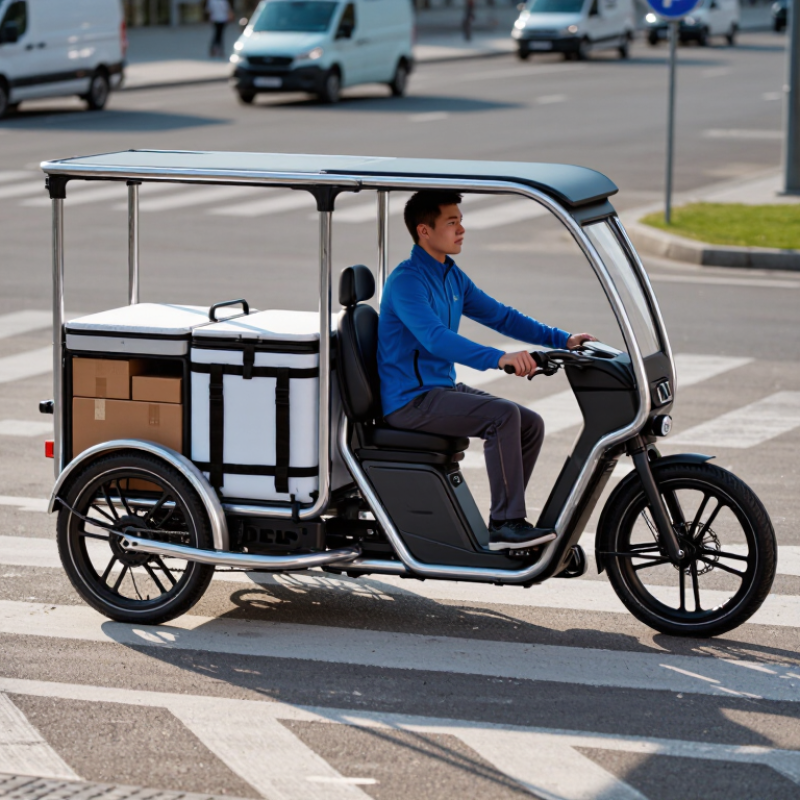
How to Choose the Best Quadricycle Bike for Global Sourcing?

Understanding Quadricycle Bike Types and Intended Uses

A quadricycle bike is not one universal vehicle. Its frame, drive system, and cabin should match the daily task. Pedal cargo models suit short routes, moderate loads, and frequent stops. They offer simple maintenance, but hills can quickly expose their limits. Electric-assist cargo quadricycles reduce rider fatigue and support heavier goods. Battery range depends on payload, temperature, road surface, and riding habits. Do not trust catalog range alone. Test it.

Passenger models need stable seating, easy step-in access, handholds, and weather protection. They may serve campuses, resorts, residential communities, or short urban transfers. A delivery model needs low loading height, secure storage, and tight turning clearance near shops. Enclosed bodies protect parcels from rain, yet they add weight and may trap heat. Open platforms are lighter and easier to inspect. They are less forgiving in poor weather.

For global sourcing, classify the intended use before comparing suppliers. Measure doorways, loading areas, road widths, and daily route distances. Check local service capacity, spare-part availability, and charger compatibility. A supplier’s test report is useful, but it is not the whole answer. Inspect welds, brake response, steering play, and frame stability during a loaded road test. Ask for load ratings based on axle distribution, not only total weight. Measure twice. I would also question whether four wheels are truly needed. They improve stability, but increase width, tire cost, and storage demands. Some compromises remain unavoidable. They should be visible before payment.


How to Choose the Best Quadricycle Bike for Global Sourcing?

Typical benchmark comparison of passenger, cargo, and utility quadricycle bikes by payload capacity, driving range, and maximum speed.

Cargo models generally provide the highest payload capacity, while passenger models balance range and speed for shared mobility. Utility models are better suited to controlled environments, short-distance operations, and lower-speed work applications. Values represent typical market benchmarks and can vary by battery size, motor output, road regulations, and vehicle configuration.

Defining Performance, Capacity, and Safety Requirements

How to Choose the Best Quadricycle Bike for Global Sourcing?

Defining Performance, Capacity, and Safety Requirements

A suitable quadricycle bike should match the work, not just the showroom specification. Define daily distance, road surfaces, gradients, and operating temperatures before contacting suppliers. A vehicle carrying parcels on paved streets needs different performance from one moving tools across rough industrial sites. Check motor output, climbing ability, turning radius, and stopping distance under realistic loads. Test results matter more than attractive claims.

Capacity must include people, cargo, and equipment. Measure the usable cargo area, not only the advertised maximum weight. Record axle loading, suspension behavior, battery range, and charging time during a full working cycle. A payload near the limit may reduce control and increase component wear. Small details matter. Door width, floor height, weather protection, and storage access can affect daily productivity.

Safety requirements should be written as measurable conditions. Review braking performance, lighting, mirrors, seat restraints, steering response, frame protection, and battery safeguards. Ask for inspection records, test methods, and production consistency evidence. Requirements also differ between destination markets, so confirm applicable transport and electrical rules before purchase. Do not assume one certificate covers every region. A perfect spreadsheet can still miss a wet downhill stop or an overloaded corner. Recheck those assumptions with a sample vehicle. That extra step may feel inefficient, but it often reveals the most expensive weakness.

How to Choose the Best Quadricycle Bike for Global Sourcing? - Defining Performance, Capacity, and Safety Requirements

Evaluation Dimension Recommended Requirement Typical Reference Range Why It Matters for Global Sourcing Verification Method
Vehicle Classification Define the intended legal category before selecting the vehicle. European L6e or L7e; local low-speed or light-electric-vehicle categories may differ. Classification affects maximum speed, power, dimensions, testing, licensing, and road access. Obtain the target-market homologation pathway and confirm the applicable authority requirements.
Seating and Payload Match seating capacity and useful payload to the intended use. 1–2 occupants; approximately 150–350 kg useful payload for compact quadricycles, depending on configuration. Overestimating payload can reduce range, braking performance, tire life, and structural durability. Review certified mass limits, axle loads, seat-belt anchorage ratings, and a loaded-road test.
Maximum Speed Select a speed suitable for urban roads, private sites, or last-mile delivery. 25–45 km/h for many light quadricycles; higher-speed versions require different approval and equipment. Speed capability influences road eligibility, stopping distance, insurance, and driver requirements. Check the speed limiter, controller settings, GPS speed test, and certification documents.
Motor Output Specify continuous and peak output rather than peak power alone. Approximately 1–4 kW continuous output for compact electric quadricycles; confirm local legal limits. Continuous power is more useful for gradients, heat management, and repeated commercial operation. Request motor curves, controller specifications, gradeability tests, and thermal-protection data.
Battery Capacity Size the battery using daily distance, payload, terrain, climate, and charging access. Approximately 5–20 kWh for compact electric models; usable capacity is lower than nominal capacity. A larger battery increases range but also adds cost, mass, charging time, and transport complexity. Verify battery label, usable-energy measurement, BMS protections, cycle data, and transport documents.
Real-World Range Use an operating target instead of relying only on laboratory range figures. Approximately 50–150 km per charge for many compact electric quadricycles under moderate conditions. Cold weather, hills, high speed, heating, air conditioning, and payload can materially reduce range. Conduct a repeatable route test at defined speed, payload, temperature, and road gradient.
Charging System Ensure compatibility with the destination country’s electrical supply and charging habits. AC charging commonly ranges from about 1.8–7.4 kW; charging time often takes 3–10 hours. Plug type, voltage, onboard charger rating, and installation requirements vary by market. Confirm input voltage, plug standard, residual-current protection, charge cut-off, and overheating control.
Braking Performance Require stable braking with adequate performance under maximum permitted load. Hydraulic or mechanically actuated disc/drum systems; regenerative braking may supplement friction brakes. Stopping distance changes with speed, tire condition, gradient, load, and wet surfaces. Perform loaded dry and wet-surface tests, parking-brake tests, and brake-fade checks.
Tires and Handling Select tires rated for the vehicle’s speed, axle load, climate, and road surface. Four-wheel road tires with load and speed ratings matched to the approved configuration. Correct tire specification affects cornering stability, braking, energy use, and replacement availability. Check tire markings, pressure recommendations, turning circle, suspension travel, and stability tests.
Passive Safety Prioritize a rigid passenger cell, seat belts, head restraints, doors, and protected battery placement. Two- or three-point restraints, impact-absorbing structures, safety glass, and compliant locks where required. Small vehicles share roads with larger vehicles, so occupant protection must be assessed carefully. Review structural test reports, belt anchorage evidence, door-latch tests, and battery crash protection.
Active Safety and Visibility Specify compliant lighting, mirrors, indicators, horn, reverse warning, and visibility features. Headlamps, tail lamps, stop lamps, turn indicators, reflectors, mirrors, and daytime visibility equipment as required locally. Visibility requirements differ by market and are particularly important for urban and delivery use. Inspect photometric markings, beam alignment, warning functions, mirror field of view, and wiring protection.
Ingress and Climate Protection Match enclosure and electrical protection to rain, dust, heat, cold, and humidity conditions. Common target: IP54 or higher for selected electrical enclosures, subject to system design and local requirements. Water or dust ingress can cause corrosion, insulation faults, charging failures, and battery damage. Request ingress-test evidence and conduct water spray, insulation-resistance, and cold/heat validation.
Dimensions and Transport Confirm road-space requirements, container loading, service access, and storage footprint. Approximately 2.0–3.2 m length and 1.0–1.5 m width for many compact quadricycles. Vehicle dimensions affect parking, delivery routes, port handling, and shipping costs. Measure production units, calculate packing density, and confirm tie-down and lifting points.
Serviceability Choose modular components with accessible service points and documented diagnostics. Replaceable tires, brake parts, lamps, fuses, suspension components, and battery modules where permitted. Local parts availability and technician training directly affect uptime and total ownership cost. Review service manuals, spare-parts lists, diagnostic access, warranty terms, and repair-time targets.
Compliance and Documentation Require a complete, market-specific compliance file before mass production. Technical file, certificates, test reports, user manual, conformity marking, battery documentation, and labeling. Incomplete documentation can delay customs clearance, registration, insurance, or retail launch. Use independent inspection and verify documents against the exact vehicle configuration and production batch.
Note: The ranges shown are general sourcing benchmarks, not universal legal limits. Final specifications must be confirmed against the road-vehicle, battery, electrical, safety, labeling, and environmental regulations of each destination market.

Comparing Materials, Components, and Electric Drive Systems

How to Choose the Best Quadricycle Bike for Global Sourcing?

Comparing Materials, Components, and Electric Drive Systems

A strong quadricycle starts with its operating environment, not its catalogue appearance. For urban deliveries, a corrosion-resistant steel frame offers durability and easier welding access. Aluminum reduces weight but can complicate repairs in smaller workshops. The International Aluminium Institute reports that recycled aluminum uses about 95% less energy than primary production. That difference can influence both cost and sourcing credibility.

Components deserve equal attention. Sealed bearings, mechanical disc brakes, and puncture-resistant tires usually improve fleet uptime. However, lighter components may reduce payload margins. Check the frame, axle, and wheel ratings together. Do not evaluate them separately. The IEA’s Global EV Outlook 2024 identifies electric two- and three-wheelers as the most widely adopted electric road vehicles. Quadricycles are different, but the lesson remains useful: simple electric systems often scale better in emerging markets. Battery pricing also matters. BloombergNEF reported an average lithium-ion pack price of 115 dollars per kWh in 2024. Lower prices do not automatically mean better quality.

Tips: Compare battery capacity, motor power, controller protection, and charging time as one system. Request sample testing with real cargo, slopes, rain, and repeated braking. Ask for test records, not promises. A common mistake is choosing the highest-capacity battery. It may add weight, charging expense, and frame stress. I would leave room for improvement here; local repair skills can matter more than impressive specifications.

Evaluating Suppliers, Certifications, and Global Compliance

Choosing a quadricycle bike for global sourcing requires more than comparing price and range. The supplier’s evidence matters as much as the vehicle itself. Ask for factory details, legal company information, production capacity, and recent quality records. A video tour helps, but an independent audit provides stronger evidence. Request samples from the same production line used for export orders.

Small details matter. Check weld consistency, brake response, connector sealing, and packaging damage after a trial shipment.

Certifications must match the destination market and vehicle category. Do not accept a generic “CE approved” statement without a declaration, test reports, and product identification. For electric models, review battery safety, charger testing, electromagnetic compatibility, and transport documentation. Requirements can change by country, even within one region.

Confirm road classification, lighting, mirrors, speed limits, labeling, language, and recycling duties with local authorities or qualified compliance specialists. Use accredited laboratories where possible, and verify report numbers directly.

A reliable supplier maintains serial-number traceability and records corrective actions. Include inspection points, spare-part support, warranty handling, and recall cooperation in the contract. Payment terms should reward verified milestones, not promises.

One caution remains: a neat certificate file can conceal weak production control. Recheck critical documents before every major order. I would also test real winter performance, although many sourcing plans overlook it. Mud, cold batteries, and uneven roads reveal weaknesses that showroom demonstrations hide.

Calculating Total Sourcing Costs and Planning Quality Control

How to Choose the Best Quadricycle Bike for Global Sourcing?

Calculating Total Sourcing Costs and Planning Quality Control

A low factory price can hide expensive risks. Calculate landed cost per quadricycle, not only the unit quotation. Include tooling, packaging, inland transport, ocean freight, insurance, duties, inspection, storage, and warranty reserves. For example, a 420-dollar unit may require another 135 dollars before reaching the warehouse. Small leaks matter.

UNCTAD’s Review of Maritime Transport 2024 reported that seaborne trade grew 2.4% in 2023, while route disruptions increased voyage uncertainty. Add a realistic freight buffer of 10% to 20%. The World Bank’s Logistics Performance Index 2023 evaluates 139 economies through customs, infrastructure, shipment arrangements, logistics competence, tracking, and timeliness. Use these indicators when comparing sourcing countries. A cheaper origin may create longer lead times and higher inventory costs.

Quality control should begin before production. Request drawings, battery specifications, load tests, corrosion requirements, and packaging standards. Use ISO 2859-1 sampling methods, but adjust inspection levels for safety-critical parts. Check welds, steering alignment, braking distance, fasteners, lights, and charger performance. Record photos and serial numbers.

Do not trust one final inspection. A staged plan catches problems earlier. Inspect the first article, monitor production, then approve random finished units. My first cost model would have ignored rework and rejected cargo. That was a mistake. Build a defect allowance, but challenge it every quarter. Perfect forecasting is unrealistic. A transparent spreadsheet is better.

Article Source:

Get a Quote
910-483-7828