How to Choose the Best Disc Diffuser for Your Application
Choosing the right Disc Diffuser is a process decision, not merely a product comparison. Tank depth, airflow, wastewater characteristics, fouling risk, and maintenance access all influence performance. A diffuser that performs well in clean water may struggle in activated sludge.
The U.S. Environmental Protection Agency’s 2023 Clean Watersheds Needs Survey estimated $630.1 billion in future clean-water infrastructure needs. The WHO and UNICEF Joint Monitoring Programme reported that 2.2 billion people lacked safely managed drinking water in 2022. These figures highlight a practical reality: aeration equipment must deliver reliable treatment while controlling energy and maintenance costs.
Dr. Bruce E. Rittmann, a leading wastewater-treatment researcher, offers a useful principle: “The process must be designed around the biology.” That principle applies directly to Disc Diffuser selection. Fine bubbles may improve oxygen transfer, but smaller pores can increase fouling sensitivity. Coarse bubbles may resist clogging, yet they often require more airflow. Nothing is universally best.
A careful selection compares standard oxygen transfer efficiency, oxygen transfer rate, pressure loss, membrane durability, and lifecycle cost. Field experience matters, too. Observe the basin: uneven bubbles, rising pressure, or dead zones can reveal problems that brochures hide. The numbers may look perfect.
Real systems are rarely perfect. Pilot testing, seasonal data, and honest maintenance records can expose weak assumptions before a full installation. Reports provide useful direction, but site-specific evidence should make the final decision.
Understanding Disc Diffuser Types and Operating Principles
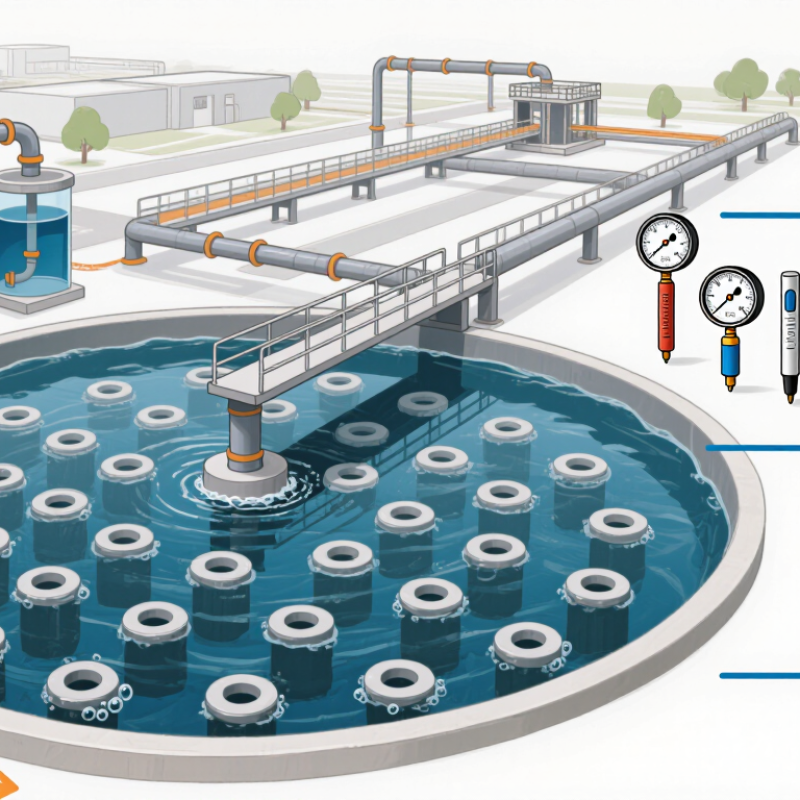
Choosing the best disc diffuser starts with understanding how different types release air into water. Fine-bubble disc diffusers use small pores to create many tiny bubbles. They provide strong oxygen transfer because the bubbles remain underwater longer. Coarse-bubble discs create larger bubbles and stronger mixing. They are useful where solids may settle or clogging is a concern.
The operating principle is simple. Compressed air enters the diffuser membrane and passes through calibrated openings. Water pressure controls the required airflow and affects bubble size. A deeper tank usually improves oxygen transfer, but it also demands more blower pressure. Membrane material, pore density, and disc diameter influence performance. In field inspections, uneven bubbling often signals fouling, damage, or poor air distribution. Yet, airflow alone does not prove good treatment. Temperature, water quality, and maintenance history matter too.
Tips: Match fine bubbles with oxygen-demanding processes and stable water conditions. Consider coarse bubbles when mixing and clog resistance matter more. Check airflow across several discs, not just one. Keep a pressure record. Small changes can reveal fouling early. No selection is perfect. I have seen efficient diffusers underperform when operators ignored tank depth or cleaning intervals. Test the diffuser under actual site conditions before making a final decision.
Evaluating Bubble Size, Oxygen Transfer, and Flow Performance
Choosing the best disc diffuser starts with the process, not the catalogue. Bubble size is a practical indicator of oxygen transfer. Fine bubbles expose more gas-water surface area. They can reduce energy demand in suitable basins. However, fine pores may foul quickly in greasy or poorly screened wastewater. I have seen performance decline within weeks when maintenance assumptions were too optimistic. Measure the actual air demand and solids load before selecting pore density. Tiny bubbles are not always better.
Oxygen transfer should be evaluated under operating conditions. Clean-water test data rarely reflects mixed liquor, temperature, or salinity. Ask for standard test methods, test depth, airflow, and alpha factor details. These figures help separate laboratory potential from field performance. A diffuser with strong transfer efficiency may still fail if its airflow range is narrow. Check oxygen demand during peak loading, not only average loading. Track dissolved oxygen at several basin points. Uneven readings often reveal poor diffuser coverage or blocked sections.
Flow performance depends on pressure loss, spacing, and header balance. A practical trial should confirm stable bubbles across the entire disc area. Watch for dead zones, pulsing, and rising pressure. These symptoms can signal clogging, undersized blowers, or uneven installation. Select materials that tolerate the wastewater chemistry and cleaning method. Keep replacement access in the design. This detail is often overlooked. Review the choice after seasonal changes, because temperature shifts alter oxygen demand and transfer efficiency.
How to Choose the Best Disc Diffuser for Your Application - Evaluating Bubble Size, Oxygen Transfer, and Flow Performance
| Diffuser Type | Typical Bubble Diameter | Recommended Airflow per Disc | Indicative Oxygen Transfer Efficiency* | Typical Pressure Drop at Design Airflow | Fouling Resistance | Best-Fit Applications |
| Fine-Pore Membrane Disc | 1–3 mm | 1.5–6 Nm³/h | 8–15% standard clean-water test
Often highest oxygen transfer | 25–55 mbar | Medium | Municipal wastewater, activated-sludge basins, applications prioritizing energy efficiency |
| Coarse-Bubble Disc | 4–8 mm | 4–12 Nm³/h | 3–8% standard clean-water test
Lower transfer, stronger mixing | 10–30 mbar | High | Equalization tanks, sludge holding, grit-prone service, mixing-dominated processes |
| Perforated Elastomer Disc | 2–5 mm | 2–8 Nm³/h | 6–12% standard clean-water test | 20–45 mbar | Medium to High | General wastewater treatment where flexibility, intermittent operation, and moderate transfer are required |
| Rigid Porous Disc | 1–4 mm | 2–10 Nm³/h | 7–13% standard clean-water test | 30–70 mbar | Medium | Industrial aeration, deep tanks, and systems requiring a rigid diffuser surface |
| High-Flow Membrane Disc | 2–4 mm | 6–15 Nm³/h | 5–10% standard clean-water test
Designed for higher air loading | 20–50 mbar | Medium | High-capacity basins, peak-load operation, and installations with limited diffuser count |
Selection Notes
- Fine bubbles generally provide greater gas-liquid contact area and higher oxygen transfer, but they usually require cleaner air and more attention to fouling control.
- Coarse bubbles provide stronger liquid mixing and better tolerance of solids, although their oxygen transfer efficiency is typically lower.
- A diffuser should be operated within its recommended airflow range to maintain uniform bubble release and avoid excessive pressure loss.
- Actual performance depends on submergence depth, water temperature, dissolved-solids concentration, wastewater characteristics, diffuser spacing, and air quality.
*Indicative oxygen transfer efficiency ranges are comparative engineering values for clean-water testing under standard conditions; field results may vary and should be verified through site-specific testing.
Comparing Maintenance Needs, Service Life, and Total Operating Cost
Choosing a disc diffuser requires more than comparing purchase prices. In field audits, I have seen low-cost units create higher expenses through frequent cleaning, membrane replacement, and rising air demand. A diffuser should allow practical access without draining an entire tank. Inspectors should check mounting hardware, pipe connections, and membrane condition during routine maintenance.
Service life depends on wastewater chemistry, solids loading, operating pressure, and cleaning quality. Fine bubbles may transfer oxygen efficiently, but clogged pores can force blowers to work harder. That extra energy can become the largest operating cost. A diffuser lasting five years is not economical if it causes severe pressure loss after eighteen months. Record airflow, pressure, dissolved oxygen, and cleaning dates. These measurements reveal gradual decline better than visual inspection alone.
Total operating cost should include labor, replacement parts, downtime, energy, and disposal requirements. Ask for tested performance data under conditions close to your process, not only laboratory results. I prefer a simple cost model using actual blower power and maintenance hours. It is not perfect. Seasonal loading and uneven air distribution can distort projections. A pilot test may expose those weaknesses before full installation. Thin membranes, blocked headers, or difficult access points can quietly change the calculation. Small assumptions matter.