Choosing among the 10 Best Kitchen Faucets for Every Budget starts with a simple question: what happens at your sink each day? A faucet may look polished under showroom lights, yet feel awkward when you fill a stockpot or rinse leafy greens. Kitchen Faucets vary in reach, handle design, spray settings, installation requirements, and price. Small details matter.
Plumbing expert Richard Trethewey offers a useful principle, paraphrased here: “Choose a faucet for the sink, the household, and the work it needs to handle.” That means checking the number of mounting holes, measuring the sink’s depth, and considering who will use the controls. A pull-down sprayer can reach crowded corners. A high-arc spout gives tall cookware room. But extra features are not automatically better. More parts can mean more upkeep.
Budget matters, too. An affordable model may provide dependable everyday function, while a higher-priced faucet might add a stronger finish, smoother operation, or a longer warranty. Read the specifications carefully. Confirm what comes in the box, and check whether your countertop needs an adapter or separate soap dispenser. Installation can be less straightforward than expected.
This guide compares ten options across price ranges, focusing on practical fit, usability, materials, and stated warranty coverage. It cannot predict how every faucet will feel in every home. That part is personal. A finish that looks warm online may seem too dark beside your actual countertop. The best choice is the one that suits your sink, routines, and budget—not simply the one with the longest feature list.
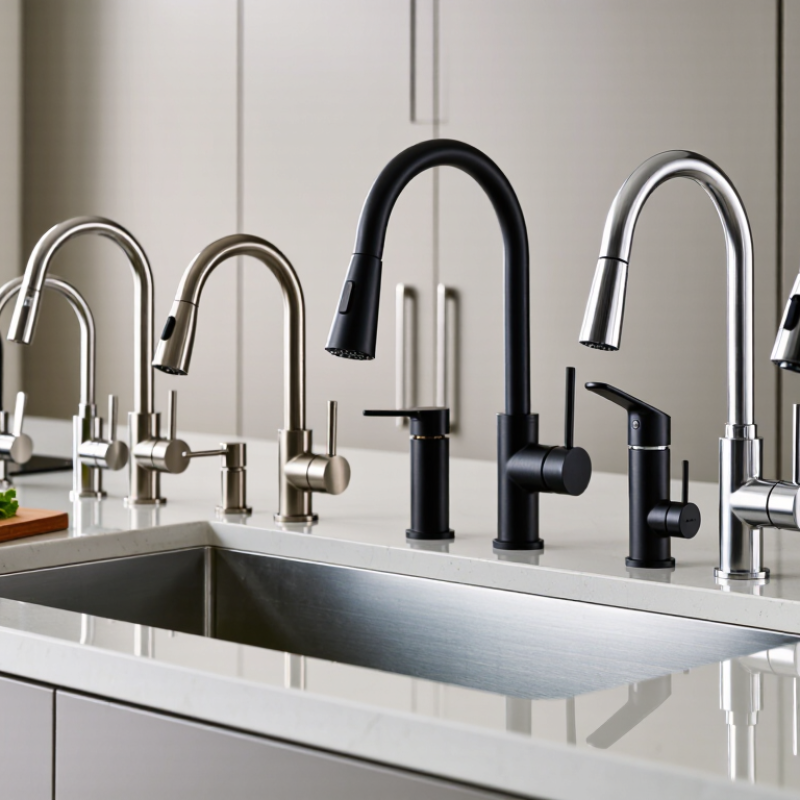
Kitchen faucets differ in reach, spray control, and installation needs. A pull-down faucet has a flexible spray head that lowers into deep pots. A pull-out model usually has a shorter spout, which can suit compact sinks. High-arc designs leave room for tall pitchers, but may splash in shallow basins. Check the sink’s number of mounting holes and the space beneath cabinets before choosing. That small measurement can prevent a frustrating return.
Core features affect daily use more than appearance alone. A single-handle control is quick to adjust with wet hands, while separate handles allow finer temperature changes. A ceramic cartridge can help reduce drips, though installation and water quality also matter. Look for a sprayer that switches smoothly between stream and spray, and a hose that retracts without snagging. Finishes vary in how visibly they show water spots; darker surfaces can need more wiping. Touchless controls are convenient, but they add parts that may need troubleshooting. No setup is perfect.
Tips: Measure the faucet’s reach against your sink before buying. Test the handle path near a backsplash. If possible, check replacement-part availability and confirm the faucet fits your existing connections. One detail is easy to miss: a powerful spray can scatter water in a shallow sink.
A practical comparison of common kitchen faucet styles, typical U.S. retail price ranges, and features to consider. These are category-based recommendations rather than rankings of specific products.
| Kitchen Faucet Type | Typical Price Range (USD) | Common Operation | Typical Spray or Spout Features | Installation Considerations | Best Suited For | Key Trade-Off |
|---|---|---|---|---|---|---|
| 1. Basic single-handle faucet | $50–$150 | One lever controls water flow and temperature. | Usually a fixed spout; some models include a simple spray setting. | Often fits a single-hole sink or deck; a deck plate may cover extra holes. | Budget-conscious kitchens and straightforward replacements. | Typically offers fewer spray options and a more basic finish selection. |
| 2. Pull-out faucet | $80–$250 | Single handle with a spray head that pulls forward from the spout. | Retractable hose commonly switches between stream and spray. | Check hose clearance and the space beneath the sink for the hose weight. | Compact sinks and kitchens where a lower-profile spout is useful. | The shorter spout may provide less clearance for tall cookware. |
| 3. Pull-down faucet | $100–$350 | Single handle with a spray head that pulls down into the sink. | Commonly offers stream and spray modes; some versions have a pause function. | Confirm the spout height and that the spray head can reach all sink bowls. | Everyday dishwashing and rinsing in a standard or deep sink. | A tall spout may not suit cabinets or shelves positioned close above the sink. |
| 4. High-arc gooseneck faucet | $70–$300 | Available with single- or two-handle controls. | High curved spout creates generous space beneath the outlet; spray features vary. | Measure overhead clearance and sink depth before choosing a tall model. | Filling tall pots and creating more working room above the basin. | Water may splash more in shallow sinks, depending on flow and basin shape. |
| 5. Touchless sensor faucet | $180–$600 | Turns on and off with a sensor; temperature is generally set with a handle. | May include pull-down spray functions and adjustable sensor settings. | Requires a power source, such as batteries or an outlet, depending on the model. | Hands-free use when cooking or handling raw ingredients. | Costs more than a basic faucet and may need battery replacement or power access. |
| 6. Touch-activated faucet | $150–$500 | Water starts or stops when the faucet body or handle is tapped. | Many versions combine touch activation with a pull-down spray head. | Check power requirements and follow the installation instructions for the sensor. | Users who want convenient activation without relying solely on a motion sensor. | Sensor response and placement can vary; electronic components add complexity. |
| 7. Commercial-style spring faucet | $150–$500 | Usually a single lever paired with a flexible spray head. | Exposed spring-style coil and a high-clearance pull-down sprayer. | Needs sufficient vertical clearance and a sink area that accommodates its size. | Busy kitchens and users who prefer an industrial-inspired look. | Its height and prominent design may overwhelm a small kitchen or shallow sink. |
| 8. Bridge faucet | $150–$600 | Separate hot and cold handles connect to the spout through a visible bridge. | Typically has a fixed spout; spray accessories depend on the design. | Often requires two or more deck holes; verify the sink or countertop layout. | Traditional or transitional kitchens seeking a distinctive profile. | Separate controls generally require two hands to adjust temperature and flow. |
| 9. Wall-mount faucet | $200–$700 | Controls and spout are mounted on the wall above the sink. | Spout reach varies; some designs allow the outlet to swivel. | Requires water supply lines in the wall and careful alignment with the sink. | Custom kitchens, apron-front sinks, and counters where a clear deck is desired. | Retrofitting can involve plumbing work; reach must match the basin to limit splashing. |
| 10. Pot-filler faucet | $150–$600 | Wall-mounted, articulated arm with a valve near the spout. | Folding joints extend the outlet over a cooktop or range. | Requires a water supply at the installation point; usually does not replace a sink faucet. | Filling large pots directly at the cooking area. | Does not carry filled pots back to the sink and adds a dedicated plumbing installation. |
Price ranges are approximate and can vary with materials, finish, included accessories, and retailer. Before buying, check the faucet’s hole configuration, sink depth, spout reach, water-supply connections, and installation requirements.