7 Best Inflatable Bubble Tents for Global Buyers

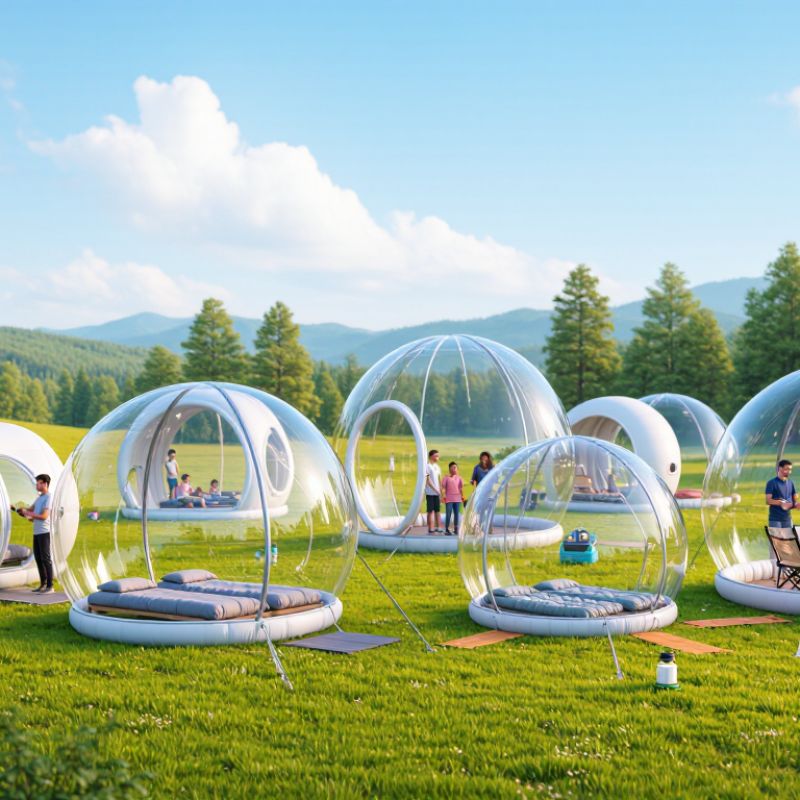
Inflatable Bubble Tents turn a campsite into a sheltered viewing space, with clear panels that bring trees, stars, and changing weather close. Their appeal is easy to see. Choosing one is less simple. A transparent dome may look impressive in a product photo, but its seams, ventilation, anchoring system, and repair options matter just as much.

The market context is encouraging, though it does not prove demand for bubble tents specifically. Grand View Research estimated the global camping tent market at about US$3.31 billion in 2023, and projected continued growth through 2030. The Outdoor Industry Association’s 2024 Outdoor Participation Trends Report counted 175.8 million U.S. outdoor recreation participants in 2023. That figure reflects one country, not the whole world. Still, it shows why buyers are examining fresh ways to experience the outdoors.

This guide compares seven options for global buyers, focusing on practical details rather than dramatic claims. We consider materials, available sizes, inflation methods, airflow, weather information, portability, and after-sales support. Buyers should confirm local plug compatibility, replacement-part availability, and shipping terms before ordering. Product specifications can vary by model and seller, so check the exact listing. A bubble tent is not automatically suitable for every climate. That limitation deserves attention. The best choice depends on where it will be used, how often it must be moved, and whether clear views outweigh privacy and temperature control.
7 Best Inflatable Bubble Tents for Global Buyers

Inflatable Bubble Tent Design: Air-Beam Frames and TPU or PVC Shells

An inflatable bubble tent relies on air beams rather than rigid poles. The beams spread the load across the structure and pack down compactly for transport. A steady inflation pressure helps the tent hold its shape, but it does not replace careful anchoring. Wind can still push against a broad, rounded shell. Check the valves, seams, and ground attachments before use. Small details matter.

The shell is commonly made from TPU or PVC, and each material brings trade-offs. TPU is flexible and often lighter, while PVC can offer a sturdy, smooth surface. Actual performance depends on thickness, coating, seam construction, and workmanship, not the material name alone. Ask suppliers for specifications and sample panels where possible. Look closely at welded seams and zipper edges. These areas can be weak points.

Transparency creates the tent’s signature open view, yet it also brings heat, glare, and privacy concerns. Ventilation panels and screened openings can improve comfort, though they may interrupt the clear appearance. Condensation is another practical issue, especially on cool nights. Vent placement and airflow deserve attention. The design is not effortless. Buyers should compare repair options, replacement valves, packed dimensions, and setup instructions alongside appearance. A beautiful shell is less useful if routine maintenance feels confusing.

Bubble Tent Types: Clear Domes, Glamping Pods, and Event Shelters

Clear inflatable domes suit scenic camps, garden stays, and viewing areas where guests want an open sightline. Their transparent panels make trees and night skies part of the experience. They also reveal every mark, so cleaning and scratch resistance matter. On sunny afternoons, interior heat can build quickly. Ask about ventilation openings, shade options, and recommended operating temperatures. The choice is not always obvious.


Glamping pods offer a more sheltered feel. Some designs combine clear roof sections with opaque walls, giving guests daylight without exposing the entire sleeping area. Check the usable floor dimensions, door width, and space for beds or luggage. Condensation can still form overnight, especially in damp climates. Vent placement matters. A pod that looks spacious in a product photo may feel tight once furnished.


Event shelters prioritize access and capacity over privacy. Wide entrances help with guest flow, while clear walls keep displays visible from outside. For repeated use, inspect seam construction, blower requirements, and the time needed for setup. Ask for installation guidance and care instructions, not just inflated dimensions. Wind exposure varies by site, and anchoring needs careful planning. For international purchasing, confirm packed size, replacement-part availability, and material specifications before ordering. These details are easy to overlook.

Weatherproofing Checks: Hydrostatic-Pressure Testing Under ISO 811

ISO 811:2018 measures a fabric’s resistance to water penetration by applying rising hydrostatic pressure. Results are commonly reported as millimetres of water column. A reading of 1,500 mm H₂O is about 14.7 kPa, but ISO 811 does not set one universal pass mark for every tent. Buyers should compare test results with the intended exposure and the supplier’s stated specification.

It is easy to overread one number.

Ask for the laboratory report, not just a “waterproof” claim. A useful report identifies the fabric face tested, conditioning, pressure result, sample count, and any variation between specimens. Small details matter.

ISO 811 tests fabric specimens; it does not, by itself, verify a finished inflatable tent’s seams, valve areas, or welded joins. Those points deserve separate checks, including inspection after inflation and exposure to controlled spray or rain.

A high fabric result can still sit beside a leaky seam. That is an inconvenient gap, but an important one.

For global buyers, clear units and repeatable test conditions make supplier comparisons more reliable than vague labels.

Fabric Durability: What ASTM D751 Coated-Fabric Tests Measure

For inflatable bubble tents, fabric strength is more than a thick-looking surface. ASTM D751, ASTM International’s standard test methods for coated fabrics, examines properties such as breaking strength, tear resistance, coating adhesion, and hydrostatic resistance. Each test answers a different question: will the fabric carry a load, resist a small cut spreading, keep its coating attached, or withstand water pressure?

That distinction matters. D751 is a set of test methods, not one universal pass/fail grade. Buyers should request the actual laboratory report, including results, units, specimen direction, and test conditions. A high tensile result alone cannot show whether repeated folding will loosen the coating or whether a seam leaks. Ask for data from both fabric directions; a coated panel can perform differently lengthwise and crosswise.

ASTM D751 results are most useful beside real construction details: coating type, fabric weight, seam method, and repair plan. For example, a lab may report tear force in one unit and hydrostatic resistance in another, so compare like with like. The standard does not, by itself, establish outdoor UV life or certify a complete tent. That gap is easy to miss. Treat the report as one part of supplier evaluation, then check the finished tent under representative inflation, handling, and wet-weather conditions. Source: ASTM International, Standard Test Methods for Coated Fabrics, ASTM D751.

Choosing Among 7 Bubble Tents: Capacity, Ventilation, UV Protection, and Warranty

Capacity is more than the number of people listed on a product page. Check the floor diameter and usable headroom, then picture sleeping bags, shoes, and a small table inside. A tent rated for four may feel crowded with four adults and their gear. Capacity charts can be optimistic. Leave room to move around.

Ventilation matters when several people sleep inside. Look for screened vents or openings that allow air to circulate while limiting insects. On a humid evening, poor airflow can leave condensation on the inner surface by morning. Keep vents clear, and check whether the openings can be adjusted. More openings are not automatically better if rain can blow inside.

For UV protection, compare the fabric’s stated rating and whether coverage applies to the full structure. Shade can shift during the day, so a protected panel does not mean every area stays cool. Warranty terms deserve the same close reading: check what they cover, how long coverage lasts, and whether seams, windows, or the pump are excluded. A clear warranty is reassuring, but it cannot replace careful setup and storage. Some details remain hard to judge from photos alone.

Get a Quote
910-483-7828