Choosing the right Festo Pneumatic Connectors can influence machine uptime, air consumption, and maintenance costs. For global buyers, the decision involves more than brand recognition. Tube diameter, thread type, operating pressure, temperature, and installation space must match the application.
This guide reviews seven practical connector options for factory automation, packaging equipment, assembly lines, and compressed-air systems. Each product should be assessed against real working conditions. A compact push-in fitting may save installation time. A stainless-steel model may perform better in humid or washdown areas. Thread compatibility also matters, especially when equipment uses G, R, NPT, or metric connections.
I have found that small connector choices often create large service problems. A fitting can look correct but still leak after repeated movement. Incorrect tube insertion is another common issue. That detail is easy to overlook. Buyers should confirm original specifications, authorized supply channels, and regional availability before ordering. Product names and configurations may also vary between markets.
The following comparison focuses on connection style, materials, sealing performance, pressure suitability, and practical installation value. It also considers replacement access and long-term reliability. No connector is ideal for every environment. That is worth stating clearly. The final selection should follow the machine manufacturer’s requirements, verified technical data, and the experience of qualified maintenance personnel. Where information appears incomplete, buyers should pause and verify it rather than rely on assumptions.
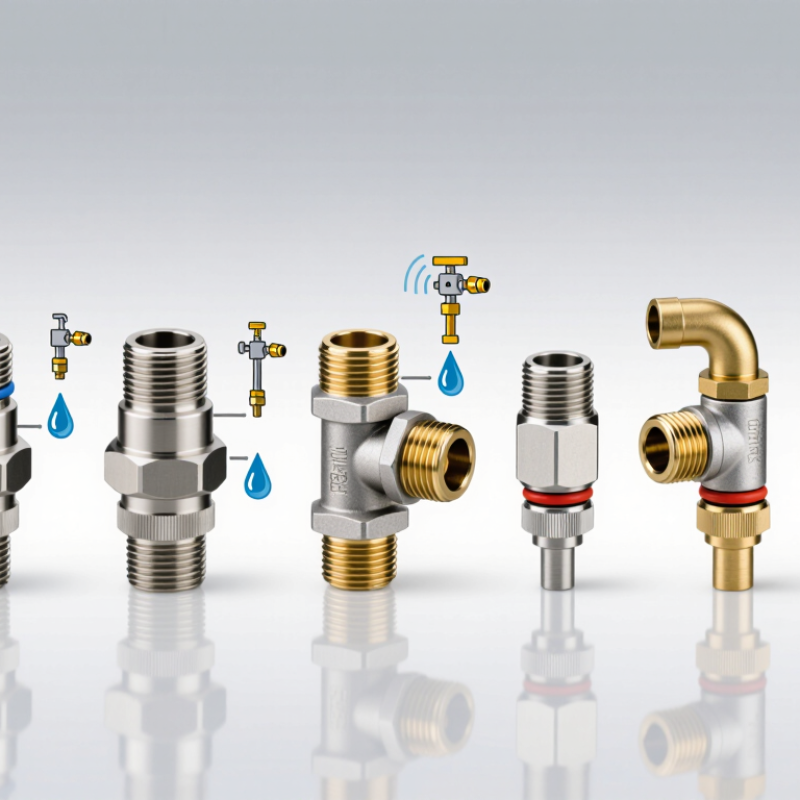
Pneumatic connectors link tubing, valves, cylinders, and filters while controlling air movement. Seven useful choices include push-in, threaded, elbow, tee, cross, bulkhead, and flow-control connectors. Push-in fittings support fast assembly beside compact robotic cells. Elbows reduce bending near cylinder ports. Tees divide air lines across packaging equipment. Bulkhead designs pass tubing through panels cleanly. Flow-control versions help adjust cylinder speed with greater precision.
Material selection depends on pressure, temperature, vibration, and cleaning routines. Nickel-plated metal suits harsh factory environments, while engineering polymers reduce weight and installation time. In food processing, smooth surfaces and suitable seals matter more than low purchase cost.
A 2024 MarketsandMarkets report places the global pneumatic equipment market on a steady growth path through 2028, driven by factory automation and process industries. That growth increases demand for reliable, interchangeable connection systems.
Global buyers should verify thread standards, tube outside diameter, seal compatibility, and replacement availability. ISO 4414 remains a useful reference for pneumatic safety principles. The International Federation of Robotics reported more than 540,000 industrial robots installed worldwide in 2023, showing why compact air connections matter in automated production. A practical commissioning lesson is simple: tiny leaks create large maintenance problems. Yet connector selection is not perfectly predictable. Dust, operator habits, and repeated bending can defeat an otherwise correct design. Testing samples under real conditions remains wiser than trusting a catalog alone.

Choosing the right pneumatic connector starts with the tube, thread, and working environment. Start with the tube. Measure its outside diameter with a caliper, not by eye. Then identify the thread standard, such as BSP or NPT, and verify the required pressure rating. A connector may look compatible but still leak after several operating cycles.
Material selection also deserves careful attention. Use corrosion-resistant materials where moisture, cleaning agents, or outdoor exposure are expected. Engineering polymers can reduce weight, while metal fittings often suit higher temperatures and mechanical loads. Do not choose by appearance. Review the supplier’s technical datasheet, including temperature limits, seal material, flow capacity, and recommended tube hardness.
Installation quality affects reliability as much as connector design. Cut the tube squarely, remove burrs, and push it fully into the fitting. Apply a light pull test before pressurizing the system. I once accepted a fitting because its size appeared correct, but its thread depth caused a slow leak. That mistake reinforced the need for sample testing. Catalog language can mislead. Global buyers should confirm drawings, tolerances, packaging details, and traceability before placing large orders. Different factories may interpret the same dimension differently. Examine every sample under actual pressure, vibration, and temperature conditions.
The chart compares representative working-pressure limits commonly found in industrial pneumatic connector families. Actual ratings depend on connector material, tube type, thread standard, temperature, sealing method, and manufacturer specifications. Always verify the technical datasheet before selection.
International buyers need connectors that match pressure, tubing, and service conditions. Seven options cover most pneumatic layouts.
Push-in straight connectors support quick tube changes.
Elbow connectors save space inside narrow control cabinets.
Tee connectors divide one air line into two branches.
Bulkhead connectors pass tubing safely through panels.
Threaded adapters bridge different port standards and sizes.
Reducers connect larger tubing to smaller tubing.
Silencers reduce exhaust noise near valves and actuators.
In field projects, I check thread type before counting fittings. A correct-looking connector can still leak after installation. I also inspect tube cuts, because angled cuts weaken the seal.
Technical datasheets should confirm pressure range, temperature limits, media compatibility, and material details. Certifications and traceable documentation support reliable international procurement.
One practical lesson is uncomfortable: the cheapest fitting may create higher labor costs later.
Tips:
Measure tube outer diameter with calipers.
Confirm metric or inch sizing.
Keep spare seals available.
Mark each branch before assembly.
Test connections at operating pressure, then inspect for slow leaks.
Leave room for wrench access.
Some compact elbows look efficient, but they can restrict maintenance movement.
Review the layout with an installer before ordering large quantities.
Choosing pneumatic connectors for global buyers requires more than matching tube diameter. Fortune Business Insights valued the global pneumatic components market at approximately USD 14.33 billion in 2023 and projects USD 22.41 billion by 2032. That growth reflects wider automation demand, but it also increases specification mistakes.
Start with pressure, temperature, and media compatibility. Nickel-plated brass suits many factory air systems. Stainless steel is safer for moisture, cleaning chemicals, and corrosive environments. Engineering polymers reduce weight, but their pressure limits need careful checking. Seal material matters too. NBR commonly handles compressed air and oils, while EPDM suits hot water and some chemicals. FKM tolerates higher temperatures, but it is not automatically suitable for every fluid. Small mismatch, large leak.
Thread standards can quietly cause failures. Compare metric, BSPP, BSPT, and NPT threads before ordering. They may look similar but seal differently. Also verify tube outside diameter, working pressure, vacuum rating, flow capacity, and allowable temperature. ISO 4414 requires pneumatic systems to address safety, pressure control, and stored energy. That is a useful baseline, not a complete product approval. MarketsandMarkets identifies factory automation as a major pneumatic equipment growth driver, making repeatable installation increasingly important. In practice, I would test a sample under real cycling conditions. Catalog figures can feel reassuring, yet vibration, condensation, and imperfect cutting often reveal the truth.
For global buyers, seven practical pneumatic connector formats cover most factory layouts: straight, elbow, tee, bulkhead, reducer, Y-branch, and swivel types. Selection should match tube diameter, pressure rating, thread standard, and working temperature. A connector may look universal, but thread mismatch can cause leakage or damaged ports.
Installation quality matters more than catalog appearance. Cut tubing squarely, remove burrs, and push it fully into the fitting. Keep the tube away from sharp edges and heat sources. Small details matter. The U.S. Department of Energy reports that compressed-air leaks can waste 20–30% of compressor output. A loose connector can therefore increase energy costs and reduce actuator speed. I have seen technicians replace a fitting when the real problem was an uneven tube cut.
Maintenance teams should inspect discoloration, vibration marks, cracked seals, and pressure drops. Record replacement dates and operating conditions. Do not rely only on visual checks. ISO 4414 recommends safe pneumatic-system design, including controlled pressure release and suitable component ratings. Global sourcing adds another risk: metric and imperial tubing may appear similar but seal poorly together. Ask suppliers for dimensional drawings, material certificates, batch traceability, and test data. Trade databases from UN Comtrade can help compare supplier countries, but shipping data does not prove product quality. I still allow extra samples for verification; procurement schedules are rarely as perfect as planned.
| No. | Connector Configuration | Typical Tube and Thread Options | Common Applications | Installation Considerations | Maintenance Requirements | Global Sourcing Considerations |
|---|---|---|---|---|---|---|
| 1 | Push-to-Connect Straight Fitting | Metric tube OD: 4–12 mm Inch tube OD: 1/8–1/2 in BSPP, BSPT, NPT | Direct connections between a pneumatic tube and a valve, cylinder, manifold, or air preparation unit. | Cut the tube squarely, remove burrs, and push it fully into the collet. Confirm tube retention with a gentle pull test. Use thread sealant only where permitted by the thread design. | Inspect for tube scoring, leakage, and damaged collets. Replace fittings if repeated reconnection causes poor tube retention or visible seal wear. | Specify tube outside diameter, thread standard, port orientation, operating pressure, temperature range, and compatible tube materials. Metric and inch sizes are not interchangeable. |
| 2 | Push-to-Connect 90-Degree Elbow | Metric and inch tube sizes Male or female threaded port BSPP, BSPT, NPT | Routing air lines around corners while reducing tube bending and saving installation space. | Align the fitting before tightening the threaded port. Avoid using the fitting to force a sharp tube bend. Leave sufficient clearance for tube release and inspection. | Check the elbow body for stress cracks and verify that vibration has not loosened the threaded connection. Replace any fitting showing deformation or leakage. | Confirm the required swivel function, panel clearance, port direction, and minimum bend radius. Swivel elbows can simplify assembly but may require locking or orientation control. |
| 3 | Tee Fitting | Equal or reducing branches Tube-to-tube Threaded branch versions | Splitting one compressed-air line into two branches or combining two lines where the circuit design permits. | Plan the airflow direction and branch layout before installation. Avoid unsupported tubing that can place bending loads on the tee, especially near moving equipment. | Inspect all three connection points for leaks. Test downstream pressure after maintenance because a tee can affect flow distribution between branches. | State whether the tee is equal or reducing, identify every port size, and request flow-performance data for applications with high air demand or simultaneous actuation. |
| 4 | Y-Branch Fitting | Equal branch sizes Metric or inch tube OD Straight-through or angled flow path | Dividing an air supply into two lines where a smoother branch path and compact layout are preferred. | Install with adequate support for each tube branch. Keep the fitting away from excessive vibration and avoid twisting the tubes during insertion. | Check branch connections separately because a leak in one branch can reduce pressure in the complete circuit. Replace fittings with damaged release rings or seals. | Compare internal flow area, branch angle, material, and allowable pressure drop. Confirm that the branch layout suits the required airflow balance and installation space. |
| 5 | Bulkhead Connector | Panel-mounted design Metric or inch tube sizes Locknut or retaining clip | Passing a pneumatic tube through a machine panel, enclosure, guard, or partition while maintaining a secure connection. | Verify the panel-hole diameter and maximum panel thickness. Deburr the hole, install the retaining hardware correctly, and avoid side loads on the tube connection. | Inspect the panel seal, locknut, and tube gripping mechanism. Retighten or replace components if vibration creates movement or leakage at the panel interface. | Request panel-hole dimensions, mounting thickness, sealing method, material, and corrosion resistance. This information is important for international equipment designs with different enclosure standards. |
| 6 | Union and Reducer Fitting | Tube-to-tube connection Equal or reduced tube OD Metric-to-metric or inch-to-inch | Joining two tubes, repairing a damaged section, or adapting between different tube diameters within the same measurement system. | Use compatible tube materials and sizes on both sides. Cut replacement tube ends cleanly and ensure that the reducer is not used beyond its rated pressure or temperature range. | Check the joint after filter replacement, tube cutting, or machine relocation. Replace the fitting if the tube slips under pressure or the seal cannot be restored. | Do not assume metric and inch tubing can be mixed. Specify both tube outside diameters, connection type, material, pressure rating, and whether a conversion adapter is required. |
| 7 | Threaded Adapter Fitting | Male-to-female or male-to-male BSPP, BSPT, NPT Metric tube connection options | Connecting pneumatic components that use different port styles, thread genders, or tube connection methods. | Identify the thread type before assembly. Keep dissimilar threads from being forced together. Apply an appropriate sealant to tapered threads while keeping sealant away from the airflow path. | Inspect for thread damage, corrosion, sealant breakdown, and leakage after thermal cycling or vibration. Avoid excessive tightening, which can damage ports or crack softer components. | Thread standards are a major international sourcing risk. Confirm pitch, nominal size, sealing method, thread angle, material, customs classification, packaging, and documentation before ordering. |