2026 Best Cross Border Trucking Companies for Global Buyers
Choosing the 2026 best Cross Border Trucking companies means looking beyond fleet size. Buyers need dependable border handoffs, shipment visibility, clear communication, and realistic delivery estimates. A polished website is not proof of reliable service. Ask how the carrier handles delays, documents, and transfers between local partners.
The World Bank’s 2023 Logistics Performance Index report found that an average shipment spent 44 days moving through international supply chains, with a 10-day standard deviation. That figure covers more than road transport, but it shows why predictable coordination matters. Delays can build at a border crossing, a warehouse, or a missed connection. Small details count.
Workforce capacity matters, too. The International Road Transport Union’s 2023 driver shortage report estimated around three million unfilled truck-driver positions across 36 countries. That pressure can affect capacity and scheduling, though its impact varies by route and season. Buyers should compare carriers on corridor experience, tracking tools, safety practices, claims support, and access to qualified local partners. Request recent performance data for the lanes you actually use. Not just broad promises. This guide evaluates companies through practical buyer needs, while recognizing that a strong carrier on one route may be a poor fit on another. Rankings can simplify a complex choice. They cannot replace route-specific checks.
Cross-Border Trucking Basics: Modes, Border Processes, and Key Terms
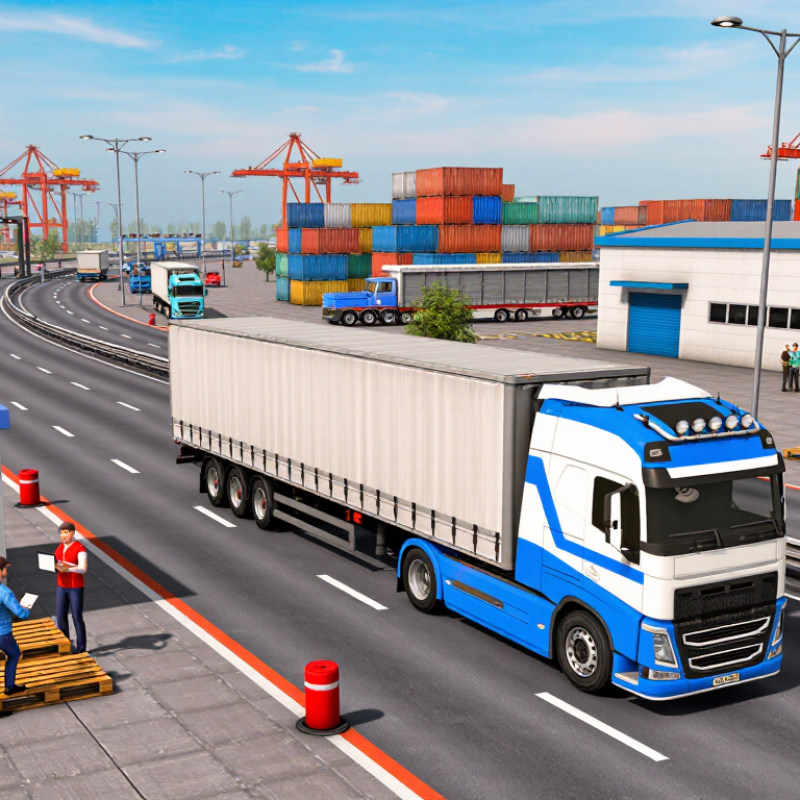
Cross-border trucking moves goods between countries by road, but the best mode depends on shipment size, timing, and route. Full truckload (FTL) gives one shipment most or all of a trailer. Less-than-truckload (LTL) shares trailer space and may involve extra handling. Some routes combine road transport with rail or ferry. Details matter. A pallet count, loading window, or temperature requirement can change the practical choice.
At the border, carriers present shipment and transport documents for review. Common paperwork includes a commercial invoice, packing list, and bill of lading. A customs broker may help prepare declarations, but the importer remains responsible for checking shipment details. Requirements vary by country and product. Customs officials may inspect cargo, so a neat document set does not guarantee immediate release. Delays happen. Build time into schedules, especially when delivery depends on a fixed warehouse appointment.
Buyers should understand a few key terms before comparing quotes. A customs broker handles clearance paperwork; a tariff or HS code helps classify goods. Incoterms set agreed responsibilities for delivery, costs, and risk, but they do not replace customs requirements. Ask whether a quote includes border fees, waiting time, and final delivery. One easy mistake is comparing prices without comparing service scope. I would also verify who provides status updates when a truck is held for inspection. A small uncertainty here can become a costly missed appointment.
Market Scale: U.S.-Canada-Mexico Trade Was $1.57T in 2023 (U.S. Census)
The U.S. Census reported $1.57 trillion in U.S. trade with Canada and Mexico in 2023. That figure shows the scale of the corridor, not the revenue earned by trucking companies. For global buyers, it signals how much depends on predictable cross-border freight. A delayed shipment can disrupt a factory schedule, retail restocking, or a tightly planned delivery window.
The strongest carrier choice is rarely just the lowest quoted rate. Buyers should check lane coverage, border procedures, tracking detail, and how clearly a provider explains accessorial charges. Ask who manages customs paperwork and whether shipment updates include real milestones, such as arrival at a border facility or release for onward transport. Small details matter. A missed appointment can leave a loaded trailer waiting while warehouse labor sits idle.
Service quality also varies by route and season. A provider with dependable capacity on one crossing may have fewer options elsewhere, so test the exact origin-destination pair. Request recent performance data, including on-time delivery and claims handling, then compare it with your own shipment history. The numbers may not tell the whole story; measurement methods differ, and that deserves scrutiny. A practical trial shipment can expose gaps that a polished sales presentation will not.
2026 Best Cross Border Trucking Companies for Global Buyers — Market Scale: U.S.–Canada–Mexico Trade Was $1.57T in 2023 (U.S. Census) | Trade Market | U.S. Exports (2023, USD) | U.S. Imports (2023, USD) | Total Goods Trade (2023, USD) | Cross-Border Trucking Planning Consideration |
| United States–Canada | $352.8 billion | $418.6 billion | $771.4 billion | Confirm the carrier’s service coverage for the specific origin, destination, border crossing, and required customs procedures. |
| United States–Mexico | $322.7 billion | $475.6 billion | $798.3 billion | Check how the provider coordinates border transfer, customs documentation, shipment visibility, and delivery appointments. |
| Combined U.S.–Canada–Mexico Trade | $675.5 billion | $894.2 billion | $1,569.7 billion
(approximately $1.57 trillion) | Compare providers using lane-specific capacity, customs support, transit-time commitments, insurance, and tracking capabilities. |
| Source: U.S. Census Bureau, 2023 U.S. goods trade by country. Values are rounded to the nearest $0.1 billion; combined figures are calculated from the displayed rounded values. Planning considerations are buyer evaluation points, not measured trade statistics. |
Freight Context: Trucks Carried 72.6% of U.S. Freight by Weight in 2022 (ATA)
In 2022, trucks carried 72.6% of U.S. freight by weight, according to the American Trucking Associations. That figure shows how central trucking is to moving goods within the United States. It does not mean trucks handled that share of cross-border shipments. That distinction matters.
For global buyers, a truck’s role often begins before a border crossing and continues after it. A shipment may move by ship or rail, then rely on trucks for delivery to a warehouse or factory. At transfer points, buyers should confirm who handles the handoff, when cargo becomes available, and how delays are communicated. A missed appointment can leave pallets waiting beside a loading dock.
The statistic is useful context, not a service guarantee. Ask prospective carriers how they track milestones, manage equipment changes, and report exceptions. Request realistic transit ranges rather than a single confident arrival date. Small details help: a clear pickup window, a named operations contact, and photo records of visible cargo damage.
A weight-based measure says little about shipment value, reliability, or border wait times. Buyers should compare those factors against their own delivery needs. Some questions may still have imperfect answers. That is worth acknowledging before a shipment is booked.
Provider Evaluation: World Bank LPI Covers 139 Economies and Six Dimensions
Choosing a cross-border trucking partner in 2026 requires more than comparing quoted rates. The World Bank’s 2023 Logistics Performance Index evaluates 139 economies across six dimensions: customs, infrastructure, international shipments, logistics competence, tracking and tracing, and timeliness. That is a useful map. It is not a carrier scorecard. A strong national result cannot prove that one dispatcher will clear a specific border quickly.
Use those dimensions as a practical evaluation framework. Ask providers for lane-level on-time records, border dwell-time ranges, tracking-event coverage, and exception escalation logs. Compare the same corridor and season; winter closures or harvest traffic can skew averages.
A refrigerated load waiting near an inspection yard needs reliable status updates, not a polished network map.
The World Bank’s LPI measures economy-level logistics conditions, so verify company claims with shipment records and customer references.
Imperfect data is still useful. Treat missing timestamps as questions, not proof of poor service.
2026 Company Profiles: Compare DHL, DSV, Kuehne+Nagel, and FedEx
A useful 2026 comparison starts with operating style, not a league table. One global provider combines parcel delivery with freight services, which can suit buyers moving urgent samples alongside regular shipments. Its broad network may simplify tracking across borders. Still, confirm whether the final road leg is handled directly or through a local partner. That detail can affect handoffs and updates.
A second provider is known for forwarding and coordinated transport across road, air, and ocean. This model may help when a buyer needs one contact for several legs, such as a container transfer followed by delivery to a regional warehouse.
Another large forwarding network offers similar multimodal planning, with road capacity supporting links between ports, hubs, and inland sites. Compare lane coverage carefully. Network size alone does not guarantee a suitable pickup window or consistent service in every market.
A fourth provider has a strong express and parcel orientation, which can fit time-sensitive, smaller consignments. For palletized freight or recurring truckloads, ask for a separate service plan and clear delivery milestones. Compare quoted transit times, cargo limits, tracking events, claims procedures, and the handling of customs documents. Request examples for the exact origin and destination pair. A profile page cannot show every local constraint. This comparison is imperfect: service names and partner arrangements can change, so verify current capabilities before booking.