What are the Benefits of Cold Rolled Coil in China?
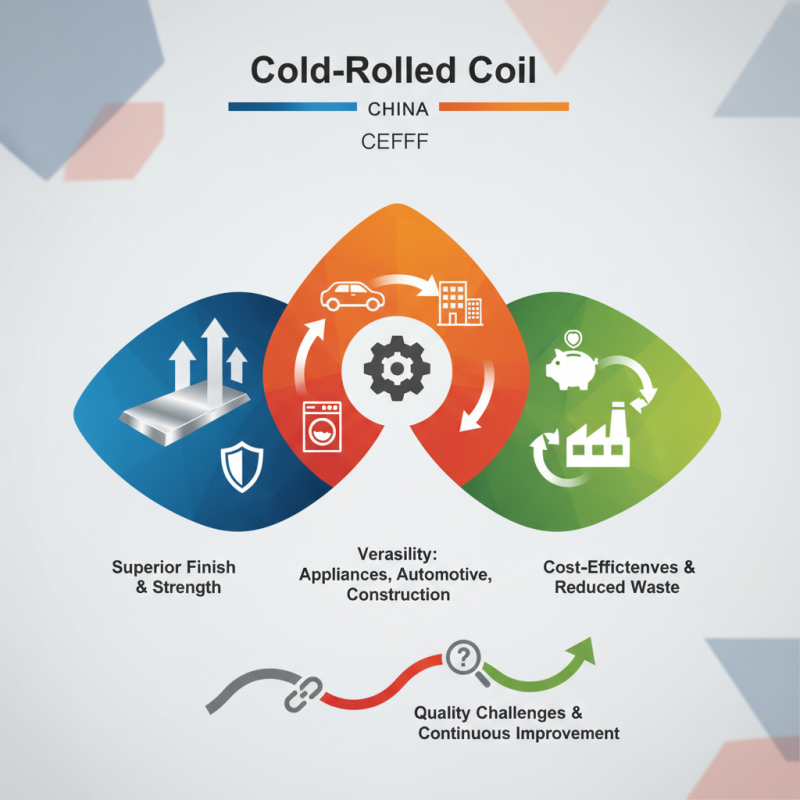
Cold Rolled Coil plays a significant role in China's manufacturing industry. It is known for its superior finish and strength. This product is essential for producing various steel-based products. Manufacturers prefer Cold Rolled Coil for its versatility. It can be used in appliances, automotive, and construction industries.
The benefits of Cold Rolled Coil extend beyond quality. It offers cost-effectiveness for manufacturers. The process reduces waste and optimizes resources. However, not all producers meet the desired quality standards. There are instances where defects occur, leading to re-evaluation of processes.
In some cases, producers may overlook necessary quality checks. This creates risks during production. Companies must continuously assess their operational practices. The value of Cold Rolled Coil is clear, but the pursuit of perfection remains an ongoing challenge.
Benefits of Cold Rolled Coil in Various Industries in China
Cold rolled coil (CRC) has become essential in various industries in China. Its smooth surface and precise dimensions make it ideal for applications in automotive, construction, and appliance manufacturing. The automotive industry benefits significantly. CRC is used for body panels and structural components, which require strength and durability. Many manufacturers prefer it for weight reduction, which improves fuel efficiency.
In construction, CRC is increasingly popular. Builders use it for creating steel frames and reinforcements. The material's consistency allows for easy fabrication. This uniformity leads to reduced waste and more efficient use of resources. However, there are some concerns. The production process can generate waste and emissions, raising environmental questions.
Appliance manufacturers also rely on cold rolled coil. The high-quality finish enhances visual appeal. Yet, the demand for thinner sheets poses challenges. Balancing weight and strength is critical. If not managed properly, it can lead to product failures. Each industry recognizes CRC's value, but there are ongoing considerations regarding sustainability and resource use.
What are the Benefits of Cold Rolled Coil in China?
| Industry | Benefits | Application Examples |
| Automotive | High strength, precise dimensions, better surface finish | Body panels, chassis, structural components |
| Construction | Resistance to deformation, aesthetic appeal | Building frames, roofing, interior fittings |
| Appliances | Lightweight, reduced manufacturing cost | Refrigerators, washing machines, HVAC systems |
| Packaging | Enhanced durability, improved print quality | Food packaging, metal cans, closures |
| Electronics | Conductivity, precise form for components | Circuit boards, connectors, casing |
Enhanced Surface Finish and Aesthetic Appeal of Cold Rolled Coils
Cold rolled coils offer a distinctive surface finish that enhances aesthetics. Their smooth, polished appearance makes them attractive for various applications. Industries such as construction and automotive benefit from this sleek look. High-quality surface finishes can elevate product value.
However, achieving a perfect finish can be challenging. Variations in thickness may occur during the rolling process. These imperfections can detract from the overall aesthetic appeal. Manufacturers must carefully monitor production to minimize such issues.
Tips: Regular maintenance of equipment is crucial. Ensure that the rolling machinery is calibrated correctly. Periodic checks can prevent defects in the final product. Additionally, consider the ambient conditions during processing. External factors can impact the finish quality, so vigilance is key for optimal results.
Cost-Effectiveness of Using Cold Rolled Coils in Manufacturing
Cold rolled coils (CRC) have become increasingly popular in manufacturing across China. Their cost-effectiveness makes them a favorable choice for various industries. A report by the China Iron and Steel Association indicates that CRC can reduce production costs by up to 20% compared to standard hot rolled steel. This significant saving appeals to manufacturers looking to optimize operational efficiency.
Additionally, CRC provides enhanced mechanical properties. It is thinner, more uniform, and exhibits greater strength. These features lead to reduced material wastage during production. According to industry experts, using CRC can increase yield rates by 15%. However, some manufacturers might overlook the need for proper handling due to its thinner profile. Improper handling can lead to deformation and additional costs.
Despite these advantages, challenges remain. The initial investment for cold rolling facilities can be substantial. Maintenance costs may also affect younger firms. A recent study notes that about 30% of CRC manufacturers struggle with maintaining equipment. While CRC offers valuable benefits, the long-term financial picture requires careful consideration. Balancing costs and quality remains essential in this competitive market.
Improved Mechanical Properties of Cold Rolled Coils for Structural Uses
Cold rolled coils are gaining traction in various structural applications due to their improved mechanical properties. These coils undergo a specific manufacturing process that enhances their strength and ductility. As a result, they are ideal for use in construction, automotive, and manufacturing industries. By being thinner and more uniform, cold rolled coils help engineers devise lighter yet strong components.
One major advantage of cold rolled coils is their superior surface finish. This smooth surface facilitates easier welding and painting. However, some users may overlook the importance of proper maintenance. Without adequate care, these properties can diminish over time, leading to unexpected challenges. A solid understanding of the environment in which these materials will be used is crucial.
Moreover, the consistency in thickness and shape allows for better material utilization. This characteristic can lead to reduced waste in production. Yet, there’s always a risk of defects during the manufacturing process. Manufacturers must remain vigilant to ensure quality control. Ultimately, while cold rolled coils offer many benefits, they also require thoughtful implementation to maximize their potential.
Environmental Considerations in Cold Rolling Processes in China
Cold rolling processes in China hold significant environmental implications. Data from recent industry reports highlights that cold rolling requires substantial energy input, leading to increased carbon emissions. In 2022, cold rolled steel production accounted for nearly 15% of China's total industrial emissions. This is concerning, especially as China strives to meet its carbon neutrality goals by 2060.
Moreover, water usage in cold rolling is a critical issue. The cold rolling process often relies on water for cooling and lubrication. Reports indicate that a large-scale plant can use up to 10,000 cubic meters of water daily. This raises questions about water sustainability in regions already facing scarcity.
Despite advancements in technology, the industry still faces challenges. Many plants struggle to meet environmental regulations. Some facilities lack proper waste management systems, leading to chemical discharge. This creates pollution risks for nearby communities. There is a clear need for improved practices. Sustainable innovations are essential. The industry must reflect on these issues to align with global sustainability goals.