Buying the right Plumber Tools in 2026 requires more than comparing prices or counting pieces. Global buyers must consider job conditions, material quality, supplier reliability, replacement support, and regional requirements. A compact pipe cutter may suit apartment repairs, while a heavy-duty press tool may serve commercial installation teams better. The best choice depends on real work.
This guide examines essential tools through a practical purchasing lens. It covers hand tools, inspection equipment, cutting tools, joining systems, safety accessories, and organized storage. Each category should be judged by grip comfort, corrosion resistance, accuracy, service life, and maintenance needs. A shiny finish alone proves very little. Field experience often reveals weaknesses that product photos hide.
International purchasing adds another layer of caution. Buyers should verify product specifications, warranty terms, certifications, packaging quality, and after-sales communication before placing large orders. Local water systems and work practices can change tool requirements significantly. Some recommendations may not fit every market. That limitation matters. Even experienced technicians can overestimate durability after a short trial. Reliable decisions come from testing samples, reviewing credible supplier records, and listening to working plumbers. This 2026 guide aims to make that process clearer, more realistic, and easier to apply across different professional environments.
Plumber tools are purpose-built instruments for cutting, joining, measuring, sealing, and testing water or drainage systems. A useful buying guide begins with function, not appearance. The World Health Organization and UNICEF Joint Monitoring Programme reported in 2023 that 2.2 billion people lacked safely managed drinking water. This pressure makes reliable installation and repair equipment increasingly important across markets.
Cutting tools include tube cutters, hacksaws, and plastic-pipe shears. Wrenches and adjustable pliers provide controlled gripping for threaded fittings. Reamers remove sharp internal edges after cutting. Threading tools create mechanical connections, while press or crimp tools form rapid joints without open flames. Drain augers and inspection cameras address blockages and hidden faults. Pressure gauges, leak detectors, and test pumps verify system performance. Each category solves a different failure point.
Tip: Match the tool to pipe material, diameter, and connection method. Check jaw range, calibration, corrosion resistance, and replacement-part access. The U.S. Bureau of Labor Statistics projects 6% employment growth for plumbers, pipefitters, and steamfitters from 2023 to 2033, showing continued demand for practical field skills. However, professional tools still fail when users ignore torque limits or inspection steps. I have found that a lighter wrench is not always better; poor balance can cause fatigue during overhead work. Product descriptions may also exaggerate durability. Buyers should request test records, material specifications, and clear warranty terms before placing large international orders.
This chart groups common plumbing tools by their primary job. The values represent the number of representative tool types included in each category, rather than market share or sales volume. Global buyers can use these categories to compare essential functions such as pipe handling, cutting, joining, drain cleaning, inspection, and safety testing.
Choose tools by task, pipe material, and access space. A leaking basin usually needs an adjustable wrench, basin wrench, and replacement seals. Do not use a large wrench on small fittings. Excess force can damage threads and create another leak. For copper pipe, use a tube cutter, deburring tool, and calibrated press or soldering equipment. For PEX systems, choose a compatible cutter and connection tool. Drain blockages require a hand auger or inspection camera, not repeated chemical treatment. The U.S. EPA WaterSense program estimates that household leaks waste nearly 10,000 gallons of water yearly. Accurate tools support conservation.
Accurate tools support conservation.
Tips: Check the tool’s measurement system before ordering. Inspect jaws, handles, and cutting edges for alignment. A torque wrench is useful for controlled connections. Wear eye protection during cutting and drilling. I still find access space underestimated on real jobs. Measure twice.
Global buyers should also check pipe standards and service conditions. The WHO and UNICEF Joint Monitoring Programme reported that 2.2 billion people lacked safely managed drinking water in 2022. Reliable repairs therefore need durable, maintainable equipment. Select corrosion-resistant tools for humid sites and insulated handles for electrical-risk areas. Follow local plumbing codes, testing requirements, and the manufacturer’s instructions. Tool kits look efficient, but unused pieces increase cost and transport weight. A smaller, task-based kit is often better.
2026 Top Plumber Tools Buying Guide for Global Buyers
Professional plumbing work requires more than a full toolbox. Essential hand tools include adjustable wrenches, basin wrenches, tubing cutters, deburring tools, and a reliable measuring tape. Choose forged steel jaws, clear markings, and handles that remain comfortable when wet. Power tools should match the job, not merely offer higher speed. A compact drill, press tool, drain cleaner, and portable work light can cover many service calls. The U.S. Bureau of Labor Statistics projects 6% employment growth for plumbers, pipefitters, and steamfitters from 2023 to 2033. That growth increases pressure to work faster, but rushed tool selection creates avoidable failures.
Inspection equipment now deserves equal attention. A waterproof inspection camera can reveal roots, collapsed sections, or trapped debris before excavation begins. Thermal imaging may help locate hidden temperature changes, although it cannot confirm every leak. Acoustic detectors are useful on pressurized systems, but surrounding machinery can distort results. The U.S. Environmental Protection Agency reports that household leaks waste nearly 10,000 gallons of water annually. Better detection supports both repair accuracy and resource conservation. Still, inexpensive sensors may produce confusing readings. Verification matters.
Tips: Carry spare batteries, seals, and camera heads. Test every meter against a known reference before departure. Clean tool jaws after corrosive-water jobs. Record inspection images with location and pipe direction. A short checklist prevents small omissions. Also, reassess your kit quarterly; last year’s favorite tool may no longer fit your workload.
For global buyers, plumber tools should pass three tests: quality, safety, and comfort. Tool steel must resist bending, corrosion, and repeated torque. A polished finish alone proves little. Ask for hardness results, load testing, and batch traceability. ISO 12100 supports systematic risk assessment, while IEC 60900 applies to insulated hand tools used near electrical hazards. Compliance markings also need verification. CE marking shows conformity for applicable European requirements, not superior tool quality.
Ergonomics deserves equal attention. Handles should fit gloved hands without sharp edges or excessive pressure points. A balanced wrench reduces wrist twisting, especially during overhead pipe work. The U.S. Bureau of Labor Statistics reported 946,290 private-industry cases involving sprains, strains, or tears in 2023. Not every case involved plumbing, but the signal is difficult to ignore. Lighter is not always better. A poorly balanced tool can still fatigue the forearm. I would test grip comfort after thirty minutes, not thirty seconds.
Tips: Request independent test reports before placing large orders. Check insulation ratings, torque limits, and replacement-part availability. Compare measurements with ISO 6789 for hand torque tools where relevant. Inspect hinges, jaws, and ratchets for uneven movement. For gloves, review cut and puncture performance under ANSI/ISEA 105 or EN 388 methods. Keep one sample from each production batch. It may reveal changes that a certificate misses. Good purchasing sometimes requires admitting that the cheapest quotation hides future maintenance costs.
| Tool Category | Typical Professional Use | Recommended Quality Indicators | Relevant Standard or Safety Reference | Ergonomic Considerations | Pre-Purchase Inspection Points | Typical Service Environment |
|---|---|---|---|---|---|---|
| Adjustable Wrench | General tightening and loosening of nuts, valves, and fittings. | Forged alloy steel, accurately machined jaws, minimal jaw movement, corrosion-resistant finish. | ISO 6787:2018 for adjustable wrenches; applicable local hand-tool safety requirements. | Wide opening with a slim head; smooth adjustment; handle profile that reduces palm pressure. | Check jaw parallelism, worm-wheel smoothness, scale readability, and absence of sharp edges. | Indoor maintenance, construction sites, and damp utility areas. |
| Pipe Wrench | High-grip turning of threaded steel and heavy-duty pipe assemblies. | Ductile or forged body, replaceable hardened jaws, strong adjustment nut, controlled jaw fit. | ASME B107.110 covers pipe wrenches; verify the edition and market requirements before purchase. | Balanced handle, adequate clearance, and a grip that supports two-handed operation when required. | Inspect jaw teeth, heel contact, adjustment threads, handle straightness, and load-bearing areas. | Industrial plumbing, water infrastructure, and exposed pipework. |
| Basin Wrench | Reaching faucet mounting nuts in confined spaces below sinks. | Strong pivot joint, reversible jaw, corrosion-resistant shaft, and secure telescoping mechanism where fitted. | Select products tested to applicable general hand-tool and mechanical safety requirements. | Long reach with a compact head; low-force pivot action; textured grip for awkward positions. | Operate the jaw in both directions and verify that locking or telescoping parts do not slip. | Residential kitchens, bathrooms, and cabinet-enclosed installations. |
| Tongue-and-Groove Pliers | Holding, gripping, and turning irregular fittings and pipes. | Drop-forged jaws, accurate groove engagement, durable pivot, and non-slip insulation or grip sleeves. | Use insulated versions only when they are specifically tested and marked for electrical work. | Multiple jaw positions, controlled pinch points, and handles shaped for a neutral wrist angle. | Check groove wear, jaw alignment, pivot looseness, grip adhesion, and accidental over-opening. | General service, mechanical rooms, and repair workshops. |
| Tubing Cutter | Cutting copper, brass, aluminum, and approved plastic tubing, depending on model. | Hardened cutting wheel, rigid frame, smooth feed mechanism, and replaceable wheel availability. | Follow the tubing manufacturer's cutting requirements and applicable workplace machine-safety rules. | Large knurled knob, low-friction adjustment, and compact body for restricted spaces. | Confirm the stated tube-size range, wheel runout, frame rigidity, and deburring-tool security. | Copper pipe installation, refrigeration work, and indoor service. |
| PEX or Plastic Pipe Cutter | Fast, square cuts on approved flexible or rigid plastic pipe. | Hardened stainless or high-carbon blade, positive locking system, clean shear action, and replaceable blade. | Use according to the pipe system's installation specification and local plumbing code. | Spring-assisted opening, low hand-force operation, and a handle span suitable for repeated cuts. | Test on the intended pipe material; check cut squareness, blade lock, and spring condition. | Residential water systems and light commercial installations. |
| Drain Auger | Clearing localized blockages in sinks, basins, and small drain lines. | Flexible corrosion-resistant cable, secure drum, reliable feed lock, and guarded rotating parts. | Follow local safety rules for drain-cleaning equipment; use eye protection and suitable gloves. | Comfortable crank or controlled motor handle; low vibration; cable handling that limits wrist twisting. | Inspect cable kinks, drum edges, feed mechanism, rotating guards, and cleaning access. | Residential maintenance, property management, and light commercial service. |
| Plumber's Inspection Camera | Visual inspection of pipes, drains, cavities, and concealed leaks. | Sealed camera head, flexible push cable, adjustable lighting, durable monitor housing, and recorded image output. | Check the product's IP rating and electrical safety documentation; an IP rating is not a substitute for waterproof certification of the entire system. | Lightweight monitor, readable display, ergonomic cable reel, and controls operable with gloves. | Verify image clarity, cable diameter, stated insertion length, battery protection, and connector sealing. | Drain inspection, renovation, leak diagnosis, and preventive maintenance. |
| Pressure Test Pump | Testing water-supply, heating, and selected hydronic piping systems for leaks. | Stable frame, leak-resistant hose, clear gauge, secure valves, and pressure-retention capability. | Use the test pressure and procedure specified by the applicable plumbing code or system manufacturer. | Long pump handle, stable base, readable gauge position, and controls accessible without overreaching. | Check gauge calibration status, hose fittings, relief function, reservoir condition, and valve seals. | New construction, commissioning, renovation, and system maintenance. |
| Torque Wrench | Controlled tightening of flanges, compression fittings, valves, and equipment fasteners. | Documented calibration, stable mechanism, clear scale, positive lock, and traceable adjustment procedure. | ISO 6789-1 and ISO 6789-2 specify requirements for hand torque tools and calibration testing. | Comfortable grip near the correct force position; low backlash; audible or tactile release. | Check range, drive size, calibration certificate, scale visibility, lock operation, and storage case. | Mechanical rooms, industrial piping, gas systems, and equipment installation. |
| Insulated Screwdriver Set | Work near energized components only when the task, tool, and user qualifications permit it. | Insulation free from cuts, securely bonded, precise tips, and clearly marked voltage rating. | IEC 60900 covers insulated hand tools for work on or near live parts up to 1,000 V AC and 1,500 V DC; it does not authorize energized work by itself. | Non-slip handle, clear tip identification, and shape that limits excessive wrist deviation. | Look for standard markings, voltage rating, insulation integrity, tip fit, and current inspection status. | Commercial service areas and plant rooms where electrical interfaces may be present. |
| Multimeter or Voltage Tester | Checking electrical presence, continuity, and selected circuit conditions. | Appropriate measurement category, protected inputs, intact leads, clear display, and documented verification. | IEC 61010-1 addresses safety requirements for electrical measurement equipment; measurement-category marking must match the installation. | One-handed controls, large display, backlight, and probe storage that reduces awkward handling. | Verify CAT rating, voltage rating, lead condition, fuse protection, battery compartment, and self-test function. | Pumps, water heaters, control panels, and building-services maintenance. |
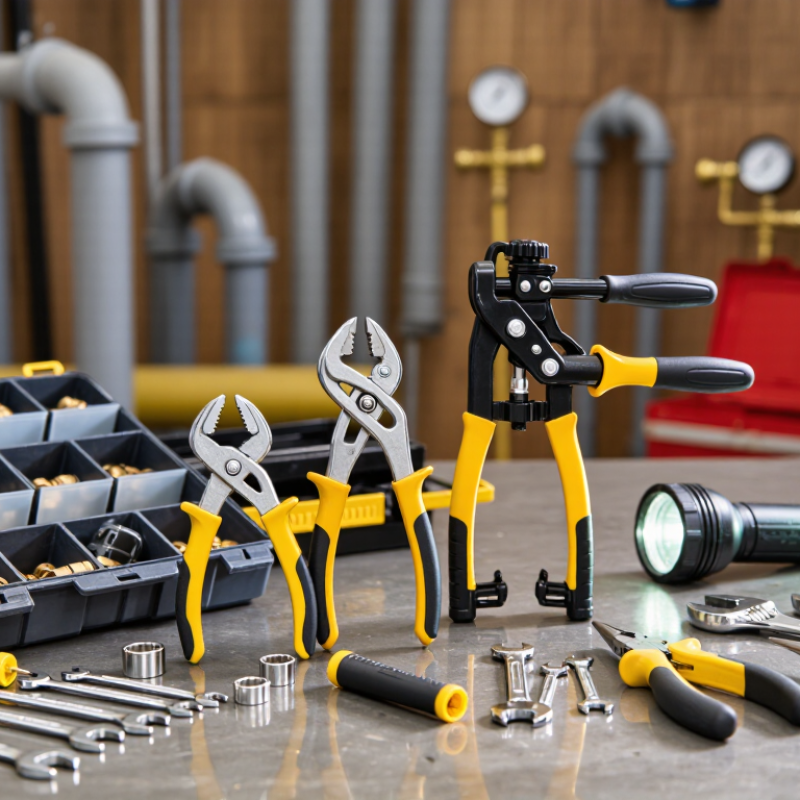
Global plumber-tool purchasing depends on more than unit price.
In quotation reviews, I check steel grade, handle comfort, replacement parts, and inspection records. A low-cost wrench can become expensive after one damaged jaw. Ask suppliers for sample testing, batch photos, and a clear defect procedure.
The World Bank’s 2023 Logistics Performance Index covered 139 economies, showing major differences in customs, infrastructure, and delivery reliability.
Shipping deserves equal attention.
UNCTAD’s Review of Maritime Transport 2024 states that over 80% of global merchandise trade by volume moves by sea. Its data also recorded maritime trade growth of about 2.4% in 2023.
For buyers, this means freight delays can affect project schedules and inventory costs. Request quotations with Incoterms, carton dimensions, gross weight, port charges, and estimated transit time.
Do not compare supplier prices without adding insurance, duties, inland transport, and possible storage fees.
Warranty terms should be practical, not decorative.
Confirm coverage duration, excluded damage, response time, spare-part availability, and who pays return freight. A twelve-month warranty may offer less value than a shorter policy with fast replacement.
Keep serial records, inspection photos, and signed receiving reports. I still find some purchasing sheets too optimistic about delivery dates.
Weather, congestion, and incomplete documents remain difficult to predict. Build a small buffer.
It is not perfect, but it is safer.