2026 Best Industrial Digital Camera for Global Buyers?
Choosing the 2026 Best Industrial Digital Camera requires more than comparing resolution and price. Global buyers now evaluate sensor performance, interface stability, software support, and total ownership cost. MarketsandMarkets projects the industrial machine vision market to grow from approximately USD 15.7 billion in 2023 to USD 24.3 billion by 2028. That growth reflects wider automation across factories, logistics centers, food processing lines, and electronics plants.
The camera is only one part of the system. A 25-megapixel sensor may capture fine solder joints, yet it can disappoint under vibration, heat, or changing illumination. EMVA’s Global Machine Vision Standardization roadmap also highlights the importance of interoperability and reliable data exchange. Jeff Bier, founder of the Edge AI and Vision Alliance, has said, “The edge is where the action is.” His point matters here: processing images near the production line can reduce latency and network dependence.
Real factories expose the differences. A camera mounted beside a conveyor may face dust, glare, compressed-air vibration, and thousands of triggers each hour. In my view, this makes frame consistency more valuable than headline resolution. That is not always obvious.
No single model fits every country or factory. Regional certifications, lens availability, industrial protocols, and local technical service can change the final decision. This guide compares leading Industrial Digital Camera options for 2026, using measurable specifications and practical deployment concerns. Some conclusions remain imperfect. Vendor claims deserve testing, and laboratory images cannot fully predict a twelve-month production environment.
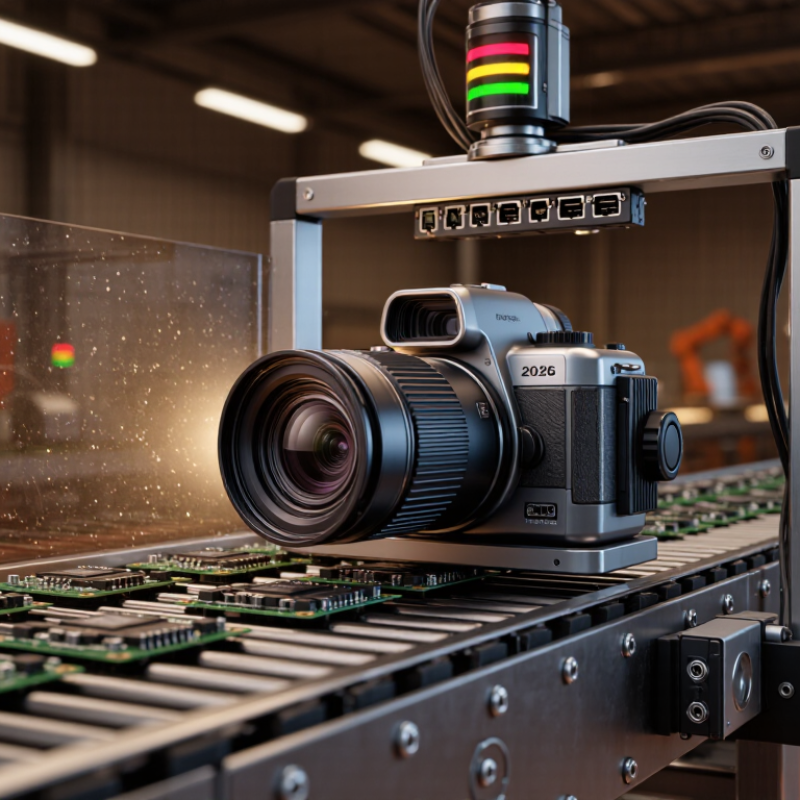
What Is an Industrial Digital Camera?
For global buyers in 2026, an industrial digital camera is not simply a high-resolution camera. It is a sensing device designed to capture repeatable images inside production, inspection, measurement, or research processes. Unlike consumer equipment, it must maintain timing, exposure, data transfer, and mechanical stability during continuous operation. The image is only one part. The camera also provides controlled triggering, industrial interfaces, and software-accessible parameters.
The need is practical. The International Federation of Robotics reported 541,302 industrial robots installed worldwide in 2023, in its World Robotics 2024 report. Many robotic cells use cameras to locate parts, inspect surfaces, or guide motion. An industrial model commonly uses a global shutter to freeze moving objects. A line-scan model builds images as materials pass beneath it. Area-scan cameras capture complete frames. The correct type depends on speed, field of view, lighting, and measurement tolerance. Pixels can mislead.
Buyers should compare measurable performance, not attractive specifications. The EMVA 1288 standard evaluates quantum efficiency, signal-to-noise ratio, dynamic range, and spatial non-uniformity under defined conditions. These values reveal more than headline resolution. Interface bandwidth, lens compatibility, thermal behavior, and trigger latency also affect results. A camera may perform well in a laboratory and fail beside vibration, glare, or dust. There is no perfect choice. A trial using real parts remains necessary.
Major Industrial Applications and Imaging Requirements
2026 Best Industrial Digital Camera for Global Buyers?
Industrial cameras are selected by the application, not by resolution alone. In automated inspection, a global shutter prevents moving parts from appearing bent or displaced. Fine-pitch electronics require small pixels, stable lighting, and careful lens matching. A higher megapixel count cannot repair poor illumination.
Robotic guidance needs low latency and consistent frame timing. Conveyor inspection may need high frame rates, trigger inputs, and reliable image transfer. Metrology demands low distortion, repeatable exposure, and strong thermal stability.
In food and pharmaceutical production, cleanable housings and suitable ingress protection can matter more than maximum speed. Check the working distance. It changes everything.
Outdoor monitoring introduces glare, dust, vibration, and wide temperature changes. A camera should provide controlled exposure, usable dynamic range, and documented operating limits.
Industrial buyers should also verify interface compatibility, software support, calibration tools, and long-term component availability.
These details often decide whether installation takes days or weeks.
No camera fits every factory. That assumption fails.
In practice, teams sometimes overspecify resolution and underspecify lighting. I have seen sharp images remain useless because reflections hid surface defects.
Testing with real samples, production-speed triggers, and the final lens is more reliable than trusting a laboratory image. Leave room for mistakes; factory conditions rarely behave perfectly.
How to Choose the Best Camera for Global Purchasing
2026 Best Industrial Digital Camera for Global Buyers?
Global purchasing begins with the application, not the camera resolution. Define the object size, working distance, motion speed, lighting, and inspection tolerance. A 25-megapixel sensor may waste bandwidth when a 5-megapixel sensor already resolves the smallest defect. The 2024 MarketsandMarkets Machine Vision report estimates growth from USD 12.7 billion in 2023 to USD 17.2 billion by 2028. That expansion increases choice, but also increases specification mistakes. I recommend comparing sensor performance under the actual light source. Use EMVA 1288 measurements for quantum efficiency, noise, and dynamic range. Marketing charts are not laboratory evidence.
For global purchasing, interface compatibility matters as much as image quality. GigE Vision supports longer cable runs, while USB3 Vision can simplify compact installations. Confirm connector types, operating temperature, trigger timing, and regional power requirements. Check whether the supplier provides English manuals, calibration records, firmware history, and replacement planning. The camera should integrate with existing software and inspection controllers. A low purchase price can become expensive after customs delays, adapters, or missing technical support. I have seen impressive sample images fail during vibration testing. That remains an uncomfortable lesson.
Tips: Request raw images before ordering. Test the camera with your real material, not a clean sample. Compare total ownership cost over five years. Ask for documented delivery times and warranty procedures. Keep one alternative interface in your design. A spreadsheet can still lie. Recheck every assumption.
2026 Best Industrial Digital Camera for Global Buyers: Interface Bandwidth Comparison
This chart compares nominal maximum link rates used by widely adopted industrial vision interfaces. Higher bandwidth can support larger image files, higher frame rates, or longer image-transfer distances, but the best camera also depends on resolution, sensor performance, trigger accuracy, lighting, software compatibility, cable distance, and total system cost. Actual throughput may be lower because of protocol overhead and camera configuration.