Seamless Steel Tube selection begins with evidence, not a glossy catalogue. Buyers compare dimensions, steel grades, heat treatment, inspection records, and delivery capacity. The stakes are practical: a tube may face high pressure, repeated thermal cycles, or corrosive service. Small differences in wall thickness can matter. A polished mill visit helps, but it cannot replace traceable test certificates.
Global steel production provides useful context, though it does not measure seamless-tube output specifically. The World Steel Association reported 1,882.6 million tonnes of crude steel production in 2024. That scale points to a broad supply base, not uniform quality. For procurement discipline, W. Edwards Deming’s widely cited reminder remains apt: “In God we trust; all others must bring data.” Buyers should request verifiable mill test reports, applicable standards, inspection scope, and clear tolerance limits. Then check whether the supplier can deliver the same specification consistently.
This guide evaluates ten manufacturers for global buyers. It considers product range, technical support, quality systems, export experience, and transparency. A large name alone is not enough. Neither is a low quote. Ask who actually makes the tube, where testing occurs, and how deviations are handled. Details matter. No shortlist fits every project; service conditions and regional requirements change the answer. That is worth admitting. The strongest choice is the producer whose documented capabilities match the job, shipment after shipment.
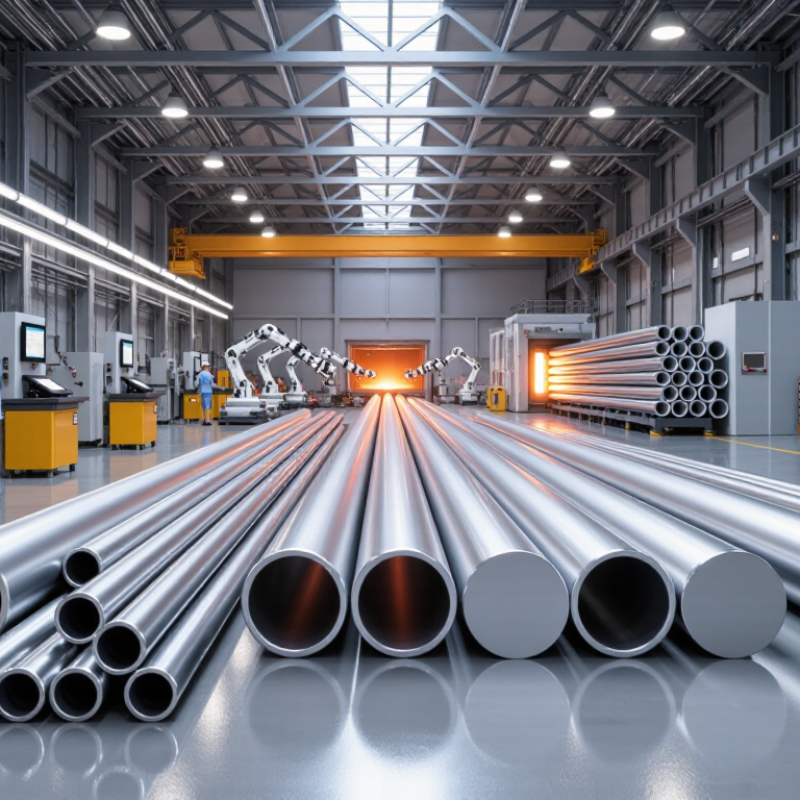
Seamless steel tubes begin as solid round billets, not flat steel sheets. In a controlled furnace, each billet reaches a carefully monitored temperature before rotary piercing creates a hollow shell. A mandrel then enlarges and shapes the tube. Hot rolling reduces wall thickness, while sizing rolls refine the outside diameter. The tube may be heat-treated, straightened, cut, and inspected. Small temperature changes can affect grain structure, so process records matter.
Manufacturers classify seamless tubes by production method, material, dimensions, and service purpose. Hot-finished tubes suit larger diameters and demanding structural applications. Cold-drawn tubes offer tighter tolerances and smoother internal surfaces. Carbon steel, alloy steel, and stainless steel grades provide different strength, corrosion resistance, and temperature performance. Buyers should verify outside diameter, wall thickness, length, grade, heat-treatment condition, and applicable standard.
Inspection should include visual checks, dimensional measurement, tensile testing, hardness testing, and hydrostatic or ultrasonic examination. Eddy-current testing can reveal certain surface or near-surface flaws. A bright surface is not proof of internal quality. I have seen specifications that looked complete but omitted ovality limits and end conditions. That omission can create fitting problems during installation. Classification tables help, but they cannot replace traceable mill certificates and independent verification.

When evaluating seamless steel tube manufacturers, start with evidence, not polished sales language. In my purchasing experience, reliable producers explain their melting, piercing, heat-treatment, and finishing processes clearly. They should provide mill certificates with heat numbers, chemical composition, mechanical results, and dimensional records. Traceability matters.
Ask whether the manufacturer controls production in-house or outsources critical stages. Review equipment capacity, inspection methods, and calibration records. Ultrasonic testing, hydrostatic testing, and visual checks should match the tube’s intended service. For pressure, boiler, automotive, or structural applications, confirm the relevant ASTM, EN, or API requirements. The standard edition must be stated. Vague compliance claims deserve questions.
A factory audit can reveal practical details that documents miss. Look for organized storage, protected tube ends, clear batch labels, and clean loading areas. Request recent sample reports, not only templates. Lead times should reflect real furnace schedules and export packing capacity. Communication also proves reliability; technical questions need precise answers. I prefer suppliers that disclose limitations instead of promising everything. That honesty is valuable, but it may also expose gaps in capacity or testing. Check claims procedures, replacement terms, and payment safeguards before placing a large order. One overlooked detail can affect an entire shipment.
The ten manufacturers profiled here serve different seamless steel tube needs. Manufacturer A focuses on high-pressure boiler tubes, using controlled heat treatment and ultrasonic inspection. Manufacturer B specializes in oilfield tubing, with threaded connections checked against documented torque requirements. Manufacturer C supplies large-diameter tubes for structural projects and records wall thickness at several points.
Manufacturer D combines a modern piercing mill with in-house chemical analysis. Its material certificates can support traceability from billet to shipment. Manufacturer E handles heat exchanger tubes, where clean internal surfaces matter as much as tensile strength. Manufacturer F produces corrosion-resistant grades for chemical processing. Buyers should review test methods carefully, because similar grade names may hide different performance limits.
Manufacturer G serves transport and machinery builders with tight dimensional tolerances. Manufacturer H offers custom lengths, but its production schedule may change during peak seasons. Manufacturer I has experience with export packing, using capped ends, moisture barriers, and reinforced bundles. Manufacturer J supports project orders with inspection access and third-party testing.
That sounds reassuring, yet paperwork alone is not proof. Ask for recent mill certificates, sample reports, production photos, and independent inspection options. A practical review should compare minimum order quantities, lead times, rejection procedures, and after-sales communication. Small details matter. One overlooked tolerance can delay installation.
For global buyers, the best seamless steel tube manufacturer is rarely the cheapest option. A credible top-ten comparison should examine product range, quality controls, and export capability together. Some producers focus on carbon steel tubes for boilers, pipelines, and structural frames. Others offer alloy grades, precision tubes, or large outside diameters. This difference matters when one project needs several specifications from one source. Ask for mill certificates, dimensional tolerances, heat numbers, and recent test reports. Do not trust polished catalogs alone.
Quality appears in practical details: straightness after cutting, consistent wall thickness, clean bevels, and packaging that survives wet ports. Experienced buyers should review ultrasonic or hydrostatic testing procedures, inspection frequency, and calibration records. ISO-based systems can support reliability, but certification alone cannot prove every shipment is consistent. A trial order often reveals more than a sales presentation. Check random bundles, surface marks, thread protection, and whether documents match the tubes. Small discrepancies need written explanations.
Global reach involves more than shipping to many countries. Strong manufacturers maintain stable capacity, responsive technical teams, export documents, and realistic lead times. Confirm loading ports, payment terms, customs paperwork, and replacement procedures before signing. Regional stock can reduce delays. Flexible cutting and labeling may simplify site work. My assessment would remain cautious because rankings change with audits, energy costs, and capacity. A supplier that performed well last year may need fresh verification this year. That is inconvenient, but responsible sourcing requires it.
Choosing a seamless steel tube manufacturer requires more than comparing catalog prices. A buyer should examine production experience, material knowledge, and evidence of consistent quality. Ask how billets are sourced, pierced, rolled, heat-treated, and inspected. Request mill certificates, dimensional reports, hydrostatic results, and non-destructive testing records. Real evidence matters. A supplier that explains defects openly may deserve more trust than one promising perfection.
Assess whether the manufacturer understands your service conditions, not only your drawing. Discuss pressure, temperature, corrosion exposure, tolerances, end finishing, and delivery requirements. Technical staff should recommend suitable grades and clarify applicable standards without vague language. Check traceability from heat number to final bundle. Review calibration records, laboratory capability, and corrective-action procedures. Remote audits help, but independent inspection can reveal process gaps. They cost more. They may prevent expensive failures.
Before signing, test a representative sample against the approved specification. Confirm packaging, marking, inspection documents, payment terms, and rejected-material procedures. Evaluate communication during quotation and production, because delays often begin with unanswered questions. A capable supplier shares realistic lead times and reports changes early. Do not select on price alone. Freight, rework, and inspection costs can change the final calculation. A common mistake is trusting polished paperwork while ignoring shop-floor discipline. Reassess the supplier after each order using delivery data, defect rates, and response time.
| No. | Assessment Dimension | What to Verify | Useful Buyer Evidence | Why It Matters |
|---|---|---|---|---|
| 1 | Product and process fit | Confirm the supplier makes the required seamless tube sizes, grades, and manufacturing route—not merely trades products. | Product range, process description, and a quotation matching the requested specification. | Capability should match the actual application and purchase specification. |
| 2 | Standards and specification control | Check the exact standard, grade, edition where specified, dimensions, and supplementary requirements in the offer. | A line-by-line compliance statement against the buyer’s inquiry. | Similar product names do not necessarily mean identical technical requirements. |
| 3 | Material traceability | Confirm that tubes can be traced to the relevant material heat or batch and that markings correspond to the records. | Sample traceability records and a specimen inspection document, with sensitive information redacted if needed. | Traceability supports quality review and investigation of nonconforming material. |
| 4 | Inspection documentation | Agree which inspection documents are required and who issues them. EN 10204 Type 3.1 is one commonly specified inspection-document type. | A document list confirmed before order placement and a sample certificate format. | Document type and scope should be agreed rather than assumed. |
| 5 | Testing and inspection plan | Identify the tests and examinations required by the applicable product standard and purchase order; clarify any additional checks. | A proposed inspection and test plan showing stages, acceptance criteria, and records. | Testing requirements vary by product, standard, grade, and order. |
| 6 | Dimensional and surface quality | Set acceptance requirements for outside diameter, wall thickness, length, straightness, end condition, and surface condition according to the applicable specification. | Inspection procedure, measuring-equipment calibration records, and agreed sampling details. | Clear acceptance criteria reduce disputes during inspection and receipt. |
| 7 | Quality management system | If certification is important, check the certificate’s validity, issuing body, scope, and site. ISO 9001 certification is not a substitute for product acceptance. | A current certificate and confirmation that the quoted production site is covered. | Management-system certification and product-specific compliance address different questions. |
| 8 | Production schedule and order capacity | Request a schedule for the specific quantity, specification, and destination; confirm how changes or delays will be communicated. | A written production and dispatch plan tied to the order requirements. | Delivery commitments are meaningful only when they reflect the actual order. |
| 9 | Export packing and logistics | Agree protection, bundling, marking, packing list details, shipping terms, and destination requirements before dispatch. | Packing specification, sample shipping documents, and the agreed delivery term. | Suitable packing and clear shipping responsibilities help prevent transit and receiving problems. |
| 10 | Commercial terms and after-sales response | Compare quotation scope, payment terms, validity, claims process, and response responsibilities—not price alone. | A complete written offer and a documented procedure for handling nonconformities. | Transparent terms make supplier comparisons more consistent and reduce ambiguity after purchase. |